


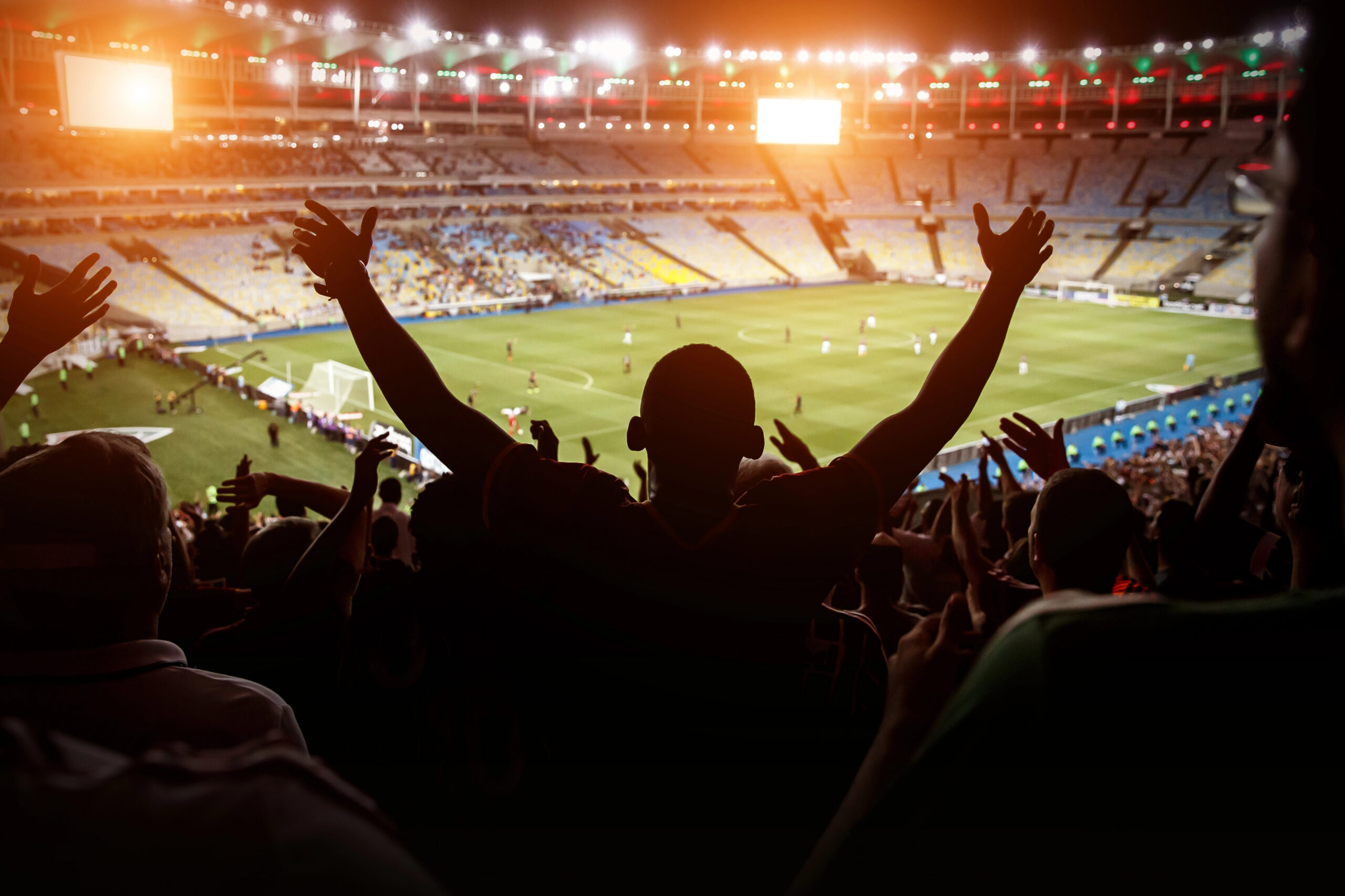
Imagine if history made one small exception. For one night, time stopped separating generations. Amidst the hustle and bustle of the packed World Cup final, in a quiet corner of the grandstand out of the reach of television cameras, eight elderly gentlemen took their seats quietly. No one around me seemed to notice. The crowd had come to watch soccer. They had come to see something else.
Below, around 80,000 supporters sang, waved flags and waited for kickoff. Billions of viewers around the world were gearing up to witness the biggest sporting event on the planet. The eight men looked at the same field. But they weren’t trying to watch the same game.
The referee checked his watch. The whistle rang. Almost immediately, 22 players started chasing the ball. The crowd watched the football. Eight economists saw civilization.
Ludwig von Mises was the first to take his eyes off the pitch. His attention drifted outside the stadium. I still see planes landing at nearby airports. The subway arrives every few minutes. A restaurant serving thousands of meals. A hotel front desk welcomes weary travelers. TV crews broadcast live across continents. A police officer directing traffic. Street vendors are adjusting prices. Taxi drivers and Uber reroutes. Volunteers help visitors who speak dozens of different languages. Each was pursuing completely different goals. Yet somehow their plans align.
Mises smiled. This wasn’t a soccer match, which was really strange. He quietly turned to the others. “Who organized all this?” Who decided the number of flights? Who calculated the number of hotel rooms needed? Who knew how much food this city would consume? Who decided how many taxis, police officers, doctors, security guards, and subway trains were needed in the evening? The answer seemed almost absurd. Not one. To be more precise, no one in particular. No government office had such knowledge. No committee can assemble it. There were no computers that could do the calculations in advance. Still, the city somehow functioned. It’s not perfect. But it works surprisingly well. Mises would have said that this is where economics really begins. It’s not the price. It’s not money. Not even the market. It starts with the people. Selected. acting. learn. Correct mistakes. Change of plans. The World Cup final is much more than 90 minutes of soccer. It is millions of human acts unfolding simultaneously.
Only then did Carl Menger speak. A father had just handed his young son a ticket to a game. The boy held it like a treasure. Menger smiled. “Interesting,” I whispered. “That little piece of paper is worth very little.” I paused. “And just about everything.”The paper itself has little value. Ink has little value. Even trophies have little influence on the metal they are made of. What gives them value are the countless hopes, memories, dreams, and expectations that come with them. If no one cared about this game, the stadium would be nothing more than concrete. Trophies will be polished metal. The ticket becomes a worthless piece of paper. And that night, it will just be 22 athletes running across the field. Value does not reside in things. It starts from within a person.
The match settled into a rhythm. TV commentators debated formations, injuries and tactics. Eugen Böhm-Bawerk seemed almost indifferent. The camera showed 90 minutes. He saw twenty years. The striker, who could score the winning goal, began training as a child. The goalkeeper who was able to prevent a decisive penalty was repeating the same move thousands of times. Youth Academy. parents. Coaches. Nutritionist. Doctor. fitness trainer. Analyst. Countless hours invisible to those watching tonight. None of these investments showed up on the scoreboard. Yet every touch of the ball reflected them. World Cup finals do not produce champions. they reveal it. Capital works similarly. The best investments often become apparent only at the last minute.
Midway through the second half, the coach walked toward the bench. Opinions were exchanged at the stadium. Another striker? A fresh midfielder? A more defensive formation? Only Friedrich von Wieser remained completely calm. Everyone else was thinking about the players who were going to play. Wieser was thinking of someone who would never do that. Every decision quietly erased countless options. Although their offensive power was strengthened by changing one player, their defensive power weakened. Pressing high up created dangerous spaces behind the final line. When he crossed the ball, he gave up a short pass. Every tactical decision has an invisible cost. Soccer has simply made that cost visible.
Friedrich Hayek, who was sitting next to Wieser, leaned forward. Until now, he had barely seen the players. I was looking at something completely different. knowledge. It’s not knowledge written in books. There is also no knowledge accumulated in government offices. That knowledge was scattered among thousands of ordinary people who had never met. He pointed toward the field. “The referee will watch the game.” He then turned to the assistant referee. “He’s seeing something else.” The goalkeeper caught wind before anyone else. The striker felt he had to delay the defense by half a step. The physical therapist recognized fatigue that was invisible to the coach. Vendors near Section 118 noticed that bottled water was sold out 20 minutes before the people in the stadium control room. A subway dispatcher noticed that the crowd was moving towards one station rather than another. The hotel receptionist knew that hundreds of Argentina supporters had checked in without reservations.
Everyone had a piece of reality. No one owned the whole thing. No one could. Hayek believed that this was precisely the point. The knowledge needed to plan a complex event like a World Cup final doesn’t exist in one place, waiting to be collected. It exists only because millions of people carry a small piece of it in their hearts. The remarkable achievement is not that someone orchestrated all this knowledge. That means no one has to. The match continued. New information is constantly flowing. I felt my legs become heavy in order to protect me. The midfielder noticed that the referee had become more reluctant to blow the whistle for minor fouls. The taste of the wind changed the flight of the long ball. One player change forced both coaches to rethink everything they had planned at the last minute. Knowledge was changing every second. Decisions were also made on that basis. Hayek smiled.
Markets and soccer have deep similarities. Neither can be adjusted because everyone knows everything. Both work because each participant knows something. And because each is continually adapting to what the other is doing. It is a spontaneous order. It’s not perfect. There are no plans. Adjustment without a screwdriver.
The clock indicated 70 minutes. Five minutes into the game, one team seemed to be in complete control. Now the momentum has shifted. Nothing dramatic happened. Don’t score. There are no red cards. Just make dozens of small adjustments. Fullbacks began to overlap more actively. The winger stopped walking back. The defenders retreated 3 meters. The passing lane has changed. The rhythm has changed. The game itself was something else.
Ludwig Lachmann watched quietly. Then he leaned closer to Hayek. “This is exactly how the market works.” Everything changes in 5 minutes. Expectations change. The plan is abandoned. New plans will replace them. Strategies that seemed great a moment ago suddenly seem outdated. Nothing stays fixed for too long. It’s not even a market. Even in football. Equilibrium is a useful idea. The reality is more interesting. Reality continues to move.
The match entered its final 10 minutes. The pace slowed. The space has disappeared. Both defenses looked impenetrable. Extra time seemed almost inevitable. Then something happened that almost no one noticed. The striker slowed down for a moment. he raised his head. 22 players saw a crowded field. One player sensed an opportunity. The coach missed it. The defense missed it. Even the TV commentators understood it only after it was rebroadcast. The striker accelerated. I received my pass. The stadium was filled with excitement. The shot missed the far post by inches. Next to Hayek, Israel Kirzner smiled. “Yes, that’s entrepreneurship.” It’s not about creating something out of nothing. We are not inventing a new world. You just see something that has been there all along, just for a moment before anyone else. The opening seemed obvious when millions watched the replay. That’s always the case. Opportunities usually become visible only after someone has already discovered them. Entrepreneurs rarely create that opportunity. They are often the first to notice it. Perhaps entrepreneurship is all about finding the potential hidden in plain sight. Hayek agreed. Kerzner spent his entire career expanding on one simple insight about Austria. Knowledge becomes dispersed. Opportunities are discovered. And progress begins when someone sees what everyone else misses.
The last few minutes go by quickly. The tension increases. Every touch you make to the ball feels heavier than your last touch. But while the crowd followed the action on the pitch, Fritz Maschlapp was quietly watching another game unfolding behind the bench. Rows of analysts stare at glowing screens. Computers process millions of data points. Artificial intelligence estimates the probability of passing in real time. GPS devices record every sprint, every acceleration, every heartbeat. Never before has soccer produced so much information. Hayek turned to the screen. “Too much information,” he muttered. Machurup smiles. “Yes, but I don’t need more knowledge.”
The goalkeeper still senses danger before the algorithm does. Strikers feel confident or doubtful long before they appear in the data set. Referees make decisions that cannot be fully predicted by statistical models. Technology has transformed football. It didn’t change human judgment. Data can be moved instantly across continents. Knowledge still lives in the minds of individuals. For a brief moment, Hayek and McClup appear to be watching the exact same game. Some have spent their careers explaining why knowledge is distributed. The other shows how modern economies produce, organize, and use their knowledge. I didn’t think either could be completely centralized.
The referee blows the whistle. One last look at his watch. The match is over. The stadium is buzzing. The players hug each other. The flag waves. The captain lifts the World Cup. The crowd celebrates the champion. But in a quiet corner of the auditorium, eight elderly gentlemen slowly rose from their seats. Please don’t clap. Please don’t give a speech. Just a quiet smile. They exchanged a few last words and disappeared into the crowd, as unnoticed as they had arrived. Maybe they weren’t there. Perhaps they existed simply because the imagination sometimes sees truths that cannot be recorded in history. In any case, something has changed. Not on the field. Inside the reader.
The next World Cup final will no longer be just a soccer match. Tickets become a lesson in subjective value. Years of training reveal the logic of capital. Substitution reveals the cost of every choice. A city that welcomes millions of strangers will be a lesson in human behavior. A perfectly coordinated tournament reveals spontaneous order. A fleeting passing lane becomes entrepreneurship. A room full of computers reminds us that although information is abundant, knowledge is still human. Football will continue to have world champions. But another victory would occur, almost unnoticed. For 90 minutes, the Austrian school will be flying off the books onto the pitch. And once you watch that match, it’s almost impossible to watch the World Cup final in the same way again.
