


As House committees considered President Donald Trump’s signature domestic policy bill last year, Republican supporters repeatedly emphasized that changes to the Supplemental Nutrition Assistance Program, also known as food stamps, would not affect vulnerable populations.
SNAP reform would “restore the health” of the program and ensure it works for “the most vulnerable among us, including our children,” said Rep. Glenn “GT” Thompson, a Pennsylvania Republican and chairman of the House Agriculture Committee.
Republican Rep. John Rhodes of Tennessee said the bill’s passage would be a “historic accomplishment” that would ensure “people in need can continue to get the help they need.”
Rep. Dusty Johnson, R-South Dakota, said the bill would focus resources on the “poorest” Americans. “If you are pregnant, your benefits are not affected by this bill. If you have young children at home, your benefits are not affected by this bill. If you are disabled, your benefits are not affected by this bill.”
But nearly a year after the bill was signed, the number of children receiving food assistance has plummeted by at least 776,000, according to a ProPublica analysis. At least 12 states break down program participation by age, and of the 1,670,111 people who lost benefits in those states, 46%, or 776,134, were children.
Another analysis reached the same conclusion. Just last month, the nonpartisan Center on Budget and Policy Priorities found that there were 700,000 fewer children receiving food assistance.
Arizona has the largest decline in SNAP participants in the nation. Since July 2025, 205,223 children have lost access to benefits, a decrease of 55%. Louisiana had the second largest drop in children at 22%.
The U.S. Department of Agriculture, which oversees SNAP, has not provided details about the impact on children receiving the program’s assistance, but initial numbers show 4.3 million fewer people in the U.S. received SNAP in February 2026 compared to February 2025, with 37.8 million participants.
Katie Berg, senior policy analyst at the Center on Budget and Policy Priorities, said that although children were not the intended targets of the law changes, they were increasingly becoming “collateral damage.”
If states are trying to follow legislative changes to SNAP, they likely aren’t focused on making the program more accessible, Berg said. Other experts said the increased paperwork required to maintain eligibility could result in people being excluded from the program.
States are required to impose work requirements on most adult recipients, preparing for two major cost shifts. In October, the state will begin paying 75% of the program’s administrative costs. The state pays 50% of these costs.
Additionally, states will be required to pay a higher percentage of SNAP benefits starting in October 2027 based on error rates. The error rate reflects overpayments or underpayments of SNAP benefits. Although sometimes characterized as fraud, these errors are usually the fault of state agencies or SNAP recipients and are “mostly unintentional,” according to the USDA.
Berg said it will be harder for low-income households to access benefits if state agencies face staffing shortages and struggle to comply with new regulations. “Families are falling apart.”
In Massachusetts, for example, the percentage of SNAP claimants who called assistance lines but were unable to reach a worker rose from 61% in November to nearly 81% in March, according to the Office of Transition Services, which administers SNAP in the state. State officials did not respond to requests for comment.
A USDA spokesperson did not respond to ProPublica’s questions about the number of children who lost access to SNAP. “There is no shortage of resources for the most vulnerable among us, including children,” the spokesperson said.
Rose, Thompson and Johnson, the House Agriculture Committee members who championed the bill before it passed last year, did not respond to ProPublica’s questions about their comments now that many children no longer receive SNAP benefits.
Rep. Jim McGovern, D-Mass., asked Secretary of Agriculture Brooke Rollins about her recent comments that millions of people no longer receiving SNAP is “good news.” If more than 700,000 children were dropped in the 12 states reporting these numbers, “the number would be in the millions” if other states were included, he said.
“The 700,000 child number is not correct,” Rollins countered, arguing that most of those kicked out of SNAP were “fraudsters.”
“It wasn’t a bipartisan group that gave us that number,” she said. (ProPublica independently verified the numbers reported by the Center on Budget and Policy Priorities.)
McGovern said he has spoken to people who have lost food assistance. “These are the people who actually need and depend on this food assistance to provide basic nutrition for their families,” he said.
Park Wilde, a food economist at Tufts University, said pressure to lower error rates “creates a temptation for states to exclude working families.” Working families’ incomes may be more volatile, making it difficult for state agencies to accurately assess benefits.
“When they say they want to preserve SNAP for the people who need it most, they’re admitting that they want to reduce the size of the SNAP program,” he says.
Mariana Chilton, a child hunger expert at the University of Massachusetts Amherst, said smaller programs won’t save money in the long run. Research shows that children who receive SNAP benefits are healthier, have better academic performance, use the hospital less often, and have better mental health as teenagers.
She called the situation a developing “public health crisis.” “When children are not healthy, it affects them today and throughout their lives,” she said, likening childhood hunger to brain damage.
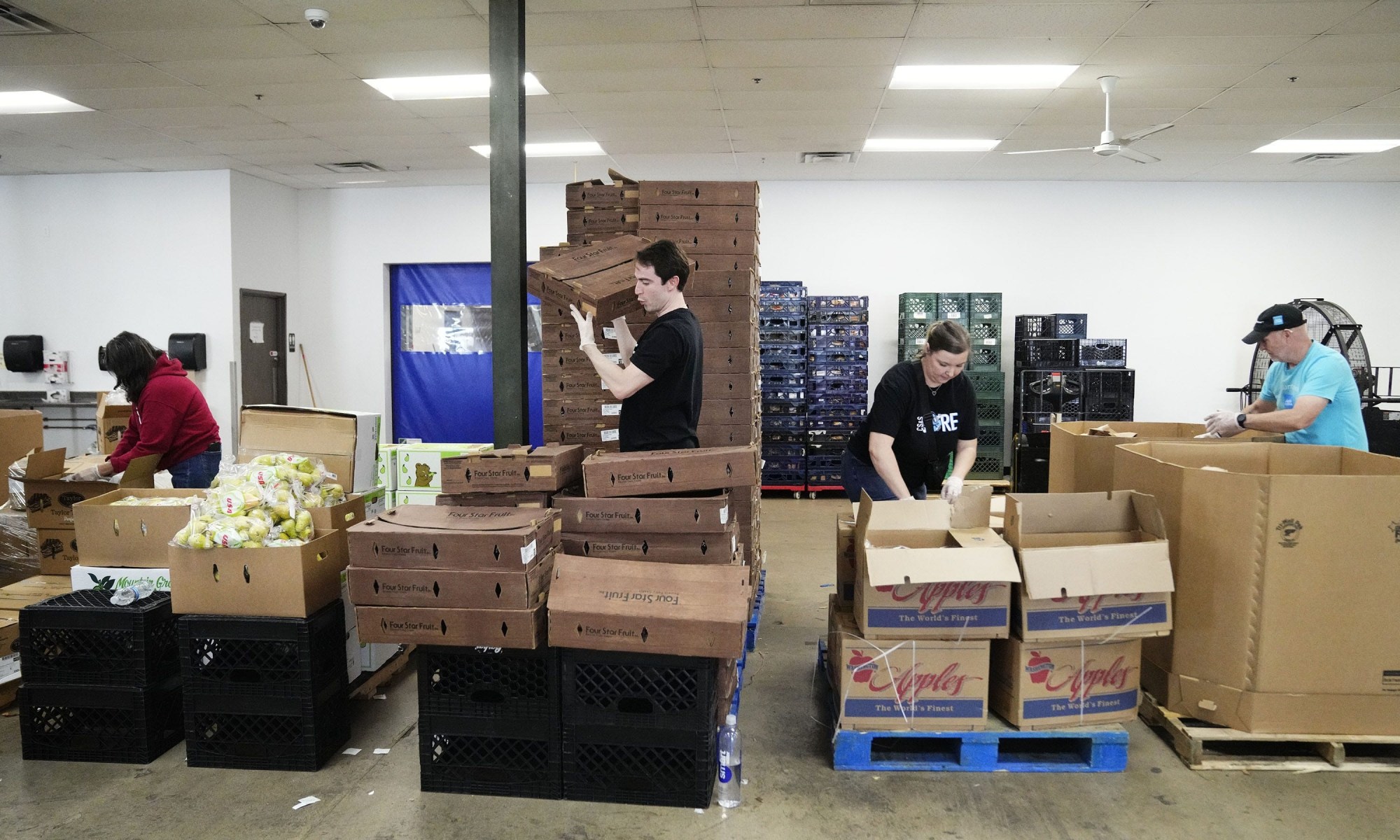
As Arizona’s SNAP participation declines, nonprofits are feeling the impact. St. Mary’s Food Bank, the state’s largest, has seen a 15% increase in need this year, with 300,000 more people coming in for food, CEO Milt Liu said.
“It’s important that we all recognize that policy impacts people at risk, and we see it on the ground every day,” he said.
On a recent morning, Ana Alvarez waited in line for her car at St. Mary’s Food Bank in Phoenix. Alvarez, a single mother of five who works in a restaurant, started attending St. Mary’s after losing her SNAP benefits in September.
She reapplied for SNAP with the Arizona Department of Economic Security in December, but her application is still pending. The ministry did not respond to questions about the backlog.
She clipped coupons and stopped going to the zoo and restaurants with her kids. The restaurant where she works will soon be in its off-season. And as summer temperatures rise, Alvarez wonders how she will cover her electric bill, rent and car payment.
She contacts the agency about applications at least once a week. When she last called, an employee told her that “she would be kept waiting,” something others had experienced in the past.
