


Whether planned or coincidental, the Trump administration’s bombing and dancing habit of Iran is having a devastating effect on its Western neighbor. Iraq’s trade routes have been destroyed, oil exports, which support more than 90% of the country’s budget, have collapsed, inflation is rising rapidly and foreign exchange reserves are being depleted at an unsustainable rate.
Iraq currently relies on oil exports for more than 90% of its national revenue, making it the most fossil fuel-dependent nation in the world, according to Carbon Tracker’s 2021 report, but it’s not particularly close.
Economic watchdog Eco Iraq reported on Saturday that Iraq has lost an estimated 350 million barrels of oil exports since February 28, worth $37.7 billion. This means that almost 30 percent of the country’s annual budget has evaporated in just over three months. The situation is already dire, with oil revenues falling by 16% in 2025 due to low market interest rates.
Dollar comes with threat of sanctions
Making this moment even more difficult is Uncle Sam’s control of Iraq’s oil revenues. As part of the 2003 illegal invasion, a program was established in which funds from Iraq’s oil exports were deposited with the U.S. Federal Reserve before being normally transferred to Iraq.
At the same time as the start of the illegal war against Iran in February, the US government froze dollar shipments to Iraq as part of a pressure campaign on Baghdad to dismantle Iranian-backed factions in the country.
The faucet was reportedly turned on again last week when Deputy Middle East Minister Tom Barrack visited Iraq, but the move was accompanied by further threats. From “New Arab”:
The statement released by the US State Department after the Barak al-Zaidi meeting looked less like a joint agreement between the two countries and more like a set of political, economic and security conditions that the Iraqi government would have to meet in exchange for US support and the avoidance of what one official described as “massive” sanctions.
The statement included a wide range of demands, starting with the disarmament of armed groups and, for the first time, using terms such as disbanding armed groups and armed organizations. It also calls for preventing threats to neighboring countries from emanating from Iraqi territory, and includes similar guidelines for US companies expanding into Iraq.
In response, Prime Minister Ali Al Zaidi’s office republished the statement almost verbatim. It contained three sections written in direct language, the first of which called on the government to:
“Implement a plan for the complete disarmament and dismantling of all armed groups and organizations operating outside the authority and control of the Iraqi state, confine weapons to the Iraqi state and enforce full sovereignty to keep Iraq out of conflict and prevent its territory from being exploited by any party that threatens peace in the region.”
According to official statements from the United States and Iraq, Prime Minister Ali al-Zaidi will visit the White House in mid-July to discuss the future of the relationship.
The Paris-based Financial Action Task Force already added Iraq to its dreaded gray list earlier this month. This would increase scrutiny of Iraq’s banking transactions, raise costs and make it harder for the country to attract private capital. This could also be seen as a precursor to sanctions unless Baghdad joins Washington’s plan.
At the appointment ceremony of the new central bank governor on Sunday, Iraqi Prime Minister Ali al-Zaidi stressed the “importance of moving forward with the banking reform program” initiated under his predecessor. Further details on these reforms can be found here, courtesy of The National.
Iraq’s banking sector has been under intense scrutiny by the US Treasury since late 2022, with the sector accused of laundering money and helping Iran and other US-sanctioned countries access the US dollar.
Under pressure from Washington, the government of former Prime Minister Mohammed Shia al-Sudani introduced financial and economic reforms. This included strict controls on foreign transactions in US dollars and requiring traders to provide full details of the goods they wish to import and the ultimate beneficiary. Other measures taken include revitalizing electronic payment systems, encouraging banks to offer a variety of services, and inviting citizens and businesses to open accounts.
However, progress was slow. State-owned banks and cash payments remain the norm. And the United States has accused Iraqi banks of helping Iran evade sanctions.
Iraq’s new central bank governor, Nazar Nasser Hussein, happens to be an expert in anti-money laundering.
hanging economic relief
Among the news emerging from the mid-June meeting between Mr. Barrack and Mr. Al Zaidi:
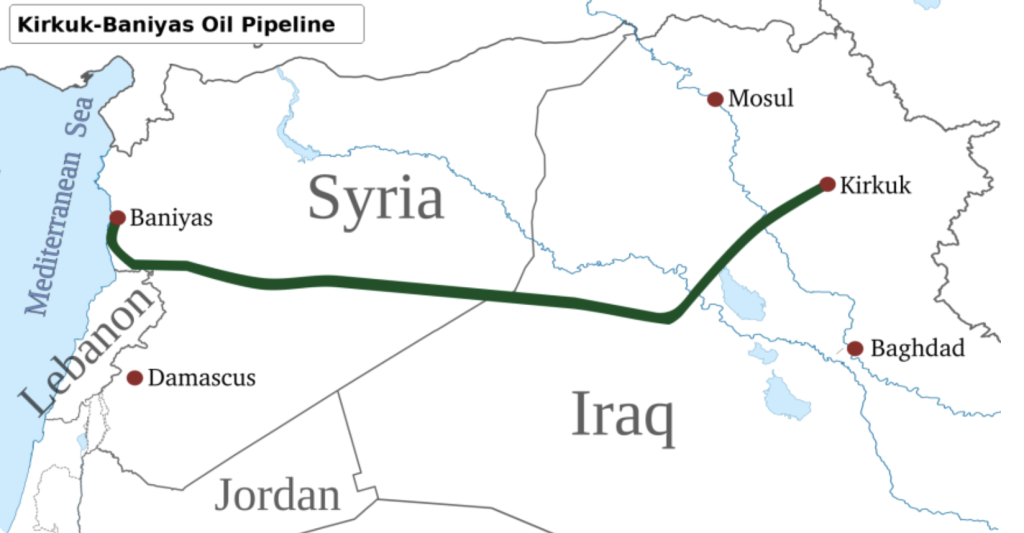
The deal with Texas-based Excelerate Energy to develop a floating LNG storage and regasification unit at the southern port of Khor al-Zubair could potentially reduce Iraq’s dependence on Iranian natural gas imports by 30 to 35 percent. The memorandum of understanding with Los Angeles-based TI Capital is for the rehabilitation of the Kirkuk-Banias oil pipeline, which will reconnect oil fields in northern Iraq with Syria’s Mediterranean coast. It has not been in operation since the early 1980s. Iraqi federal forces were committed to ensuring the physical security of the Kurdistan Region’s energy infrastructure. The move is aimed at allowing three major US upstream companies (HKN Energy, Western Zagros and Hunt Oil) to immediately resume full-scale production. According to Iraq News,
Going forward, federal anti-aircraft forces, localized border patrols, and a joint information cordon will demonstrate absolute coordination between Baghdad and Erbil to protect these foreign-operated assets from non-state drone and missile attacks and protect Western capital expenditures.
Let’s see how it goes. Because of pressure from Washington, Baghdad has little choice but to acquiesce. The follow-through will be something else entirely.
However, it is not only Washington that is oppressing Iraq.
What about collaboration with Turkiye?
Iraq currently exports between 150,000 and 200,000 barrels per day through pipelines in the Kurdistan Region to the port of Ceyhan in Turkiye. The Kurdistan pipeline was recently shut down for about two and a half years after an international court of arbitration ordered Turkiye to pay Iraq $1.5 billion for allowing oil exports from the Kurdistan region without Baghdad’s permission between 2014 and 2018. Oil flows resumed in late 2025, but could soon stop again.
On July 27, Iraq’s oil pipeline agreement with Turkiye expires, threatening a vital lifeline during the closure/slowdown of the Strait of Hormuz. The Turkish government knows it is in a strong position and is demanding higher transit fees, investment commitments to offset the $1.5 billion decision, and more oil.
It is probably no coincidence that Mr. Barrack was in Ankara just before leaving for Iraq.
Productive meeting with FM @HakanFidan ahead of the NATO Summit in Ankara. As strong allies with many common goals, the U.S.-Turkiye partnership is bearing fruit. 🇺🇸🤝🇹🇷 https://t.co/IMcs6Wh835
— Ambassador Tom Barrack (@USAMBTurkiye) June 12, 2026
Meanwhile, the old Kirkuk-Ceyhan pipeline remains unavailable as Iraq grapples with much-needed repairs. This could ultimately allow Iraq to export up to 1.6 million barrels per day.
pressure on the kurds
At the same time that Turkiye threatens not to renew Kurdistan’s pipeline contract, billionaire Barrack is telling Kurds they need to align with Zaidi and his efforts on security and oil or risk losing Washington’s support.
And one might imagine that Mr. Barrack, who serves as U.S. ambassador to Turkiye in addition to his role as special presidential envoy to Syria and Iraq, is also touting the U.S.’s usefulness in helping reach a deal with Turkey to keep oil flowing.
While on the surface it appears that Washington, while failing in Iran, at least used the disaster in Iran to separate Baghdad from Tehran, there is reason to pause.
One rather important item omitted in many articles about US dealings with the al-Zaidi government is that Iran has significant influence over the Popular Mobilization Forces in Iraq, targeting US military bases in Iraq, and has also attacked Gulf states.
In recent weeks, Iraqi insurgents have announced that they will integrate with the national security forces. These include the powerful cleric Muqtada al-Sadr’s militia, the Imam Ali Brigades, Farah al-Fayed, and the Popular Mobilization Forces commander Farah al-Fayed.
It’s usually not that simple. Iraq has promised for years to rein in its militias and pursue alternative oil export routes, which has now become a reality. But the turmoil in the Strait of Hormuz may or may not be enough motivation. From Al-Monitor:
This statement has been met with some skepticism. Some believe these are Iranian-inspired foils designed to give Iraq critical breathing space amid its swelling financial crisis.
Analysts say Zaidi ultimately still has to respond to the Coordination Framework, the coalition of Shi’ite parties that elected him. However, they added that he will try to expand the space for action.
Maria Fantappier heads the Mediterranean, Middle East and Africa program at the International Association in Rome. “The new prime minister is a clear expression of the network of relationships and interests tied to Iranian-backed groups. He is also a realist and, in the tradition of previous Iraqi prime ministers, will seek to abandon relations with Iran and strike a balance with the United States,” she told Al-Monitor.
“However, if done poorly, U.S. pressure could have the opposite effect. It could strengthen relations with Iranian countries and force them to abandon pragmatism,” Fantappy said.
