


[Today’s Iran war update launched essential complete. Any updates will come at 9:00 AM EDT because I have to go out and my return time is uncertain. If you arrived early, please check comments to see when I have announced an update in comments and refresh your page then]
After CENTCOM tried claiming that latest Iranian retaliatory strikes, in response to attacks on Qshem Island and other targets were only a scratch, enough evidence to the contrary has accumulated to show that Iran did real damage to the Kuwait Airport and the US Fifth Fleet operations in Bahrain. It appears that the escalation by the US was intended to tax Iran over time and Iran is having none of that, with its fierce retaliation reportedly taking the US by surprise.
In the meantime, Israel is sabotaging any peace deal, as expected, by continuing attacks in Lebanon, Gaza, and the West Bank. Trump barking at Netanyahu has not deterred Israel.
But it also appears that the US was misled by Israel even more severely than believed. Former adviser to the UAE, Steve Hank, argues that purchasing power parity GDP data shows that Iran and the Saudis were the best economic performers in the Gulf area post the 2008 crisis, and grew at nearly the same rate despite Iran having been under sanctions. So the idea that Iran was on the verge of collapse was a canard.
As we will soon discuss, an important new article in Bloomberg describes how the US has not given up on trying to “open” the Strait of Hormuz, and is attempting to create a more-or-less secure corridor along the Oman Coast.
In addition, even though Iran close-to-official channels had maintained that Iran had stopped sending messages to the US, more and more well-connected sources are saying that communications continued. I am not in a position to adjudicate this question. One way to square this circle is if Iran did halt its official written messages about the memorandum of understanding draft, but was still exchanging information via other channels.1
Finally, we will turn to yet more signs of economic stress, with the Asia picture already looking grim. And just as egg prices jumped up during Covid due to a big culling of flocks due to an unrelated factor, avian flu, so too are beef prices in the US at risk of big rises thanks to screwworm.
Briefly, to kinetic updates first. The Hindustan Times segment below gives a sense of the damage to the Kuwait Airport and says Iran may also have hit a US destroyer, which is big if true:
Another report. Note that “targeted” does not mean “hit”:
⭕️⚡️The Iranian Army’s Navy targeted aUS destroyer in the Gulf of Oman, using anti-ship Cruise Missiles. — Statement
“A few hours ago, following aggressive actions, violations of the Hormuz Strait regulations, and hostilities against Iranian commercial vessels in the Sea of Oman… pic.twitter.com/83BgzhcGZS
— MenchOsint (@MenchOsint) June 3, 2026
NO1 contends the damage was considerable:
Kuwait airport T1 destroyed, US bases hit. Iranian missiles/drones struck Kuwait International Airport Terminal 1 — 1 killed, 63+ injured, airport shut for months (MilitarySummary, zerohedge, Lord Bebo). Satellite imagery confirms hangar/warehouse destruction at Ali Al Salem and Camp Buehring (MenchOsint, AMK Mapping). HIGH.
CENTCOM caught reversing itself. After claiming 100% interception of the Kuwait attack, CENTCOM then accused Iran of a deliberate airport hit — the contradiction was flagged by many (MenchOsint, Daniel Davis, imetatronink). Iran’s IRGC counter-claims the terminal was wrecked by a failed US Patriot. HIGH on the contradiction; attribution of cause unresolved.
In keeping, Trita Parsi argues in a long tweet that the US was not prepared for the intensity of Iran’s kinetic response to the latest US escalation:
Over the past eight or so days, the US has targeted Iranian vessels as well as targets on the Iranian mainland. This included non-Iranian oil vessels. In essence, this was the US seeking to escalate the blockade of the blockade.
At first, Iran’s response was proportional. The US could tolerate that response.
In fact, it was beneficial to the US to continue the exchange of blows but keep them relatively limited, as it would slowly but surely erode Iran’s deterrence without imposing intolerable costs on the US.
But yesterday, Iran moved to change that equation.
After the US struck a Botswana-flagged tanker as part of Trump’s blockade, the Iranians counter-escalated disproportionally.
Tehran struck Kuwait International Airport as well as a US base in Kuwait, Ali Al-Salem.
It struck the 5th Fleet facilities in Bahrain. (Full extent of damage unknown.)
It struck Jordan. (Full extent of damage unknown.)
It struck northern Iraq. (Full extent of damage unknown.)
It struck the UAE. (Full extent of damage unknown.)
It struck the Al-Udeid Air Base in Qatar. (Full extent of damage unknown.)
It was a demonstration – and reminder – that Tehran retains escalation dominance.
Whereas the US is comfortable with either a possible deal or a low-level exchange of fire, but not a return to full-scale war, Tehran is comfortable with a possible deal or a full-scale war, but not with a low-level exchange of fire that erodes Iran’s deterrence and allows for Trump’s “blockade of the blockade” to become effective.
The area where both can actually be comfortable is some sort of a deal. Reaching it, however, is a different story.
Predictably, the ceasefire in Lebanon is not holding. Israel has never respected one save to take a short breather for its own purposes. From Aljazeera’s live feed:
Iran keeps up its trolling game:
The damage to the terminal at Kuwait International Airport was the result of a failure in the U.S. Patriot air defense system.
— Iran Embassy SA (@IraninSA) June 3, 2026
Several wounded in Israeli strike after agreeing to Lebanon truce
Several people have been wounded in an Israeli drone attack that targeted a vehicle on the Zefta-Kfarwa road in southern Lebanon, the National News Agency reports.
The strike came after Israel’s and Lebanon’s governments agreed to halt the war after a series of meetings in Washington, DC, mediated by US officials.
It remains unclear whether Hezbollah, which condemned the peace talks, will agree to withdraw from the region south of the Litani River as demanded by Israel.
Trump announced a ceasefire between Hezbollah and Israel yesterday.
Israel responded by dropping over 50 bombs on Lebanon today, killing over 10.
There is NEVER peace with these people. pic.twitter.com/EWu7DFgtX2
— Ethan Levins 🇺🇸 (@EthanLevins2) June 2, 2026
Even high-profile American media figures are calling out the Israel ceasefire abuses:
🚨WATCH: Megyn Kelly says Israel bombed Lebanon, broke the ceasefire from the start, then convinced Trump to let them keep bombing.
Israelis are determined to do to Beirut what they did to Gaza.
Our ceasefire is falling apart; it’s being intentionally destroyed to drag the… pic.twitter.com/4J3VK7MKEg
— THE GLOBAL WATCHDOG (@glwatchdog) June 3, 2026
And on top of that, again from the Aljazeera live feed:
Israel threatens to strike Beirut if Hezbollah attacks
Defence Minister Israel Katz says a ceasefire with Lebanon grants the military the “freedom” to strike the capital Beirut if Hezbollah attacks Israeli communities.
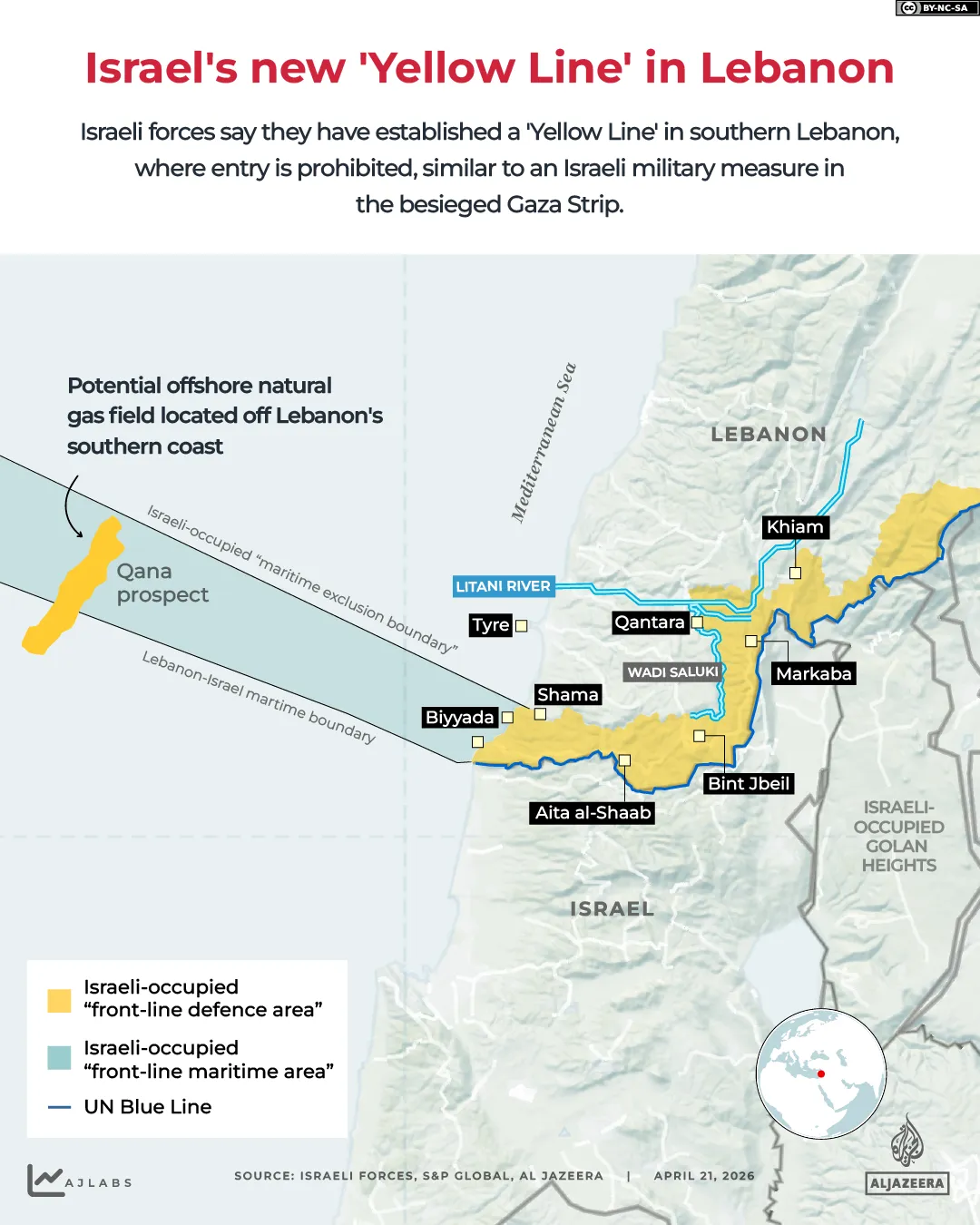
“The [army] will, at this stage, continue its fire and ground operations, remain in the security zone in Lebanon up to the yellow line – including in the Beaufort area – and without the return of the population, while continuing to dismantle terrorist infrastructure on the ground,” Katz said in a statement.
Israeli forces retain the “freedom of action, with American backing, to strike in Beirut in response to fire on Israeli communities and territory”, he added.
Similarly:
🚨BREAKING: Israeli Air Defences Activated Over Kiryat Shmona
Israel’s ambassador to the US just posted online that Tel Aviv will fire on Beirut because of rocket fire against Kiryat Shmona. Soon after, there appears to be rocket fire on Kiryat Shmona again.
— MintPress News (@MintPressNews) June 3, 2026
And remember that even if a ceasefire were to hold in Lebanon, that does not meet Iran’s demands Iran has also called for an end to Israel operations in Gaza and the West Bank.
Steve Hanke,2 in a new talk with Mario Nawfal, not only makes a point that can’t be stated often enough, that Israel can and will wreck any “deal” but that the idea that Iran is an economic basket case is an Israeli fabrication. Parsed correctly, the data shows Iran was still growing under the sanctions, and on a par with most Gulf states:
From a lightly cleaned-up machine transcript:
Nawfal: But why do you not think Trump could rein in Netanyahu as he did in the last couple of days and ensure that he does not sabotage the Iran war?
Hanke: Well, he hasn’t reined him in.
You think they’re reined in? Well, look at what’s going on in Lebanon. You have to lookat what’s going on in Lebanon and and every day, you know, everybody’s forgotten about Gaza, but there’s a drip drip every day. Every every day there, you know, half a dozen murders in Gaza.
On the prospects for Strait of Hormuz traffic:
Hanke: My scenario that the Strait will be closed for a considerable amount of time. And by the way, even when it so-called opens again, my baseline scenario is that it will be controlled by the Iranians….
I think that is a base-case scenario that people should be thinking about. I think most people are not thinking that way. They’re they they always raise the question when I’m interviewed, Mario. People say, “Well, if the Strait opens tomorrow, professor, what do you think’s going to happen?” And I and I come back and I say, “It’s not opening tomorrow.” So, you’re in a in a graduate seminar raising hypothetical questions that I think are largely irrelevant.
Note how the press relentlessly keeps flogging the idea that the Strait of Hormuz will magically go back to the old normal. OilPrice provides an example Kuwait Says Oil Output Won’t Recover for 10-12 Weeks After Hormuz Reopens
And on Iran’s economy:
Hanke: If you look at the the Gulf States from 2008 when the great financial crisis started until prior right prior to the war, the the GDP per capita on a purchasing power parody basis, it it was going down big time in all the Gulf states with the exception of two, Saudi Arabia and Iran. And they were going up in Saudi Arabia and Iran by almost exact exactly the same…
Let’s take away the narrative without getting in into the weeds of the details of how this actually happened and and the the narrative coming from the Gulf was it was booming everything was great you know that everyone was moving to Dubai. You know, every everyone in the world was moving there. It was booming a lot. Real estate boom, all the rest of it. Well, it actually was basically flatlining. It went from 100 to about 96, the number GDP per capita.
Now, what happened in Saudi Arabia? Well, it went from 100 to about 115 or 16. Same thing happened in Iran. It goes from 100 to 115.
Nawfal: I’m surprised at Iran. I thought the economy was…
Hanke: Well, that’s the problem getting destroyed. That’s the propaganda. That that that is what they that that is what the Israelis told the Americans before they before they invaded and and hit them. They said
Nawfal: They had the people on the streets as well.
Hanke: Well, the numbers are the numbers. And I’m telling you, if you if you look at Kuwait, it goes from a 100 down to about 56. A huge a huge Kuwait really in in bad shape from a from a GDP per capita that and that’s the best measure of kind of general prosperity because when we say per capita, that’s GDP that’s like income per person and and it’s adjusted for purchasing power parity..
I think that yeah I think the propaganda was that the rial was collapsing. That’s true. It it was they had in a big inflation problem. Yeah. That that’s true. It was.
But when you when the dust settles and you look at look at the whole picture and adjust for inflation adjust for exchange rates actually it was it was improving slowly.
It was improving. improving almost exactly at the same rate the Saudis were improving…
Nawfal: Despite the sanctions….
Hanke: Despite the sanctions and and everyone else in the Gulf the UAE was essentially flatlining and and Kuwait was plummeting big time Qatar was going going down Oman was going down Bahrain was going down.
Now to the efforts to understand what if anything is happening, talks-wise, between Iran and the US. The full text of a tweet from Hormuz Letter:
BREAKING: Iran rejects all of Trump’s new claims to NYP as “Trump’s fantasies” and “completely inconsistent with reality,” denying that Iran has been talking to the US in the past days, that Mojtaba Khamenei is involved in negotiations, that Iran has agreed not to have a nuclear weapon, or that the deal framework is being approved in Iran, per Tasnim.
Iran has not provided any response to the US regarding the draft memorandum of understanding in recent days and has ended all exchange of texts and communications until Iran’s conditions regarding Lebanon are met.
From Bloomberg on the latest US effort to “open” the Strait of Hormuz, in U.S. Looks to Unblock Hormuz With Quiet Version of Project Freedom:
A month after President Donald Trump announced — and then abandoned — a plan to escort commercial ships through the Strait of Hormuz, the US military is trying less public ways of protecting vessels in the vital waterway.
Rather than announcing an open challenge against Iran, the US is quietly coordinating with shippers willing to take a different approach. Evidence gleaned from US Central Command statements, shipping data and people with knowledge of the transits suggest ships are turning off transponders and sticking close to the Omani coast on the strait’s south to avoid Iranian mines, with the US military assisting if needed.
The latest evidence came Tuesday night amid a flareup between the US and Iran. Central Command issued a statement saying its forces shot down Iranian attack drones aimed at “civilian mariners that were rightfully transiting regional waters.”…
The effort marks a change in tactic from Trump’s previous effort, dubbed Project Freedom…Trump later said he was scrapping the idea after allies in the region asked him to back down.
The latest US push has no title and the administration has offered little public explanation. But it’s been accompanied by other signals that suggest the US is working with shippers in ways that officials have declined to specify…
Two shippers said previously they were in touch with the US military, which advised them on how best to navigate the waterway, Bloomberg News reported earlier. When one vessel was approached by suspected Iranian fast attack boats on a recent transit, helicopters appeared and drove them away, according to the person with knowledge of that transit.
“If the commercial ships are hugging the coast opposite of Iran and turning off their AIS transponders, Iranian forces would need to use radar or spotters to detect the movement and direct drone or missile attacks,” said Bryan Clark, a senior fellow at the Hudson Institute.
“The US Navy could detect these efforts and counterattack the Iranian units,” he said.
While some shippers are growing more optimistic about a pickup in traffic, ship-tracking data compiled by Bloomberg indicates that movement through the strait has been limited. Just two inbound commercial transits were observed on Tuesday morning, following two outbound ships on Monday..
Two transits per day is the functional equivalent of zero.
Forgive me for not dwelling on the House voting against the Iran war, (see NBC in House votes to rebuke Trump over war with Iran if you must), since this action is in the wet-noodle-lashing category.
And a contrary data point:
Greek shipping tycoon willing to pay Iranian transit toll in strategic Strait of Hormuz
——
Prominent Greek shipping mogul Evangelos Marinakis stated on Tuesday that he is prepared to pay Iran a transit fee to ensure the Strait of Hormuz remains open, suggesting the funds could… pic.twitter.com/P4OYUejs8X
— The Cradle (@TheCradleMedia) June 3, 2026
Some economic tidbits:
Global food price inflation is accelerating:
Thailand’s white rice prices surged +20% in May, the biggest monthly increase in data going back to 2008.
This benchmark used for Asian rice prices has surged +26% since April, to ~$480 per ton, while Chicago rice futures prices… pic.twitter.com/V7Q1ZaPHHy
— The Kobeissi Letter (@KobeissiLetter) June 2, 2026
Note that this sighting is not quite as bad as it looks. As a local contact pointed out:
The rice variety grown in Thailand is very heavily fertilizer dependent. This was because of a deal with corrupt officials in the government and certain Indian fertilizer importers. I was told this about 15 years ago by one of the Indians involved who was boasting about how much money they’re making. So I’m not surprised.
Accordingly, Thailand is one of the biggest fertilizer importers in the world. Even though Thailand historically has been a large exporter of rice, we featured a story from the Washington Post on how many farmers were letting their fields lie fallow since they could not make a profit between fertilizer and fuel costs. So worse than the price hikes may be the coming shortages.
Another shortage-in-the-making sighting:
USDA has now confirmed the detection of a New World screwworm in a bovine in Zavala County, Texas. The detection of the parasite, which is deadly to cattle, comes at a dire time for the US beef industry, with a smaller herd having already sent prices to record highs. https://t.co/TBvKXtv81l
— Javier Blas (@JavierBlas) June 4, 2026
And a final note:
The Israeli ambassador to Europe is protesting the spread of this image. Let it spread all over the world. 🌍🔥” pic.twitter.com/ndUivVzz9x
— Middle Eastern Affairs (@OpsHQs) June 2, 2026
____
1 I feel compelled to mention claims that Iran has obtained (note that John Mearsheimer said he did not believe (see at 24:05) that a third country would supply one and Mohammed Marandi effectively said that he could not prove a negative, but as far as he knew, the fatwa against nuclear weapons was still in place, see starting at 4:40). Keep in mind that Ted Postol has repeatedly stated that Iran could develop nuclear weapons in a matter of weeks from its existing stockpiles (I took his “weeks” to be “not two or three but not much more than that”). So the idea that Iran could devise a nuclear bomb quickly, indigenously, is not new news.
However, the claim originated from a single source, which in my experience raises big red flags. In my history of reporting, single sources, unless they also present documentary evidence, are dodgy. Even if they are sincere and did hear what they say they heard, that does not mean they have the full picture. And in a worse case scenario, they may be trying to burn the reputation of the reporters by planting a story that winds up being disproven.
What is new is the claim, per the well-connected Robert Barnes on a new talk with Mario Nawfal, that Trump was informed of this new story, last Thursday, and that Iran was specifically planning to make a demonstration if the US did not accept key Iran demands. Barnes’ argument is that the Iranians have worked out that Trump is most fearful of humiliation and having Iran show it has nuclear capabilities after Trump has gone on and on and on about how Iran must never get a nuclear weapon would be the most embarrassing thing that could happen to him and he would be highly motivated to avoid that. Barnes argues that he sees the risk of US escalation as much lower than before.
Well….perhaps. First, the timeline does not match up. The US escalated further this week in the Strait of Hormuz, at best pushing the envelope of tit-for-tat dustups. Rubio also held to the existing US line in his Senate testimony, repeating US maximalist demands, such at that Iran needed to export or destroy (how has never been clear to me) its enriched uranium.
Second, it is entirely possible that this is an information operation (which I do not regard as the same as a bluff). Keep in mind that Trump does not read intel briefings. He instead gets a daily 2 minute video update on Iran, which has been characterized as “Best explosions made by the US in the last 24 hours”. Barnes has earlier claimed that many of the leaks to the New York Times are to get information to Trump, since he does read the Times religiously.
In other words, this story could have been devised by the many factions who see that Trump is about to destroy the US and the global economy, yet has seemed in no mood to back down. So this “Iran will detonate a bomb if you don’t relent” is a new reason for Trump to finally get over himself and find an exit.
However, I can see this backfiring. Israel is determined to throw a spanner in any peace attempts. Recall also that Israel is rumored to have convinced Trump that Iran was behind the Butler assassination attempt.
The many many Zionists around Trump could use the claim that Iran is now prepared to get or develop a nuclear weapon in the very near future as reason to strike Iran as hard as possible now to prevent that from happening.
And either way, can Trump really constrain Israel? He clearly has the means, by cutting off intel plus weapons and spare part deliveries. But the backlash from the Zionist-supporting media in the US would be fast and brutal.
2 Please filter out that Hanke is a member of the Mises Institute. His commentary ex on monetarism and other libertarian hobbyhorses, is sound.
