


Mr. Connor: It’s hard to avoid the conclusion that there is a concerted effort to destroy American food production. Currently the following is happening:
Fertilizer prices have skyrocketed due to the Iran war. As tech companies seize farmland for data centers, electricity costs soar and water supplies become strained. Purchases of U.S. farmland by foreigners are increasing. Deportation creates farm labor problems. And the mother of all challenges: climate change.
I’m probably forgetting some other examples, but what conclusion can we draw from this? Is selling the few remaining independent farmers to large corporations, investment funds, and institutional investors a war against small farmers? (These types of corporate acquisitions have been on the rise for some time already.) Or perhaps it’s just eugenics to starve people, given that hunger in the U.S. already affects 48 million Americans and the administration’s SNAP cuts?
All these developments take place on top of systems already geared towards commercial production. CNBC pointed out a few years ago:
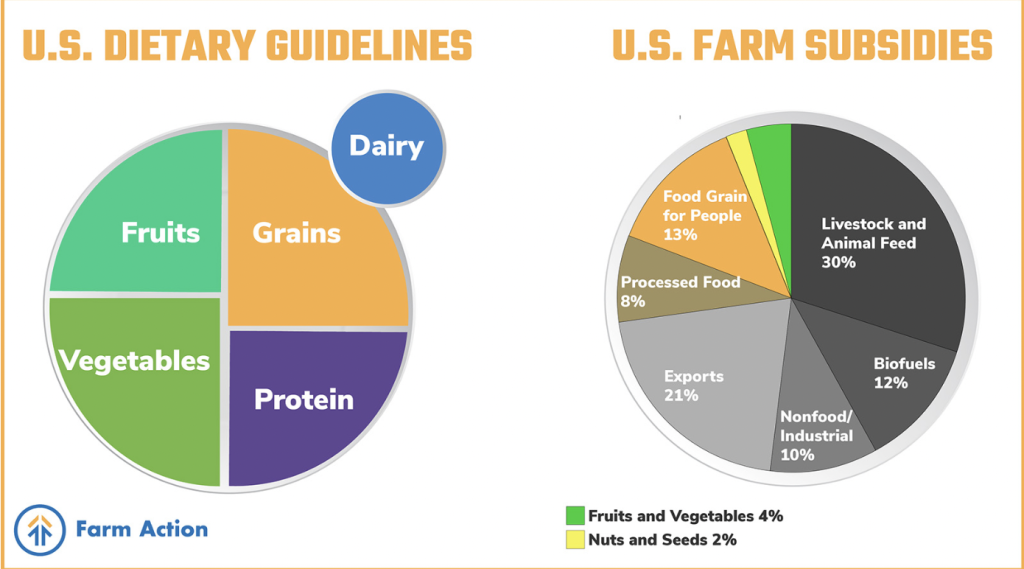
The United States prioritizes growing commodities such as corn, soybeans, wheat, and sugar. Corn and soybeans are valuable because they are primarily used as livestock feed and ethanol. The country also dominates in meat production, and global consumption continues to rise.
Goods are necessary for the U.S. economy, but they don’t feed people. And that’s a big problem for many small and medium-sized fruit and vegetable farmers.
Increasing consolidation among buyers and ever-increasing costs of land, labor, and raw materials are making it increasingly difficult for small and medium-sized producers to stay in business. And the government doesn’t seem to care:
Now, let’s go to the bees.
Written by Jenny L. Durant, Human Ecology Researcher, University of California, Davis. Originally published on The Conversation.
America’s bees and beekeepers are losing a valuable ally at a time when they need help most.
The U.S. Department of Agriculture will soon close the Beltsville Agricultural Research Center, a 6,500-acre agricultural research station in Maryland and home to the Beltsville Honey Bee Research Institute, the nation’s premier honeybee research and disease diagnostic center.
The closure comes at a critical moment for bees. In the winter of 2025, many beekeepers lost more than half of their business as the insecticide-resistant Varroa mite spread and introduced a deadly virus. This loss has reduced honey production, and rising fuel costs have made it increasingly expensive to transport bees across borders for agricultural pollination, putting further stress on the industry.
In my 14 years of researching bees and beekeepers and writing my new book, Bitter Honey: The Big Ag Threat to Bees and the Fight to Save Them, I have seen beekeepers frequently turn to the USDA Honey Bee Lab for assistance during crises like this. Honey bees contribute approximately $15 billion to U.S. crop production, and these laboratories help stabilize the U.S. food system, as native and managed bees pollinate more than 130 crops.
Beekeepers are currently facing their greatest challenge and their scientific support system is at risk as native honey bee populations continue to decline.
Why Beltsville Bee Research Institute is important
USDA honey bee researchers have served beekeepers for more than 130 years, including nearly 90 years at the Beltsville station. One of Beltsville Bee Lab’s standout services is its honey bee disease diagnostic service, which allows beekeepers to submit samples for analysis free of charge.
Since the early 2000s, Beltsville researchers have been helping beekeepers address Varroa mites, a leading cause of massive colony losses each year. Currently, the institute is helping beekeepers prepare for the more dangerous mite that parasitizes Asian honey bees, Tropilelaps mercedesae, or “tropi” mite, by developing detection and response protocols that beekeepers can use to protect their colonies.
Varroa mites are a major source of stress for bees, sometimes affecting up to half of all colonies. Other major stressors affect large numbers of colonies as well. Farm Doc Daily/University of Illinois
Beltsville Bee Lab supports beekeepers across the country, but we are located in areas with strong agricultural and beekeeping areas. If the facility closes, it will leave a significant research gap in the Northeast, where beekeepers help pollinate cranberries, pumpkins, blueberries and other crops.
Its location also allows researchers to conduct extensive research on winter colony loss, work that would be difficult to replicate at USDA’s remaining honey bee labs, which are primarily located in temperate climates.
The hidden costs of closing honey bee labs
The USDA says it will decommission the entire Beltsville Agricultural Research Center because maintaining and renovating the building will cost an estimated $500 million. But closing labs could come at even greater costs for beekeepers, farmers and consumers.
For example, in the winter of 2025, beekeepers experienced the largest losses in U.S. history. Although many people opened colonies in January of that year, it was found that more than 60% of those colonies, or nearly 1.7 million colonies nationwide, had died. Beekeepers contacted Beltsville, and researchers quickly flew out to test the affected colonies for pesticide residue, disease, and Varroa mites. The data could help guide beekeepers’ treatment response.
Weeks later, as the institute’s scientists were grappling with the crisis, the Trump administration laid off the Honey Bee Institute’s probationary investigators and staff, as well as thousands of other employees across the Department of Agriculture. The Beltsville team was hobbled, and the remaining staff had limited communication with beekeepers.
Because of a communications blockade, it took nearly six months for researchers to publish their findings. By then, the season was over and beekeepers were left to fend for themselves.
The loss of bee colonies ultimately cost beekeepers an estimated $600 million in lost honey production, pollination income, and colony replacement costs. This far exceeds the expected one-time cost of modernizing the entire Beltsville Agricultural Research Center.
These losses could also hit consumers’ pockets.
When beekeepers lose nearly half their business, they often have to charge farmers extra for pollination services to stay in business. These additional costs can ripple throughout the food system and affect how much everyone pays for pollinator-dependent fruits, vegetables, and nuts.
NOTE: The width of the arrow is proportional to the number of colonies moved. The curvature of the line indicates a nonlinear root path. Source: Economic Research Service calculations using USDA, National Agricultural Statistics Service, Colony Loss Survey (USDA-NASS, 2018). Beekeepers often transport bees around the country to meet their pollination needs and produce honey at different times of the year. This map shows the migration of bees from California to other states during the summer and fall. Jennifer K. Bond et al., USDA Economic Research Service, 2021
Further cuts to US pollinator research are planned
Beltsville Bee Lab’s closure is not an isolated case. The administration is proposing to eliminate the U.S. Geological Survey’s Ecosystem Mission Area, which could cut funding to the USGS Honey Bee Research Institute, a vital resource for research on native honey bees.
It also plans to eliminate 16 USGS research centers across the country, including the Northern Prairie Wildlife Research Center in North Dakota, the nation’s top honey-producing state. For decades, beekeepers have brought foraging colonies to the region’s grasslands. Researchers have been tracking how the transition from grasslands to crops has affected bee health and beekeepers’ incomes.
The U.S. Forest Service also faces widespread deforestation, including plans to close 57 of its 77 research stations across the country. These closures could also impact critical pollinator habitat, as the Forest Service manages more than 193 million acres of federal land that supports native plants and pollinators.
Such closures risk a serious brain drain.
When the first Trump administration moved the USDA Economic Research Service from Washington to Kansas City, Missouri in 2019, the agency lost more than 75% of its experienced research staff. Recent research suggests that history may repeat itself. If restructuring were to take place, farmers and beekeepers would lose experts with decades of institutional and technical knowledge.
The Beltsville Bee Research Institute is an important part of an underappreciated federal research infrastructure that supports pollinator health and the nation’s food supply.
If the USDA and USGS move forward with plans to close honey bee laboratories and research facilities, the result could be delays in responding to bee threats, weakening efforts to track native honey bee populations, and loss of habitat for honey bee pollinators. All of this increases costs and risks for beekeepers, farmers, and everyone who depends on the food system.
