


As soccer fever sweeps across North America this summer, we’ll see global brands connecting with the cultural moment in a variety of ways. Some have created new fans that last a lifetime. After the final whistle, no other player will be remembered. but why?
When Century 21 Brands signed on to become an official partner of Major League Soccer (another MLS), the goal wasn’t just to put our logo in front of soccer fans, to put it tongue-in-cheek.
Yes, this partnership will provide national exposure through in-stadium signage, Apple TV placement, and digital campaigns. We brought the brand to life with billboards near the host city of the world’s biggest soccer tournament, turning yard signs into the sport’s instantly recognizable corner flags.
That exposure certainly brings results, but the real value goes much deeper.
This partnership gives the Century 21 brand a way to have a presence within a vibrant and growing soccer culture built around family, connection and community. And that’s where local brokerages can take a cue from national sponsorships and build meaningful connections and positive brand associations within their communities.
And at the local level, there are clear advantages to being closer to the people we serve.
National brands can increase awareness. A local agent can make it happen. That’s why local sponsorships shouldn’t be treated as a small-scale version of a national campaign. They are often more powerful.
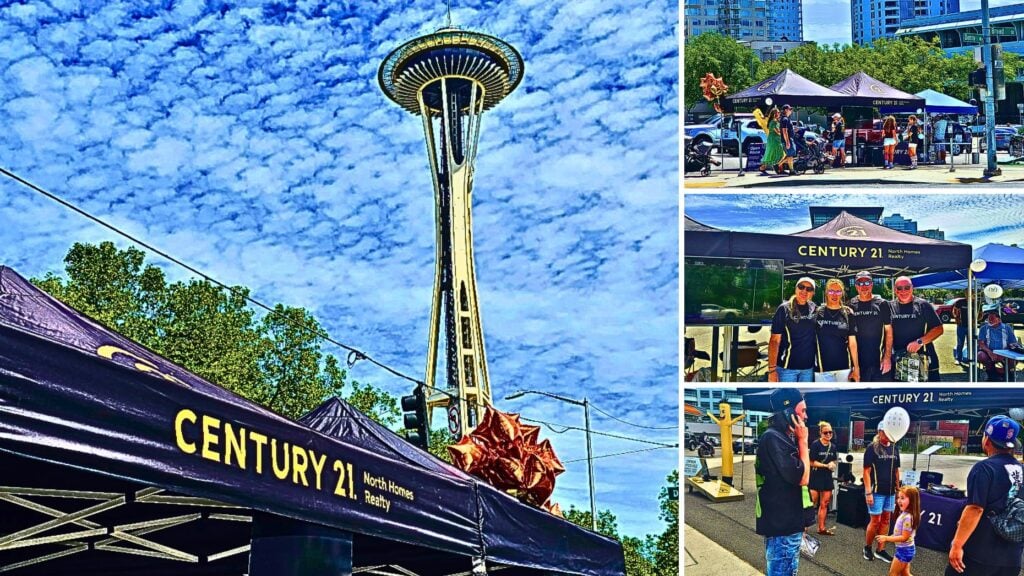
On June 19, the Century 21 North Homes tent was set up across the street from the Seattle Center, on a major walking route between two World Cup viewing parties where thousands of fans gathered for the U.S.-Australia game.
Over the course of 12 hours, agents handed out 750 branded stadium backpacks filled with agent information and maps of nearby viewing parties, held raffles for 65-inch televisions, tied balloons to children’s wrists and broadcast the game on a big screen for anyone who wanted to stop and watch.
“The energy was contagious,” the team later described it.
This wasn’t just a sponsorship. It was a brand that appeared where communities already existed, on their terms, and created engaging experiences.
turn your neighbors into fans
Sponsorships create visibility, but experiences create value.
One of my favorite examples is Century 21 BHJ Realty. The company partnered with a local YMCA to host a community soccer festival inspired by its relationship with MLS. More than 350 children attended, local businesses donated food, volunteers from across the region helped organize the event, and every child went home with a branded soccer ball.
One lucky family won tickets to watch local MLS club Colorado Rapids play in person.
It wasn’t the branding that made it successful. That’s what made them feel that way.
Hundreds of families have left with a positive and lasting impression because the intermediaries created something meaningful for the community. It’s very different from hanging a banner on a fence.
be selective and intentional
The request for local sponsorship is often overwhelming for brokerage leaders. We encourage you to look at these opportunities from a different perspective.
Instead of asking how big your logo is or how many people will see it, ask a different set of questions.
How do people interact with us? What kind of experience can you create? What will they remember afterwards?
That’s exactly the question Century 21 North Homes answered with its Seattle pop-up. They asked what they could build that would make fans actually want to stop by and built a 12-hour activation around that answer. It’s a place to watch a game, a reason for kids to grab balloons, and a backpack worth storing.
The soccer tournament gave them that moment. That experience became theirs.
Build relationships, not just leads
One of the biggest mistakes when it comes to sponsorships is treating it like a lead generation strategy when it’s actually an opening. They create access. Its true value is determined by what you do with it.
This is my guidance. It’s about attending, participating, and being present.
If you sponsor a school event, be present and hand out prizes. If it’s a walk-a-thon, walk with the participants. If it’s a youth sport, spend time on the sidelines meeting your family.
We are trying to facilitate that on a national level as well. Through MLS partnerships, intermediaries on the network can bring teams to games, and many agencies are making it more than just a perk. Some use it as an office cultural event or a night out to foster friendships outside the four walls of the brokerage firm.
Some people use it as a recruiting event. It’s a relaxed way for either of you to get to know your prospective agent before discussing any differences.
The most powerful opportunities are those that agents actually want to be involved in. Because that’s where real connections are made.
The event is not the goal
Sponsorships are often treated as a one-day initiative, when in reality they are just a starting point.
Please promote your participation on social media in advance. Help introduce organizers and volunteers and build momentum for your event.
Then continue talking. Each time you become a sponsor, a list remains. These include families who entered the lottery, neighbors who left their contact information in tents, and potential agents who came as candidates for recruitment. This list is your path to important relationship-building opportunities.
Build simple, multi-touch follow-ups, such as sending a thank you note within a day or two after the event and checking in a few weeks later, completely unrelated to real estate.
It’s the difference between a connection and a connection, and it’s the difference between a sponsorship that ends when the tent collapses and one that continues to make money for months on end.
Think of it this way. Sponsorship is an investment, but relationships are profits.
Tori Keichinger is Vice President and Head of Marketing at Century 21. Connect with her on LinkedIn.
