


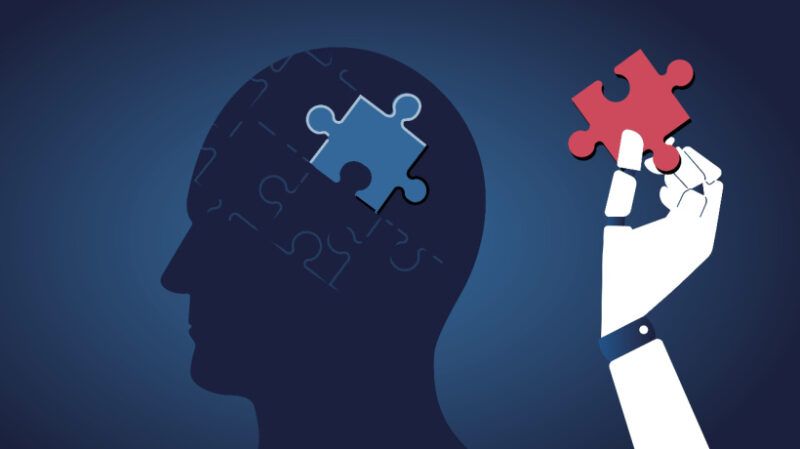
From fire hoses to tunnel vision: the risks behind AI in learning
Today, every executive understands one thing. It’s just too much information. The internet became a fire hydrant and never really stopped. Merciless. High pressure. It is impossible to absorb it completely. For years, organizations have responded by building learning systems (courses, academies, knowledge bases) to manage that overload. Then came AI. And suddenly the problem seemed solved. No more fire hoses. Just answer. clean. fast. I concentrated. But in solving one problem, we secretly created another problem: tunnel vision.
The shift no one is talking about
AI does more than just filter information. it will be narrower. Like a horse’s blindfold, it blocks out your surroundings and shows you a single, consistent path forward. No alternatives found. I don’t understand the trade-off. I don’t know what was left out. I know the answer. And it creates a powerful illusion:
That means the answer is complete. The logic must be sound. That the risks have already been taken into account.
However, AI cannot understand business context, regulatory risks, and operational nuances. It produces plausible output rather than responsible decisions.
Challenges leaders are beginning to feel
On the surface, AI appears to dramatically improve productivity.
Employees can get answers quickly. Work goes faster. Learning will be “on demand”.
But behind that efficiency lies an increasingly unpleasant reality. That means leaders have less visibility into how decisions are being formed.
Because AI doesn’t just support work. Affects judgment.
From overload to overconfidence
The fire hose posed one problem. It’s just that people didn’t have enough knowledge. AI introduces something subtler and more dangerous. People think they know enough.
Friction is reduced when output is structured, confident, and immediate. But it also reduces the number of questions asked. There will be fewer second opinions. There will be fewer challenges. There is less visible uncertainty. And that’s where the risks start to quietly escalate.
New risks: Faster decisions, harder to fix
In the days of fire hoses, the following problems were visible:
People asked too many questions. I’m late at work. The knowledge gap was clear.
In the AI era, risks are different.
Decisions are made faster. It seems to be more reliable. Errors surface later and often occur across multiple areas.
Also, decisions can be revisited at any time, but once an action is taken on a large scale, it is very difficult to reverse it. By the time a problem becomes visible, the operational, financial, or reputational costs of fixing it are significantly higher.
Why can’t traditional L&D solve this?
Most learning and development features are designed for firehose problems.
Organize your content. Conduct training. Completion of the track.
But AI has already circumvented that system. Employees are not waiting for courses. they are:
prompt. Generating. acting.
In real time. This means that the learning moment has moved from the classroom to the decision.
What shift leaders need to understand
This is not a technology issue. It’s a matter of ability. The question is no longer “Do our people have access to knowledge?” The question is, “Do our employees know how to use AI output without tunnel vision?” This is because AI does not eliminate the need for judgment. It raises the bar.
The false start most organizations make
Today, many organizations are responding to AI risks by:
Awareness session. tool training. Rapid engineering workshop.
These feel productive. They generate activity. But they completely miss the core issue.
Because the real challenge is not:
the:
When to trust. When should I try? when exiting the tunnel.
Without this clarity, organizations accelerate decision-making without increasing judgment.
What this means for business leaders
This is important if you are responsible for performance, risk, or growth. Because you are currently operating in an environment like this:
Decision-making is shaped by individual interactions between humans and AI. The speed is faster than the oversight. Confidence can mask imperfect thinking.
And the signals you relied on – questions, hesitations, visible arguments – are disappearing.
What this means for L&D leaders
This is the moment when L&D becomes more strategic or fades into the background. Because the role is no longer about managing the fire hose. It’s about making sure people know how to think beyond AI when it creates tunnel vision.
This means designing for:
Decision making under pressure. Contextual judgment. Risk awareness. Clear boundaries for AI use.
There is no further content. Greater ability.
real question
AI already exists within organizations. The fire hose has already been replaced. Tunnel vision is already happening. The only question that remains is: Do employees know what they can’t see and what to do about it?
final thoughts
Organizations that get this right aren’t the first to adopt AI. They are:
Build clarity before scale. Define decisions before automation. Treat AI as an enabler, not a shortcut.
Because at the end of the day, the risk is not in people using AI. The danger is that we become dependent on it without realizing how narrow our perspective has become.
A practical path forward
This is truly a challenge. It’s not how we use AI tools, but how we build the judgment, guardrails, and clarity needed to use them responsibly at scale. Because without that foundation, organizations simply won’t adopt AI. They accelerate risk.
