


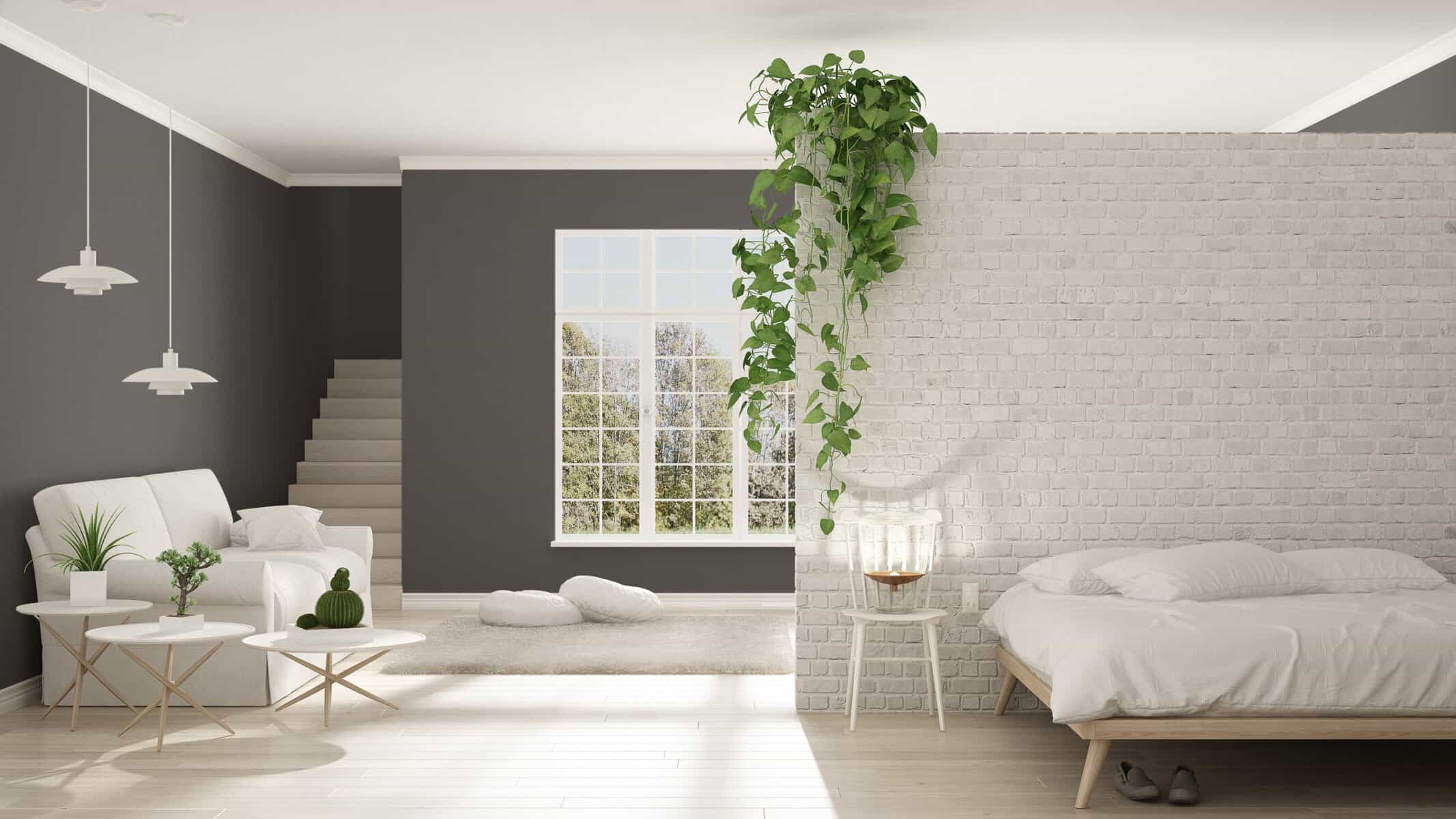
Painting brick can transform your home by breathing new life into everything from fireplaces to accent walls to exterior walls. Brick is beautiful in its natural state, but its natural tones don’t necessarily match every design style. Therefore, proper painting techniques can make a big difference.
To help you get it right, we’ve gathered tips from experts on the best ways to paint brick. Whether you’re painting a room in your home in Boston, Massachusetts, or renovating the interior of your home in Lincoln, Nebraska, this article provides practical advice for achieving a beautiful, long-lasting finish.
Start with proper preparation for lasting results
No matter which method you choose, painting brick begins with careful preparation for long-lasting results. Here are some top tips to set you up for success.
Clean the brick thoroughly. Remove dust, dirt, grease, and loose debris before starting to ensure proper adhesion and prevent uneven coverage. Use a primer made specifically for masonry surfaces: A high-quality masonry primer seals porous brick and creates a smooth base. This is especially important for solid paint finishes. Protect your surroundings: Use drop cloths and painter’s tape to cover doors, windows, moldings, and walkways.
overview
To help you compare options at a glance, we’ll detail the most common brick painting methods and how they differ in finish, breathability, and durability.
Method Breathability Finish Durability Paint Low Smooth and opaque Medium (may peel) Limewash High Chalky and matte High (fades beautifully) Stain High Natural Excellent (persistent) German smear High Textured and rough Excellent
1. Traditional method
The traditional method is a popular way to paint brick, especially if you want to dramatically brighten a fireplace, interior wall, or exterior wall. “This is ideal for achieving a clean, modern aesthetic, providing a more uniform finish and bolder changes than other methods,” says the team at 21st Century Painting & Roofing in Austin, Texas.
When it comes to application, the right materials and techniques are key. He is the chef and tastemaker of Living Life Beautiful, a digital lifestyle brand centered on food, design, and hospitality, and will debut a restaurant this fall. Jennifer Morne, who opens Fleur, recommends, “Use a breathable, high-quality masonry paint to prevent moisture trapping inside the brick, which can lead to delamination over time. Apply with a combination of roller and angled brush to match the lines and texture of the mortar, and finish with a weather-resistant sealer for a long-lasting effect.”
“We took this same approach to our painted brick fireplace renovation and applied it to the flagstone, turning a heavy, dark surface into a bright and inviting focal point,” Jennifer explains. “By reducing the weight of the stone, we achieved a true fireplace remodel that reflects more natural light while maintaining its texture and character.”
2. Lime wash
If you’re drawn to a brighter, worn-in look, limewash is a great alternative to traditional paint. Unlike standard masonry paints, limewash soaks into the brick rather than remaining on top, resulting in a more natural finish.
“This is a preferred option for homeowners who desire a softer, more natural look. It provides a timeless look and can be customized with one coat or multiple coats, depending on the desired coverage level and texture,” explains the team at 21st Century Painting and Roofing.
For Amanda of Amanda Katherine Interiors, limewash is a personal favorite for updating old brick while preserving its character. “I love brick and its texture, but when you buy an older home, you often need to update the color a little. If you have old brick and want to brighten it up, try lime wash. It’s one of my favorite products to ‘paint’ brick.” It is a natural product that allows the brick to breathe and makes it easier to work with. ” Amanda had her brick fireplace lime washed and years later, she still loves the results.
3. Brick staining
If you’re considering painting the brick texture without completely covering it, we recommend using stain as a more subtle and unique alternative. Instead of creating a hard, opaque layer, staining emphasizes the natural variations in the brick and allows the depth and dimension of the brick to shine through.
As Ryan Briggs, owner of Paragon Painting in Charleston, South Carolina, explains, the first step is deciding on the overall look you’re going for. “Using techniques like ‘brick staining’ and diluted paint washes allows the texture and changes in the brick to show through while updating the color.”
As a best practice, Ryan recommends doing a quick test first. “Brick absorbs coatings differently, so be sure to test your method on a small, hidden area first. This extra step allows you to fine-tune the exact look before committing to the entire surface.”
4. German Smear
German smear is one method of painting brick that provides a textured European look. Instead of painting or washing, this technique involves applying a layer of wet mortar to the surface and wiping it off in spots, creating a soft, irregular finish.
The result is a heavier, more dimensional look than lime wash or paint, giving it a distinctly rustic look. In some areas the original brickwork peeks through, while others are covered with a thicker coating, giving the surface a worn-in feel.
German smear is especially effective on fireplaces and exterior brick where the added texture makes a design statement.
Choose the right method for painting bricks
When considering the best way to paint brick, it’s worth thinking beyond the finish itself. Consider how each method will wear over time, maintenance, and how the final look will complement the rest of your home’s style. All things considered, the goal is to choose options that will continue to feel right for your home over time.
