


Nvidia CEO Jensen Huang admitted to having an affair with an alleged Chinese spy, and some are questioning the timing and agenda behind those allegations.
Before we start, let’s set the scale of Nvidia in today’s market.
First, it’s one of the “Magnificent 7” (Apple, Nvidia, Microsoft, Amazon, Alphabet, Meta, and Tesla) that make up over 33% of the market cap of the S&P 500.
https://t.co/rE1ZZu5srI
— Nat Wilson Turner (@natwilsonturner) November 11, 2026
And among the Mag 7, Nvidia makes up 18% of the total market cap.
https://t.co/9sijbkXOH4
— Nat Wilson Turner (@natwilsonturner) November 11, 2026
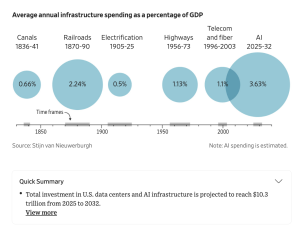
And then there’s this: “US Economy Increasingly Revolves Around Data Centers” and this:
Point being, Nvidia is a huge deal, and this scandal (among other factors) is having a massive impact on its valuation and potentially the broader US market and economy:
https://t.co/4nmWuireaP
— Nat Wilson Turner (@natwilsonturner) November 11, 2026
Let’s start with the chain of news stories that built into a corporate communications crisis of epic proportions (HT to B. of Moon of Alabama, from whom we’ll be hearing more in a moment).
Nvidia’s Biggest Southeast Asian Partner Dogged by China Chip Smuggling Questions Bloomberg December 22, 2025
As B. wrote, “(These allegations) did not make much sense as (Megaspeed) has always been free to rent out its GPU capacity to Chinese companies:”
A Mystery C.E.O. and Billions in Sales: Is China Buying Banned Nvidia Chips? NY Times, October 9, 2026
Megaspeed’s Malaysia subsidiary bought nearly $2 billion of Nvidia’s most advanced products; U.S. officials scrutinizing possible diversion to China.
Nvidia Chief Seen as Target of Chinese Spy Plot, NY Times, October 29, 2026
“A Chinese businesswoman who had a close relationship with Jensen Huang was found to be passing intelligence to Beijing. President Trump was briefed and took no action.”
China’s Top Spy Agency Recruited Woman Who Targeted Jensen Huang, New York Times, November 6, 2026 (The FT was given the same story)
“A memo that circulated among top policymakers in the Trump administration last spring cited intelligence that a Chinese businesswoman who had a close relationship with Nvidia’s chief executive was a spy for China’s Ministry of State Security, according to people briefed on the intelligence.”
Rubio Warned Officials About Nvidia Chief’s Entanglement With Chinese Spy November 8, 2026
“Secretary of State Marco Rubio oversaw the drafting of the highly classified memo this past spring warning top Trump administration officials that Nvidia’s chief executive, Jensen Huang, was in a close relationship with a Chinese spy, multiple people briefed on the matter said.”
All of this led to Jensen Huang sending the email below to all Nvidia employees on Sunday:
I owe my family and all of you an apology.
I was unfaithful to my wife. My actions hurt her and our children. There is no excuse for what I did. I am deeply sorry.
Throughout my life, my family has given me love and support. They deserve my honesty and loyalty. Instead, I let them down and damaged the life we built together. I take full responsibility for what I did and the hurt I caused, and I accept the criticism that comes with it.
To my wife and family: I love you. I know an apology cannot undo what I have done. I hope our family will heal and that, over time, I can earn back your trust.
To my colleagues at NVIDIA, including those I have worked alongside for decades, and to our board, partners, and shareholders around the world: you deserve better from me. Leading NVIDIA is the privilege of my life. My responsibility is to serve you and be worthy of your trust. I have fallen short of that responsibility. I am fully committed to NVIDIA and will work to earn back your confidence.
Regarding the national security concerns raised in news reports, NVIDIA’s Board of Directors has initiated an independent investigation. I support the investigation and will cooperate fully. I love our country and our company. I am committed to protecting NVIDIA and supporting America’s national security. I am proud and grateful to be an American.
My family bears no responsibility for my choices. I do. Please give them privacy.
Jensen
Followed by the following statement from the Nvidia Board of Directors:
The NVIDIA Board is initiating an independent investigation in light of recent reporting that founder and CEO Jensen Huang has been the target of a foreign intelligence effort.
A committee of independent directors, assisted by outside independent counsel, will oversee the investigation.
The Board prioritizes U.S. national and economic security, which is paramount to the interests of NVIDIA and its shareholders.
While the Board has no reason to believe that either national security or NVIDIA secrets were compromised, the Board’s inquiry will examine all available information.
Jensen fully supports the review and has committed to cooperating with it.
The Board has confidence in Jensen and his leadership team and will provide further updates as appropriate.
Tuesday, the Board followed up with news that it had “retained former acting U.S. Attorney of the Southern District of New York Joon H. Kim and his firm Wachtell, Lipton, Rosen & Katz to conduct a thorough and independent investigation.”
Nvidia will release its 3Q financial results next Tuesday, November 17, at 2 p.m. PT.
All of this led former BlackRock portfolio manager Ed Dowd to comment on the timing on the Coffee and a Mike podcast:
I mean, I think this has been out there for a while. And what I find interesting is the timing of it post-midterms. Right before the Nvidia earnings. It’s been known that Nvidia has been kind of a mafia mob boss when it comes to their chips. There’s been, you know, a lot of reports that they force all the buyers to buy exclusively from them because they give financing.
So, and Jensen is clearly because he wants…He’s about selling chips. He’s a pick-and-shovel guy for the AI gold rush. He wants to sell as many chips as possible. So, he’s pro open source. So, I think I think the deep state probably doesn’t want open source. They want to control the AI eventually, and they don’t want people to have access to cheaper models.
So, I think it’s very suspicious that this is all coming out now, in my humble opinion. I mean, I think it was there. And I’m not saying, you know, Jensen’s should get off the hook, but the timing, I’m always about timing, and the timing is interesting.
B. from Moon of Alabama also smells a rat:
I wonder what this ‘spy’ story is really about.
While Jensen Huang has technical knowledge, he is by far too remote from the myriad details of chip production to make him a valuable target for technology espionage. There is also no need to push him to argue against export restrictions to China. Nvidia, in its own interest, has always favored unlimited trade.
Alice Huang may well have had talks with Chinese authorities. (Not only in China do business people with ‘interesting’ business contacts in ‘enemy’ countries regularly have such chats.) But I find it unlikely that she was specifically tasked with targeting Jensen Huang. Her role is too elaborate.
The controlled leak about the relation between the two Huangs, and the completely unverifiable spy allegations on top of that indiscretion, likely have a different purpose.
A number of people dislike Jensen Huang, who is from Taiwan, for his ethnicity. They dislike his control over Nvidia and the sky-high prices of its chips. There are people, like Anthropic leader Dario Amodei, who argue for harsher restriction on Chinese open source AI models.
Removing Jensen Huang from Nvidia would probably tank the company at the center of the AI bubble. It is not a good motive. So the target may be Jensen Huang but he may not be the only one.
There are others, like Marco Rubio, for whom anything China is always the enemy. To leak this now may be designed to cripple Trump and/or to sabotage the upcoming Trump and Xi summit. Rubio wants to run in 2028 and the hawks he needs as support behind himself like such interventions.
Meanwhile Jensen Huang has admitted that he has had an intimate relation with Alice. For now he will stay at the top of his company while its board will investigate the ‘spy’ allegations.
Arnaud Bertand, a French China booster, points out that allegations are not proof:
So I looked into these allegations that Jensen had a romantic relationship with a Chinese spy and, ironically, the only actual proof we have that someone is whoring themselves out to spies in this story is the media – all the rest is unsubstantiated, just journalists repeating what anonymous US intelligence officials told them.
I’m not exaggerating, I actually read all the key articles on this:
1) New York Times on Oct 29, the initial “scoop”: https://t.co/E122RznhSa
Claim: Alice Huang is a Chinese intelligence asset funneling information to Beijing.
“Proof”: they were told so by “people briefed on the surveillance, who spoke on the condition of anonymity because the findings are drawn from classified intelligence…” That’s it. The Times even admits it couldn’t determine which agency monitored her, what she passed along, or its value to China. In other words, they didn’t verify the spy claim whatsoever.
2) Wall Street Journal on Oct 30: https://t.co/IbUk6yTpfv
Claim: The US, Singapore and Taiwan suspect Alice Huang is a Chinese intelligence source, with Singapore and Taiwan even putting physical surveillance teams on her.
“Proof”: “people familiar with the matter said.” That’s it. And the story actually fell apart within a day since Singapore’s Home Affairs ministry went on the record with a public rebuke of the WSJ article (https://t.co/JBXvZayuBF) stating that “neither the Singapore Government nor its officials said this,” and that “there were no such investigations conducted in respect of Alice Huang.” Taiwan declined to comment. In other words, the only government they invoked that went on the record denied the claim publicly.
3) New York Times again on Nov 6, the “MSS recruit” story: https://t.co/tu9Re4WdzM
Claim: Alice Huang was recruited by China’s Ministry of State Security (MSS) specifically to collect intelligence on Jensen.
“Proof”: “according to people briefed on U.S. surveillance.” That’s it. No new evidence, no document, no on-record source for the claim. Yet the headline states it as plain fact, without even an “allegedly.”
4) The Financial Times, quoted below, on Nov 7 with the romance claim: https://t.co/4y9n4wacRW
Claim: A US government memo says Jensen had a romantic relationship with Alice Huang.
“Proof”: “said people familiar with the memo.” That’s it: anonymous people describing a memo the FT never saw, which itself describes intelligence nobody can check.
—
It’s properly extraordinary when you think about it and you couldn’t make it up: she’s accused of being an intelligence asset, yet the only people we can actually watch behaving as intelligence assets – and admitting so in writing (since they openly cite spies as their only source) – are Western journalists.
Things are so bad that we’ve forgotten what actual journalism is: real journalists – when anonymous intelligence officials tell them something – would treat it as a lead to investigate, not as a fact. They’d ask: why are they leaking this, why now, and who benefits? And, most importantly, they’d try to verify the claims independently before printing them – which is supposed to be journalism 101 and wasn’t done here.
You’d think something would have been learned from the Iraq WMD story and the countless other examples of the press laundering intelligence claims into front-page “facts.” Apparently not – and it’s even the same newspaper, the New York Times, leading the charge.
— Arnaud Bertrand (@RnaudBertrand) November 8, 2026
Full text:
So I looked into these allegations that Jensen had a romantic relationship with a Chinese spy and, ironically, the only actual proof we have that someone is whoring themselves out to spies in this story is the media – all the rest is unsubstantiated, just journalists repeating what anonymous US intelligence officials told them. I’m not exaggerating, I actually read all the key articles on this:
1) New York Times on Oct 29, the initial “scoop”:
https://nytimes.com/2026/10/29/us/politics/nvidia-china-jensen-huang-trump.htmlClaim: Alice Huang is a Chinese intelligence asset funneling information to Beijing. “Proof”: they were told so by “people briefed on the surveillance, who spoke on the condition of anonymity because the findings are drawn from classified intelligence…” That’s it. The Times even admits it couldn’t determine which agency monitored her, what she passed along, or its value to China. In other words, they didn’t verify the spy claim whatsoever.
2) Wall Street Journal on Oct 30: https://wsj.com/tech/chinese-executive-close-to-nvidia-ceo-suspected-of-giving-china-information-798eb6a1Claim: The US, Singapore and Taiwan suspect Alice Huang is a Chinese intelligence source, with Singapore and Taiwan even putting physical surveillance teams on her. “Proof”: “people familiar with the matter said.” That’s it. And the story actually fell apart within a day since Singapore’s Home Affairs ministry went on the record with a public rebuke of the WSJ article (https://mha.gov.sg/media-room/newsroom/clarification-statement-on-wall-street-journals-article/) stating that “neither the Singapore Government nor its officials said this,” and that “there were no such investigations conducted in respect of Alice Huang.” Taiwan declined to comment. In other words, the only government they invoked that went on the record denied the claim publicly.
3) New York Times again on Nov 6, the “MSS recruit” story: https://nytimes.com/2026/11/06/us/politics/chinese-spy-agency-nvidia-jensen-huang.htmlClaim: Alice Huang was recruited by China’s Ministry of State Security (MSS) specifically to collect intelligence on Jensen. “Proof”: “according to people briefed on U.S. surveillance.” That’s it. No new evidence, no document, no on-record source for the claim. Yet the headline states it as plain fact, without even an “allegedly.” 4) The Financial Times, quoted below, on Nov 7 with the romance claim: https://ft.com/content/a55a2a22-4479-4f93-a445-6147a5c6d790Claim: A US government memo says Jensen had a romantic relationship with Alice Huang. “Proof”: “said people familiar with the memo.” That’s it: anonymous people describing a memo the FT never saw, which itself describes intelligence nobody can check. — It’s properly extraordinary when you think about it and you couldn’t make it up: she’s accused of being an intelligence asset, yet the only people we can actually watch behaving as intelligence assets – and admitting so in writing (since they openly cite spies as their only source) – are Western journalists. Things are so bad that we’ve forgotten what actual journalism is: real journalists – when anonymous intelligence officials tell them something – would treat it as a lead to investigate, not as a fact. They’d ask: why are they leaking this, why now, and who benefits? And, most importantly, they’d try to verify the claims independently before printing them – which is supposed to be journalism 101 and wasn’t done here. You’d think something would have been learned from the Iraq WMD story and the countless other examples of the press laundering intelligence claims into front-page “facts.” Apparently not – and it’s even the same newspaper, the New York Times, leading the charge.
He also points out another weakness in the story:
This is the biggest irony of the whole Alice Huang / Nvidia saga: the Chinese government actually doesn’t want Nvidia chips and is actively keeping them out of the country.
Last year it even ordered Alibaba and ByteDance to cancel their Nvidia orders (https://t.co/T4ZMand2BD) and sent customs teams to the ports to check every advanced chip coming in (https://t.co/UFPerK7Cgp).
And right now 600,000 Nvidia H200s are stuck in Hong Kong because Beijing won’t let them into the country (https://t.co/epimhGPQYq)👇
Nvidia also explicitly frames this as a threat to its business in its latest annual report to the SEC: “The Chinese government has encouraged customers to purchase from our China-based competitors and discouraged customers from purchasing, importing, or using our data center products” (https://t.co/TQVwWuix83).
Why does China do that? Because every Nvidia chip a Chinese company buys is one that Huawei or Cambricon doesn’t sell, and domestic chips can only catch up if people actually buy them (which means money for R&D, etc.).
Which means that the notion that Chinese intelligence was running honeytraps to get more Nvidia chips into China gets the whole thing exactly backwards.
In fact, it looks like Megaspeed – Alice Huang’s company – was a counter-reaction to official Chinese policy: a private sector workaround to these efforts by the Chinese government to curtail Nvidia.
As was widely reported – including by Western media – Megaspeed built data centers in Southeast Asia and rented their computing power to Alibaba, which the New York Times called “a backdoor way of getting access” to Nvidia chips (https://t.co/tu9Re4WdzM).
That is a backdoor not only – allegedly – around Washington’s export controls, but also around China’s own efforts to wean its companies off Nvidia.
I can’t believe the Chinese government was too thrilled about it: it’d make just about zero sense for it to run countless domestic measures to prevent Alibaba from using Nvidia chips, yet at the same time have its top spy agency help the same Alibaba get Nvidia chips through the back door in Southeast Asia 🤷
At the end of the day, as with all such stories, you always need to look at “cui bono?”: who benefits? Who benefitted is pretty clear:
– Nvidia itself: it’s in the business of selling chips so a customer willing to spend billions of dollars on chips in Southeast Asia is a godsend. Again, as they themselves state in their SEC filings, not being able to tap into Chinese demand would have “a material and adverse impact on our business” (https://t.co/TQVwWuix83).
– Chinese companies like Alibaba: facts are, 1) Chinese chips haven’t yet caught up, 2) Chinese chip companies’ production capabilities are still limited and 3) Chinese tech firms’ historical tech stack runs on Nvidia’s CUDA ecosystem, and rewriting years of code for Huawei chips is painful. Renting Nvidia chips in Southeast Asia is the easy way to stay competitive and serve customer demand in the meantime.
– The US, according to core members of the Trump administration: back in July last year, US Commerce Secretary Howard Lutnick explained that the point of letting Nvidia sell more chips to China was to get Chinese developers “addicted to the American technology stack” (https://t.co/WpaKkS6gOG).
Who does NOT benefit, according to official Chinese policy, is the Chinese state, which has made tech self-reliance one of its foremost priorities.
Which means that, to believe the spy story, you have to believe that a person – Alice Huang – was effectively a spy paid by her own government while simultaneously sabotaging its tech self-reliance drive, which it has spent years and trillions of dollars on – pretty senseless.
Stranger things have happened, I guess, but it doesn’t pass the smell test.
And there is another absolutely major contradiction in the media story. According to a Financial Times article published yesterday (https://t.co/7q1UEaUR4y), “a person who knows [Alice Huang] said they had been asked by MSS for information about her earlier this year after news emerged that Singapore was investigating the company in relation to chip-smuggling allegations. The agency wanted to find out more information about Huang, including the nature of her business and connections, the person said.”
Which raises a damn obvious question: if she were indeed an MSS asset, why on earth would the MSS need to ask the people around her who she was and the nature of her business?
It’s a complete contradiction with the spy story – but very much not a contradiction with what I described above: a private businesswoman running a workaround to Beijing’s own policy, which the Chinese security apparatus would naturally want to look into.
Especially since, around about the same time, Shanghai police detained her business partner, reportedly her husband, in a stock manipulation case (https://t.co/KXimvioTTd): also coherent with Chinese authorities looking into her network, and much harder to square with her being a prized MSS asset.
And, to top it all, there is – to this day – not a shred of evidence that’s been published that she is, in fact, a Chinese spy: just anonymous intelligence officials, repeated by journalists who never verified it, as I detailed here (https://t.co/loSwtoVrqr) and here (https://t.co/fIWGMIF3Cr) with one of the key FT journalists on this story actually admitting that he has no idea what evidence US intelligence actually has.
So the claim went to print without anyone seeing the evidence, without anyone being able to check it, and without anyone knowing whether it even exists.
And given everything above, from Beijing blocking the very chips she was supposedly recruited to help get into China, to the MSS asking around about her, to her partner being detained in Shanghai, my bet is that the evidence doesn’t exist at all. If anything, everything we can check points the other way.
— Arnaud Bertrand (@RnaudBertrand) November 11, 2026
Brian Berletic also has some thoughts:
🇺🇸🇨🇳 On the US-Nvidia Political Circus
▪️An actual, real spy investigation would neither be leaked to major Western propaganda platforms (who work directly with intelligence agencies to shape narratives in the first place) nor be reported by them until the investigation was concluded and actions already taken;
▪️Instead, “leaks” like this are used to organize deliberate political circus meant to manipulate the public, pressure China in this case, and possibly even pressure or seize control of aspects of Nvidia’s operations by targeting its senior leadership;
▪️There is something revealing here regarding the US corporate oligarchy using its power to command/control and pressure individual corporations – not to take actions to serve the American people’s best interests, but to serve the collective greed of the larger corporate oligarchy itself (always at the American people’s expense), while “fighting Communist China” who is “evil” specifically because it commands and controls corporations to actually serve the best interests of the people;
— Brian Berletic (@BrianJBerletic) November 11, 2026
Meanwhile, the story keeps building.
Here are the “four jaw-dropping revelations ” (per Gary Marcus) that dropped Monday and Tuesday:
Commerce Dept. Chip Inquiry Was Halted After Nvidia Intervention New York Times, November 9, 2026
An investigation into Megaspeed, a Singapore company that was buying advanced Nvidia A.I. chips, was transferred to the Justice Department after a top Nvidia executive reached out to Commerce Department officials.
From MIT prof Yasheng Huang
One difficulty for Jensen is having to explain his insistence to sell to Megaspeed when there was a huge backlog of orders for his chips. He could have sold his chips to these customers easily and as lucratively rather than getting himself into this complicated situation.
— Yasheng Huang 黄亚生 (@YashengHuang) November 9, 2026
A fascinating 4-minute clip from the @dwarkesh_sp interview with Jensen Huang in April 2026.
Asked why he’s so keen to sell GPU chips to China, Huang is evasive, defensive, deflective, and irrational, going off on bizarre tangents and insults — and refusing to answer the key question.
— Geoffrey Miller (@gmiller) November 9, 2026
From former NSC Senior Director for China & State Dep China Coordinator Julian Gewirtz:
Jensen Huang reportedly instructed his team at Nvidia “never to think about” planning for a Taiwan contingency.
Despite the fact that their business is reliant on TSMC.
The Jensen-Megaspeed mess really puts these incredible — and barely-noticed — details from Stephen Witt’s The Thinking Machine in a new light:
Huang refuses to consider the impact on his global business if China were to blockade or invade Taiwan, despite the regular threats emanating from Beijing to do just that. “To my great surprise, Nvidia had done no contingency planning for this eventuality,” Witt writes.
He quotes Deb Shoquist, Nvidia’s executive vice-president of operations: “If something happens to Taiwan and TSMC, the ramifications are so large it’s almost like asking me what I’d do if California fell into the ocean.” Huang had instructed her “never to think about this question.”
—from my @nybooks essay earlier this year on Nvidia and American policy toward China: https://t.co/xfn5RqtKy3
—more thoughts from me today: https://t.co/lQG6IFcdwh
— Julian Gewirtz (@JulianGewirtz) November 9, 2026
Full text:
Jensen Huang reportedly instructed his team at Nvidia “never to think about” planning for a Taiwan contingency.
Despite the fact that their business is reliant on TSMC.
The Jensen-Megaspeed mess really puts these incredible — and barely-noticed — details from Stephen Witt’s The Thinking Machine in a new light:
Huang refuses to consider the impact on his global business if China were to blockade or invade Taiwan, despite the regular threats emanating from Beijing to do just that. “To my great surprise, Nvidia had done no contingency planning for this eventuality,” Witt writes.
He quotes Deb Shoquist, Nvidia’s executive vice-president of operations: “If something happens to Taiwan and TSMC, the ramifications are so large it’s almost like asking me what I’d do if California fell into the ocean.” Huang had instructed her “never to think about this question.”
We’ll come back to Gewirtz in a moment, but first there was yet another “jaw-dropper” in the NYT yesterday:
Despite Denial, Trump Was Told on Trip to China About Spying on Nvidia Leader
President Trump was told aboard Air Force One in May en route to China that the United States had obtained sensitive intelligence showing that Nvidia’s chief executive was in a relationship with a woman believed to be a Chinese spy, people with knowledge of the matter said.
The message was delivered by Marco Rubio, his secretary of state and national security adviser, shortly before the Nvidia leader, Jensen Huang, joined the presidential trip to Beijing at Mr. Trump’s invitation. It marked at least the second time in seven months that the president had been told of intelligence about Mr. Huang’s involvement with the woman.
The existence of the previously unreported update given to Mr. Trump contradicts the president’s assertion on Monday that he had not known at the time of the trip about Mr. Huang’s relationship with the woman, who U.S. officials had concluded was working for China’s Ministry of State Security.
Hmmm, I wonder who leaked this story to the Times? And if my suspicions are well-founded, what does Marco Rubio gain from (maybe) blowing up the Trump administration’s uneasy trade truce with China?
And just one more:
🚨 BREAKING: Shareholders SUE Nvidia and Jensen Huang over alleged concealment of national security risks. Main allegations & my opinion:
“Defendants made false and/or misleading statements and/or failed to disclose that:
(1) Jensen Huang had an affair with a suspected Chinese spy, who also has a role at a company called Megaspeed, which is suspected of helping China evade export controls;
(2) as such, Nvidia’s statements about its relationship with Megaspeed were materially false and misleading at all relevant times;
(3) the foregoing raised concerns in the national security community about Nvidia and, if revealed, presented a material risk to the Company’s reputation and business prospects; and
(4) as a result, Defendants’ public statements were materially false and/or misleading at all relevant times.”
👉 My opinion: because of the personal nature of the affair and the legal implications it triggered (the investigation into the extent of the harm is still pending), Jensen will probably have to resign.
👉 More in my newsletter. Join 103,000+ subscribers below.
— Luiza Jarovsky, PhD (@LuizaJarovsky) November 10, 2026
And as for the implications of all this for US/China relations, let’s refer to China hawk Julian Gewirtz’ Substack “Paper Tiger” (guess who that is):
As Trump prepares to meet with Xi again in less than two weeks, the timing of these explosive revelations could significantly constrain one of the most influential voices who has shaped Trump’s more accommodating line on China, as well as the administration’s broader approach to AI.
Asked on Sunday whether he should have acted on the warning, Trump replied, “No, I don’t think so.” As journalists and Congress investigate this mess, there are many major questions that need answers:
Why did Trump choose not to act on the warning about the relationship, and what, if anything, did the rest of his administration do?
When did Commerce learn of the intelligence about Alice Huang, and what happened to chip shipments to Megaspeed after that? (Chris McGuire argues on X, “Commerce could have blocked chip shipments to Megaspeed the moment it found out that it was run by a Chinese spy, but it did not.”)
Will Trump raise the spy scandal directly with Xi in Shenzhen?
What will be the result of Nvidia’s investigation of its revered founder and CEO?
Will Jensen Huang lose Trump’s ear — and will that affect the course of Trump’s China policy even more than new Democratic majorities in both Houses of Congress?
It’s worth remembering that Huang wasn’t on the original list for Trump’s trip to Beijing in May. The president invited him at the last minute, and Huang caught up with Air Force One on a refueling stop in Anchorage. Now three Republican House committee chairs have asked Huang to brief them behind closed doors on November 18 — just as the APEC leaders’ meeting opens in Shenzhen.
On Sunday, a reporter asked Trump whether he would bring Huang along on his next trip to Asia. Trump replied, “I don’t know, but I’d certainly take him.”
Veteran reporter (one might even call him a “China hand”) Nury Vittachi comments on the sudden change in tone in Taiwanese media coverage of Nvidia and Jensen Huang:
BOING! Taiwan’s pro-Washington media has made a spectacular backflip to join the CIA-led campaign to replace Nvidia’s Jensen Huang with a China-hostile leader.
With breathtaking speed, the Chinese island’s media outlets have switched from excessive hero worship of the Nvidia chief (“Jensanity”) to harshly demonizing him—keeping rigidly in line with the narrative pushed by the US intelligence community through evidence-free “honeypot espionage” allegations published in the New York Times.
.
SMASHING A CHAIR OVER YOUR HEAD
Jensen Huang was a “tyrant” boss who told a staff member: “I will smash this chair over your head,” said a highly critical report in Taiwan’s Mirror Media on Monday. “He admitted to tormenting his employees.”
Sanlih E-Television, a Taiwan media group closely associated with the highly unpopular Washington-allied DPP government, reported that Huang would “smash his fist” on the table, “yell at subordinates” and “frequently reprimanded them harshly in public”.
As well has his love affair, “his extremely strict ‘workplace tyrant’ persona has also been exposed,” the news outlet added. “Huang admitted that he would rather ‘torture’ employees to unleash their potential than easily dismiss them.”
.
COMMON AS DIRT
Taiwan residents, who are far more intelligent than politicians and journalists think, are astonished by the switch, since having a mistress is de rigueur for top local businessmen, and table-thumping bosses are common as dirt.
The DPP has served Washington since its inception. While the CIA spin-off known as the NED always claims to promote democracy in general, it openly worked in Taiwan to put the US-aligned DPP in power. (This was admitted by Kenneth Wollack of the NED’s IRI division in a 2004 speech.)
The switch from praising locally born Jensen Huang to demonizing him shows Washington how obedient they are.
“Besides parroting US intel’s ‘spy mistress’ allegations, Taiwan DPP party media are now running pieces trashing Jensen Huang as ‘a bad boss’,” said Paul Huang, Research Fellow at Taiwan Public Opinion Foundation, in a post on X.
“Previously TW govt & state media always portrayed Jensen hagiographically, a ‘pride’ of TW given his root and Nvidia chip biz with TW.”
Jensen Huang has repeatedly called for a better relationship between the US and China – triggering a campaign to have him replaced with someone more pro-conflict.
The US is desperate to win the AI race, but the world’s richest country is worried by the creativity of the hardworking Chinese nerd community.
.
.
— Nury Vittachi (@NuryVittachi) November 11, 2026
Mo Bitar had a theory about how this all happened, and his seems to point to a Congressional Democrat rather than Rubio:
October 29th, the first story. November 3rd, the election. November 5th, Congress asks for a closed door briefing. November 6th, somebody hands the New York Times that classified memo. November 8th, the email and Nvidia reports earnings on the 17th. That’s not how news breaks. That’s how somebody releases it.
…
Here’s what I think happened. The people in Washington who wanted to stop selling chips to China lost that fight the day the president took his 25%. So they leaked the memo instead.
And they tried everything else first. The GAIN AI Act, the AI Overwatch Act, angry letters to the Commerce Secretary, and an invitation to testify before the Senate that Jensen simply declined. Bills take years, but a sex scandal takes one news cycle. And now the loudest voice in America for selling chips to China is a guy who had an affair with an alleged Chinese spy.
…
And it worked. This week, Elizabeth Warren said, “We must pass bipartisan legislation to keep our advanced AI technology out of China’s hands.” And nobody in Washington is going to stand next to Jensen and argue.
The people who want to control AI lost every vote, every bill, and every meeting at the White House. And they won anyway with one memo about where Jensen’s been putting his d**k.
And this tweet names specific congressional names:
The Real Play Behind Jensen Huang’s “Spy” Scandal: A Classic DC Two-for-One
Don’t let the “Chinese spy” tabloid drama fool you. The real story behind Jensen Huang’s affair scandal may have less to do with espionage than with pure Washington politics. US China hawks may be trying to pull off a classic “two birds, one stone” play.
First, they want to kneecap Jensen’s influence in DC. Huang has successfully lobbied the Trump administration to ease export controls on high-end AI chips like the H200, a move that has drawn strong opposition from China hawks in both parties. Linking his affair to an executive at a firm suspected of chip smuggling offers a convenient way to undermine his credibility, raise questions about whether he could be compromised, and put pressure on the White House to tighten the screws on chip exports again.
Second, they’re pushing the “Chinese spies are everywhere” narrative to stir up security panic. Spinning a personal affair and a business compliance dispute into a “Chinese spy” story—without publicly presenting hard evidence—plays straight into Western fears. It smears China’s image while giving Congress political ammunition to push for harsher tech restrictions and tighter controls on cross-border talent and business exchanges.
Look at the timing—it’s hard not to raise questions. US intelligence reportedly knew about the matter more than a year ago, and Trump had reportedly been briefed on the intelligence concerns. Yet the story only broke in the press on October 29—just days before the midterms and weeks ahead of Trump’s planned Asia trip, with Huang’s participation in the delegation still under discussion. The timing, followed by Huang’s November 8 statement, inevitably raises questions about why the information surfaced when it did. That “sit on it, then drop it at a politically convenient moment” pattern looks very much like classic DC selective leaking.
Look at who’s leading the charge: Brian Mast @RepBrianMast, John Moolenaar @RepMoolenaar
, and Rick Crawford @RepRickCrawford
—the Republican chairmen of the House Foreign Affairs, China, and Intelligence committees—who just demanded a closed-door briefing from Huang. Meanwhile, Democratic Senator Elizabeth Warren @SenWarren has separately challenged Nvidia over its China-related chip exports. All four are longtime critics of Huang’s China chip sales and Big Tech’s lobbying power.
Forget the spy thriller narrative and look at what Jensen Huang’s opponents in Washington may actually be trying to achieve. With the midterms now behind them and Democrats set to take control of Congress in the next session, the real tug-of-war over AI regulation and China chip policy between Trump and the incoming Democratic-led Congress is just getting started. #JensenHuang #Nvidia #Geopolitics #Bigtech #China $NVDA
— 观察者网 (@realGuancha) November 11, 2026
Full text:
The Real Play Behind Jensen Huang’s “Spy” Scandal: A Classic DC Two-for-One
Don’t let the “Chinese spy” tabloid drama fool you. The real story behind Jensen Huang’s affair scandal may have less to do with espionage than with pure Washington politics. US China hawks may be trying to pull off a classic “two birds, one stone” play.
First, they want to kneecap Jensen’s influence in DC. Huang has successfully lobbied the Trump administration to ease export controls on high-end AI chips like the H200, a move that has drawn strong opposition from China hawks in both parties. Linking his affair to an executive at a firm suspected of chip smuggling offers a convenient way to undermine his credibility, raise questions about whether he could be compromised, and put pressure on the White House to tighten the screws on chip exports again.
Second, they’re pushing the “Chinese spies are everywhere” narrative to stir up security panic. Spinning a personal affair and a business compliance dispute into a “Chinese spy” story—without publicly presenting hard evidence—plays straight into Western fears. It smears China’s image while giving Congress political ammunition to push for harsher tech restrictions and tighter controls on cross-border talent and business exchanges.
Look at the timing—it’s hard not to raise questions. US intelligence reportedly knew about the matter more than a year ago, and Trump had reportedly been briefed on the intelligence concerns. Yet the story only broke in the press on October 29—just days before the midterms and weeks ahead of Trump’s planned Asia trip, with Huang’s participation in the delegation still under discussion. The timing, followed by Huang’s November 8 statement, inevitably raises questions about why the information surfaced when it did. That “sit on it, then drop it at a politically convenient moment” pattern looks very much like classic DC selective leaking.
Look at who’s leading the charge: Brian Mast, John Moolenaar, and Rick Crawford
—the Republican chairmen of the House Foreign Affairs, China, and Intelligence committees—who just demanded a closed-door briefing from Huang. Meanwhile, Democratic Senator Elizabeth Warren has separately challenged Nvidia over its China-related chip exports. All four are longtime critics of Huang’s China chip sales and Big Tech’s lobbying power.
Forget the spy thriller narrative and look at what Jensen Huang’s opponents in Washington may actually be trying to achieve. With the midterms now behind them and Democrats set to take control of Congress in the next session, the real tug-of-war over AI regulation and China chip policy between Trump and the incoming Democratic-led Congress is just getting started.
All of this is a huge win for China hawks who can now tie Nvidia to the unpopular Trump and tie Trump to the now-tainted Nvidia CEO Jensen Huang.
I’m curious what the big money players think of this and if any of them were involved in pushing this story, which, as B. pointed out at Moon of Alabama, was basically known in late 2025 — the non-salacious parts anyhow, because there is huge money at stake here and a major Nvidia share price dive could go a long way toward popping the AI bubble.
Also, given that Trump getting his butt kicked by China in the trade wars was one of the most disastrous events of his first term, who is pushing a renewal of conflict with the Middle Kingdom, and how do they expect to benefit?
Related Posts
