


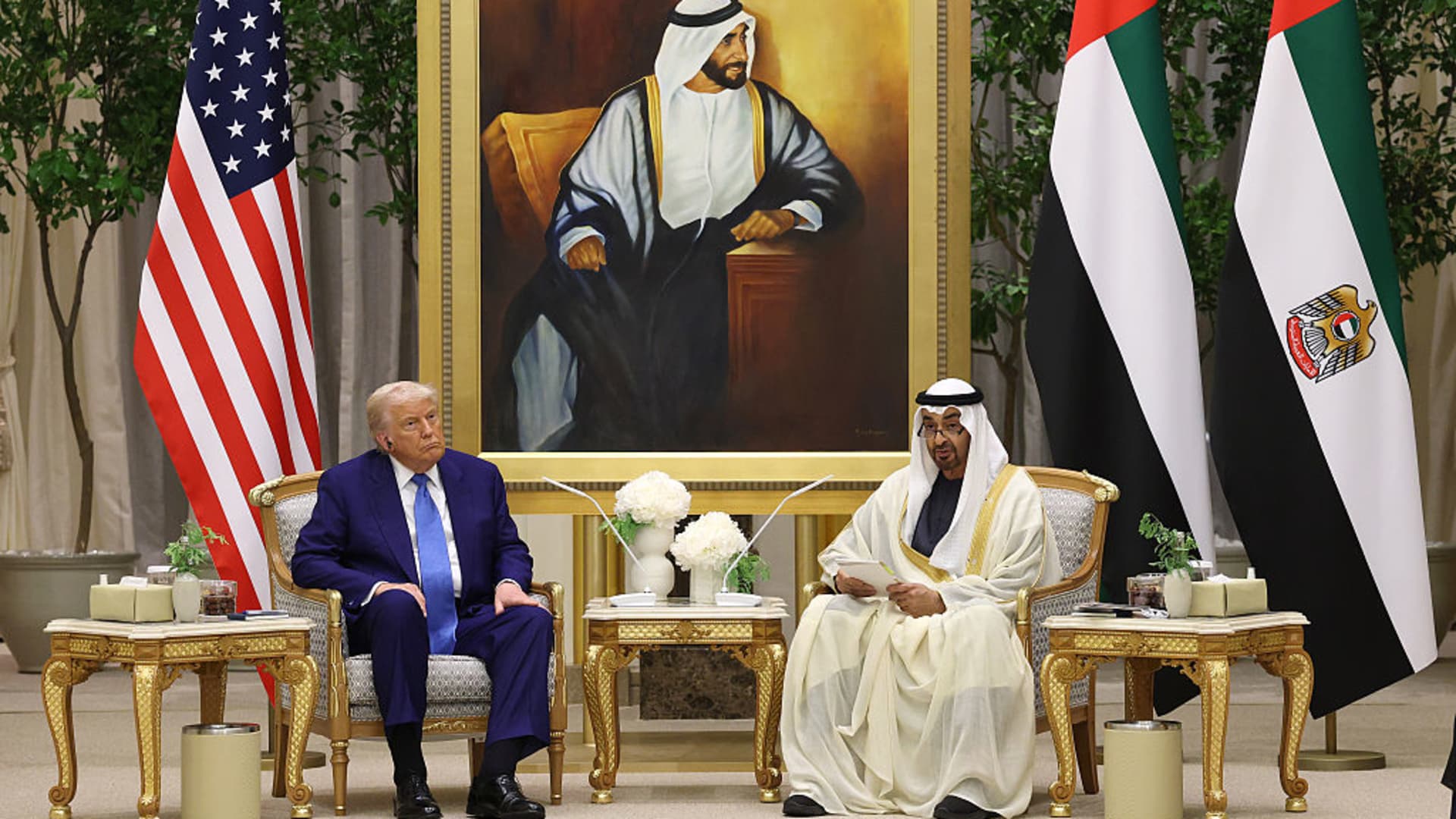
The White House is considering providing a financial lifeline to the United Arab Emirates, a White House official told CNBC, as the U.S. war with Iran wreaks havoc on the Gulf states’ economies.
The official, speaking on condition of anonymity to discuss private plans, said the UAE has not formally requested a currency swap line and no plans are currently being developed. Still, the government is still considering it, according to the person familiar with the matter. Such a move would provide dollar liquidity to the oil-rich UAE, but could be politically unstable for the administration as American consumers struggle with soaring prices at home.
The UAE and other Persian Gulf countries have been hit hard by the war between the US and Iran. The Iranian government has launched a large number of missiles at US regional allies, damaging economic infrastructure. Iran’s blockade of the Strait of Hormuz also largely halted oil exports, which the UAE relies on for cash flow.
Read more CNBC’s political coverage
The UAE has been a particularly close ally of the Trump administration and has been instrumental in making advances to Washington since Trump returned to the White House. The country pledged to invest more than $1 trillion in the United States last year. Gulf leaders are also reportedly involved in President Donald Trump’s family business.
President Trump was asked directly on CNBC’s “Squawk Box” on Tuesday whether a currency swap was being considered, and appeared to say he was ready to help the UAE.
“If we can help them, we will,” the president said. “This was a good country. A good ally of ours.”
A White House official said President Trump views the UAE as a key ally of the United States and is open to assistance, but cautioned that the UAE exchange was still “under consideration.”
Even if the administration were willing to provide support, the final decision on providing swap lines rests with the Federal Reserve.
Offering swap lines to the UAE would be an unusual expansion, as swap lines have historically been limited to major central banks and systemically important markets.
The prospect of a swap line between the United States and the UAE first emerged on the sidelines of a World Bank-IMF meeting in Washington last week, when U.S. Treasury officials asked some Gulf allies what it would take to rebuild their economies after the end of the Iran war, the official said. The UAE later raised the possibility of a currency swap but did not make a formal request, the Wall Street Journal first reported.
The newspaper also reported that the UAE warned that if it runs out of dollars, it may have to use the Chinese yuan for oil sales and other transactions, threatening the dollar’s dominance in the oil market.
But the possibility of a currency swap line carries political risks for President Trump. While American consumers swallow higher prices, American voters may see it as a bailout for foreign countries and wealthy countries.
—CNBC’s Jeff Cox contributed to this report.
Never miss the most trusted news moments in business news when you choose CNBC as your preferred source on Google.
Source link
