


For more than a century, lead smelters and other factories in downtown Omaha, Nebraska, spewed toxic dust into the city, contaminating the soil and causing lead poisoning. The U.S. Environmental Protection Agency and the city of Omaha have been working for decades to clean it up.
But in 2019, the EPA acknowledged that the plan may not be enough to protect children, and the Environmental Protection Agency is reexamining potential locations for expanded cleanups, which could result in more residential yards being remediated.
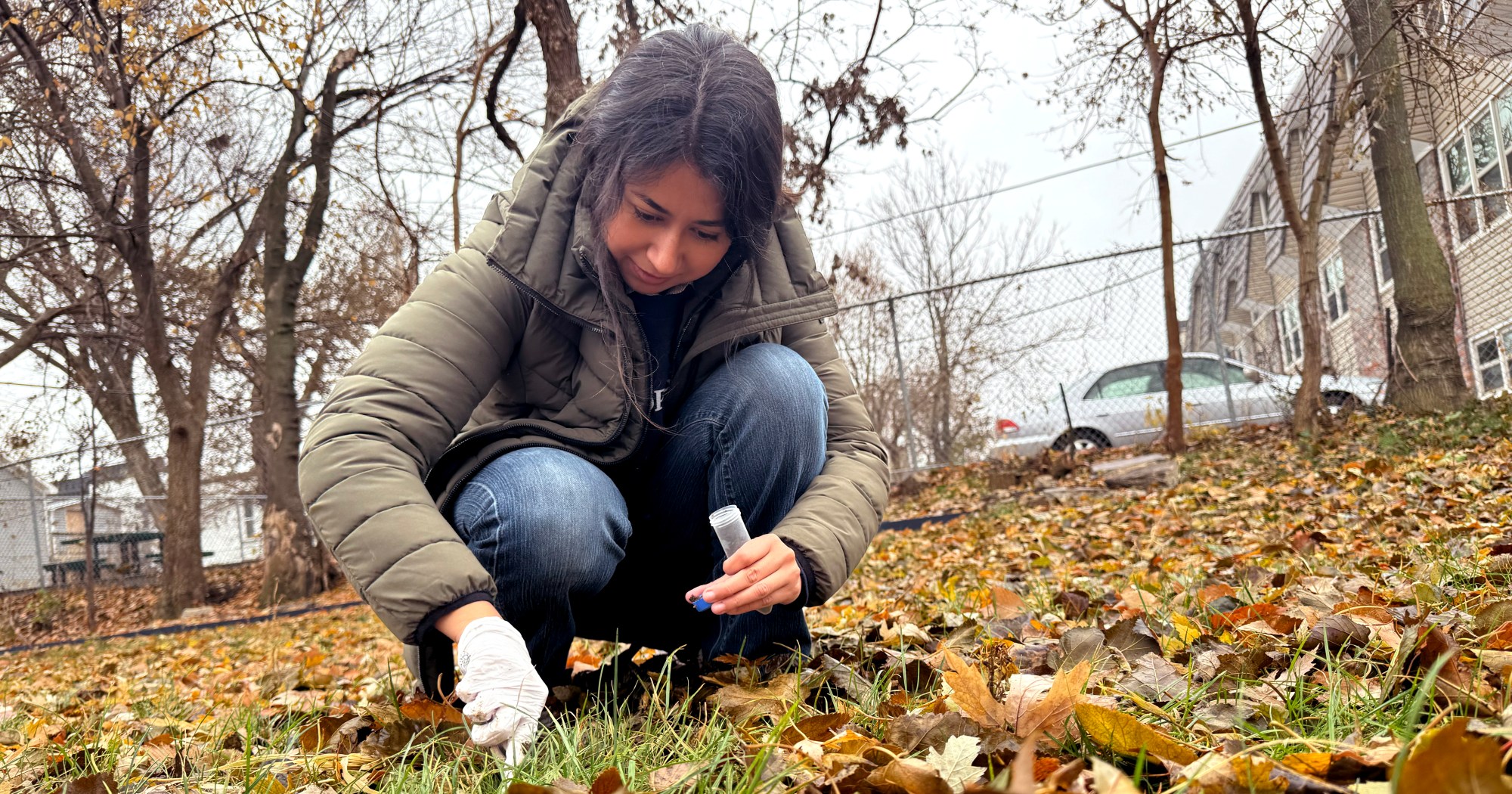
Journalists from the Flatwater Free Press and ProPublica teamed up to report on how well the cleanup was progressing. This included collecting soil samples from more than 600 yards in and around the affected area, known as the Superfund site. Many people we met along the way said they had never heard of the Superfund site and had no idea they could be at risk from lead exposure. They had lots of questions about how to stay safe.
So we consulted experts and got the following answers:
We test soil for lead around Omaha, Nebraska, focusing on homes just outside of federally designated cleanup zones. If you live in Council Bluffs, Iowa. Carter Lake, Iowa. Or if you live north of Bellevue, Nebraska and are interested in testing your soil, please fill out our sign-up form. If someone in your household has elevated blood lead levels, please contact reporter Chris Bowling. [email protected] Share your experience.
1. What is lead poisoning?
Lead poisoning occurs when lead, a toxic metal that has been used in paint, gasoline, and plumbing for decades, is ingested and accumulates in the body, causing problems such as developmental delays and behavioral problems in children. It’s a bigger concern for children because their bodies are still developing and they inhale or ingest more lead than adults. But lead poisoning can also affect adults, causing problems such as high blood pressure, memory loss, and joint and muscle pain.
2. What are considered dangerous lead levels?
There is no “safe” level of lead exposure. The Centers for Disease Control and Prevention defines a high level as 3.5 micrograms of lead per deciliter of blood.
If a child’s test shows lead levels above that, the Douglas County Health Department will schedule an environmental risk assessment. This includes home inspections and education on how to prevent exposure. The nonprofit National Center for Healthy Housing also has a good checklist on how to reduce lead exposure.
If you live on Superfund property, you can check your soil levels at the Omaha Lead Registry. EPA’s risk model predicts that, assuming no other exposures, soil lead levels below 100 parts per million can protect children from developing what the CDC currently considers high blood lead levels.
3. What do I need to know about Omaha’s main Superfund site?
Superfund sites are typically located north of Harrison Street, south of Reed Street, between 45th Street and the Missouri River. It was designated a Superfund site in 2003, and the federal government will oversee the cleanup of toxic waste there and try to make polluters pay for it.
The EPA drew boundaries for Superfund sites based on less than 5% of residential properties testing for soil lead levels above 400 parts per million, the level at which the government conducts cleanup. This is about the same size as a marble in a 10 pound bucket of soil. Those who live across the border may also have elevated soil levels and can contact the city if they are interested in testing and possible cleanup.
4. Is my soil contaminated with lead? How do I get my soil tested?
If you live on an Omaha Superfund site, you can check the Omaha Lead Registry to see the highest levels of lead found in your yard through soil sampling of all properties conducted by the EPA or the City of Omaha. You can request a detailed diagram of your home from the city that shows the average lead levels in different areas of your yard. These levels can change over time if you have peeling lead paint on your home or if you add, remove, or hide soil in your yard.
If your soil has not been tested and you live within or near the boundaries of a Superfund property, contact your city’s lead information office. Midwest Research Institute in Omaha also offers heavy metal screening for a fee through its Yard and Lawn Soil Testing Program.
5. Is there lead in my house? Does my water contain lead?
Homes built before 1978 may have lead paint. You can test for lead using a home kit approved by the EPA. A common sign that it may be leaded paint is when it lacks a geometric pattern, called “alligator ring” because it looks like scaly alligator skin.
East Omaha has extensive lead piping. You can use this map to see if your home is eligible for service line replacement. If you use a service line, you can request a free water test from the Metropolitan Utility District.
6. What is the city’s remediation process?
If lead levels in the soil are high enough to qualify for cleanup, the city will also evaluate the exterior of the home for lead-based paint. If your home has lead-based paint, a contractor hired by the city will remove the peeling paint and repaint the surface before remediating the soil.
The contractor will remediate the property by removing 4 inches of soil and testing. If you are still concerned about the level, continue digging to a depth of 1 foot and test. If contamination is still present, the contractor will lay down a barrier like landscaping fabric, then add mound and lay grass on top.
Following the city’s initiative, the Douglas County Health Department will also be asking property owners if they would like to have their homes evaluated for dust and receive free vacuum cleaners with filters to capture small particles.
We will report on the progress of this repair process. If you have a story or concern about the restoration process, please contact Flatwater Free Press.
7. Now that my garden has been restored, do I still need to worry? Will it be re-inspected?
EPA remediated the Omaha yard by digging up and replacing areas that had more than 400 parts per million of lead in the soil. EPA spokeswoman Kellen Ashford said most properties do not require resampling. However, the EPA and the City of Omaha resample properties on a case-by-case basis. One example is when a structure is demolished, exposing lead-contaminated soil or spreading lead paint dust.
Tens of thousands of properties with high levels of lead contamination but below the 400 ppm limit were not remediated. Flatwater Free Press and ProPublica are investigating how effective the cleanup was. If you have any questions or concerns, please contact Flatwater Free Press.
8. Do I need to worry if I am outside of a Superfund site?
The EPA is analyzing whether to expand the boundaries of the Omaha Superfund site, an investigation by Flatwater Free Press and ProPublica reveals.
The agency currently allows some remediation beyond the scope of Superfund sites. Testing and remediation will require EPA approval, but the process will be the same as for on-site real estate. If you live within Omaha city limits and are interested in off-site Superfund inspection and remediation, you can contact the City of Omaha.
9. Is it safe for me, my children, and my pets to be in a garden with contaminated soil?
Naudia McCracken, supervisor of Douglas County’s lead poisoning prevention program, said it’s safe to spend time outdoors on Superfund property if you manage the risks.
“Casual outdoor activities such as walking in the garden, sitting on the grass, or playing briefly on a covered surface do not in themselves represent a high-risk exposure scenario,” she said. “Of concern are repeated or prolonged contact with exposed contaminated soil, especially activities such as digging or playing that leave dirt on objects that go into the hands, face or mouth.”
McCracken said you can reduce the risk by keeping bare soil covered, washing your hands, taking off your shoes at the front door, cleaning dust indoors and, if possible, preventing pets from coming into contact with bare soil.
10. Is it safe to garden if the soil is contaminated?
Safe gardening starts with limiting contact with soil. The EPA recommends washing produce thoroughly, peeling root vegetables, and discarding the outer parts of leafy vegetables such as cabbage and lettuce. Wear gloves when doing yard work, wash your hands and remove shoes when entering your home.
Shannon Cuyler, community programs manager for urban farming group City Sprouts, said the best way to avoid pollution is to build raised beds. Placing a layer of landscape fabric under the 18-inch bed should direct roots away from the foundation soil. Mixing compost into the soil dilutes lead levels and improves soil health. She said it’s a good idea to retest the soil every year.
Crops absorb some lead, but usually in small amounts in well-maintained soils, the Washington and Kansas studies found.
With proper precautions, gardening can be a low-risk activity, Kyler said. Several resources, including Natural Resource Conservation Service, Nebraska Extension, and City Sprouts, can also help answer your questions.
11. Are there any concerns about lead contamination when blowing dust?
Gabriel Filippelli, executive director of Indiana University’s Institute for Environmental Resilience and a principal investigator for Superfund for decades, said lead is especially dangerous in small dust particles because they are easily absorbed by the body. Contaminated dust that is blown into the home or penetrated through the soil can settle on surfaces that children can reach, such as floors and tables.
12. Will lead disappear over time?
Lead generally does not degrade in the environment. When ingested or inhaled, some of it leaves the body naturally, but this depends on factors such as age and diet. Most of it is stored in the bones for decades and can be released into the bloodstream, especially during times of stress such as pregnancy.
Medical organizations such as the Mayo Clinic and the Cleveland Clinic write that the damage caused by leads cannot be reversed. But some recent research suggests that exercise, educational experiences like going to museums or taking art classes, and nutrients found in many fruits and vegetables may counteract some of the effects.
