


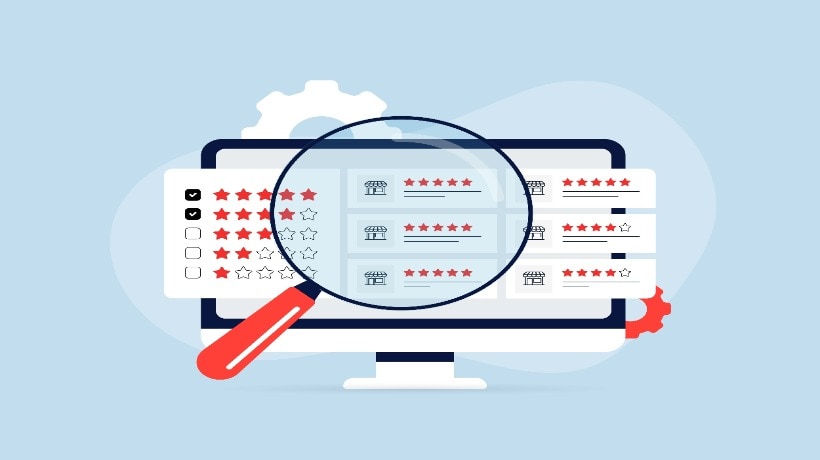
Social proof in online learning is broken
Here are some numbers worth noting. The global e-learning market is expected to exceed $400 billion by 2026. We have millions of students. Hundreds of thousands of courses. The entire industry is built on the promise of learning from anyone, anytime, anywhere. However, the trust system in online learning is almost completely broken down.
False testimony. Paid endorsement disguised as organic praise. Carefully selected screenshots that no one can verify. It is a marketing machine so sophisticated that students can hardly tell the difference between creators who truly change results and creators who simply learn to demonstrate authenticity. This is not a fringe issue. This is how most of the online course market actually operates today. And as the industry grows, things are getting worse, not better.
The actual cause of trust issues
The online education market did not begin fraudulently. In the early days, course creators were practitioners who built something and taught it. The audience was small, the community was close-knit, and word spread naturally. After that, the market expanded. As platforms have lowered the barrier to creation, the barrier to authenticity has lowered with them. Anyone can launch a course. Anyone can collect their experiences. Anyone could buy followers, hire a copywriter, and run ads that made a $97 course look like a life-changing investment. Games have become less about producing results and more about producing the appearance of results.
And what is the tool that made this possible? These were not hacks or workarounds. These were just a standard toolkit for online marketing. A landing page with carefully selected success stories. Email sequences built around social proof. An affiliate program where influencers earn commissions by recommending courses to their viewers, regardless of whether they actually take the course.
This is not necessarily designed to deceive. But the cumulative impact on students is the same. They land on your course page, but there’s no reliable way to assess whether what they’re reading is authentic.
Three forms of false trust in online learning
Understanding a problem means having a concrete understanding of how the problem actually works. There are three different mechanisms that have hollowed out trust in the online learning market.
Carefully selected customer testimonials
They are listed on every course page. A student who went from 0 to 6 digits. Someone who has finally cracked a skill they have struggled with for years. These stories may be true. It could also be the best 3 results out of 1,000 registrations. Creators choose them. Students have no way of knowing whether it represents a typical experience or a statistical outlier. Paid and Incentivized Recommendations
Affiliate marketing is a legal model if it is transparently disclosed. However, the world of online education is full of influencers, podcasters, and content creators who recommend courses to their viewers in exchange for commissions, often without personal experience with the product or proper disclosure. The audience trusts the person. The person is compensated for making recommendations. The course may be good or it may not be. There is no way to know what kind of relationships students actually have. fabricated social proof
This is more direct. This is a purchased review. Fake verified buyer accounts on third-party platforms. A review pod where course creators exchange 5-star ratings. Comments section seeded by affiliates. These practices are widespread enough that anyone who has spent time building in this field will understand exactly what I’m describing.
Together, these three mechanisms create a market where social proof (what students rely on most) is the least reliable signal available.
Why is this an industry-level crisis?
Some might argue that dishonest marketing is not unique to e-learning. And you would be right. But there are three reasons why this problem is particularly acute in our industry.
The cost of a wrong decision is high
Low-rated restaurants cost a night and a fair amount of money. Choosing the wrong course can cost you hundreds or even thousands of pounds, and in addition to the time you invest, there is also the opportunity cost of not pursuing the right path sooner. Unlike consumer products, the risk of inappropriate recommendations is real. The market is full of repeat offenders.
In most industries, businesses that continue to deceive their customers eventually lose out in the marketplace. Online education allows creators to build an audience, sell courses, get different results, and pivot to new branding, new products, and the same tactics. Feedback loops that normally punish misbehavior don’t work well here. The students became canaries.
When trust breaks down in the market, it is usually the most vulnerable who absorb the damage. Students who put their savings into courses that promised to teach them new career skills. Experts who invested in coaching programs because all their stories were life-changing. Dropout rates, refund requests, reddit threads full of warnings, this is what a lack of trust looks like when it hits real people.
What are the actual verification standards?
The question is not whether trust standards are needed for online learning. Apparently so. The question is, what does the standard actually require to be meaningful? There are some non-negotiable elements.
Verification at the student level rather than the creator level
The current system allows creators to submit testimonials. The actual standard requires that the reviewer be a verified student, someone who can be verified to be enrolled in and taking the course. No verification, no reviews. It’s that simple. Results over impressions
A review that says “Great content, highly recommended” tells you very little. A review system designed around actual results asks a variety of questions. Did this course deliver on its promise? Did you apply what you learned? Has it made a measurable difference to your skills, career, or business? This is really useful information for candidates. Independence from creators
Creators cannot choose, hide, or influence which reviews are displayed. The moment a creator controls their own review feed, the review system disappears. You have marketing tools. an aggregated score that means something
An average star rating of 8 reviews means very little. Composite scores derived from hundreds of verified student responses built on outcome dimensions, not just general satisfaction, begin to give real signals. This is the direction the industry needs to go.
There are platforms built in exactly this direction, including verified student reviews, real outcome signals, and composite scores that the creator cannot control or manipulate. The infrastructure for true trust standards already exists. The question is whether enough of the industry decides to adopt it.
The uncomfortable truth for course creators
This is what makes this conversation so difficult. Many creators reading this probably think they’re great. They offer real value. Their students can get real results. They do not engage in the above activities. And they’re probably right.
But they operate within a market shaped by bad actors. Their students arrive skeptical. The default assumption, especially among younger buyers who have had previous flames, is that testimonials will be curated and recommendations will be paid. The lack of trust created by bad actors affects everyone.
Therefore, verification standards are not a problem that only fraudsters can solve. This is a structural problem across the industry, including creators who are doing the right thing but still get dragged into the noise.
The creators who will survive the next decade of online education will not be the ones who are the best at marketing themselves. They let the work of actual students do the work. The change that’s coming isn’t a shift to better copywriting or more sophisticated sales pages. It’s about transparency, verification, and third-party accountability.
Creators who understand this and act on it early will have a huge advantage. Not just because it’s the right thing to do, but because when trust is scarce in a market, trust becomes the most valuable thing in that market.
What’s next for the industry?
The eLearning market currently has opportunities not available to most industries. It is still early enough to establish true trust systems and standards in online learning before the problem becomes irreversible. There are creators, platforms, and builders working on exactly this. We’re trying to create an infrastructure for verified results that will eventually become the default expectation for course purchases. But that requires the industry to take the issue seriously. Not as a PR issue. It’s not something that can be managed with better disclosure policies. as a structural problem that requires a structural solution.
What will happen in practice? It seems that validation is becoming a basic expectation rather than a premium feature. Creators appear to actively solicit and publish third-party review scores, much like restaurants publish hygiene ratings or financial advisors display certifications. It appears to be a platform that builds verification into the core product rather than treating it as an add-on. The market will get there eventually. The only question is how much damage the student absorbs during that time.
Share with
