


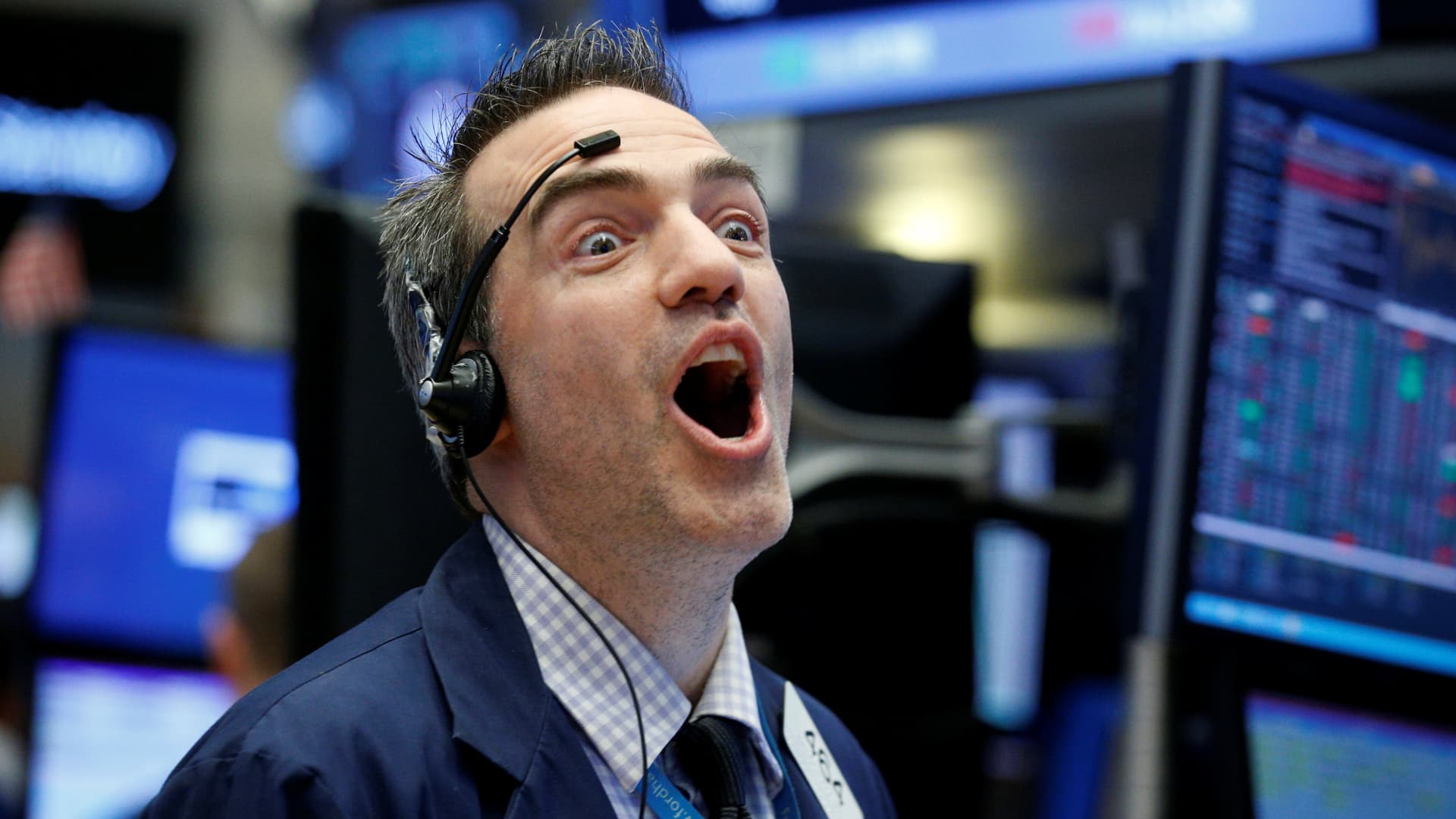
You could call it a comeback. Last week, stocks soared to record highs on hopes of a peace deal with Iran, with the S&P 500 index closing above 7,100 for the first time and the Nasdaq ending its longest 13-day rally since 1992. For the week, the broad-based S&P rose 4%, while the tech-heavy Nasdaq rose 6%. The Dow Jones Industrial Average rose 1.7%. This capped a rare and dramatic turnaround in stock prices. As Barclays strategist Venu Krishna noted in a note to clients, the S&P 500 went from near correction territory (down about 9% from its all-time high) to back to its all-time high in just 11 business days. This is the fastest move from a trough of more than 9% to record levels since at least 1990, he said. This rapid reversal was largely a result of investors pricing in an end to the Iran-US conflict. But Wall Street was also digesting strong bank earnings and a resurgence in the battered software sector. PEACE SIGN The week started like every Monday since the US attacked Iran in late February. Investors were trying to determine how the latest overseas trends would affect their portfolios. First, negotiations in Islamabad broke down last weekend, with President Donald Trump announcing a blockade of all maritime traffic in and out of Iranian ports. But none of that seemed to matter. The market became even more exciting. Stocks soared on Tuesday after new negotiations between Washington and Tehran and on Wednesday when President Trump told Fox Business the war was “very close to being over.” After that session, the president announced a ceasefire agreement between Israel and Lebanon, and the record reached another high. On Friday, Iran finally declared the Strait of Hormuz “fully open.” Jim Cramer said war-stricken stocks could rise further if there is more good news. He singled out home builders such as Home Depot, which soared 3.6% on Friday. Cramer said in a Friday morning meeting that he expects a rotation into war-stressed stocks to come. “The Fed now has an opportunity under Kevin Warsh to cut rates, so what we’re seeing is a return to a situation that has been very slow in the past,” he said. Software Returns Tattered software stocks were the portfolio’s biggest winners, with Microsoft, CrowdStrike and Salesforce the top three gainers. Software stocks have been hurt this year by concerns that artificial intelligence startups will eat into market share. The iShares Expanded Technology Software ETF (IGV) rose nearly 14%, recouping some of its losses, but remains down about 20% in 2026. Microsoft is up 14% since the beginning of the week. Management should allocate more of its available computing power to Microsoft Azure rather than Copilot, its struggling AI assistant. CrowdStrike rose 11.9%. The club isn’t worried about what AI means for the company. As AI models become more sophisticated, it should provide a boost for two cybersecurity companies, including Palo Alto Networks. Eventually, the company plans to exit Palo Alto and put some of its funds into CrowdStrike. Salesforce rose 10.4%. AI could hurt the company’s seat-based business model, but management is hopeful that it can turn things around. I would like to pay attention to CEO Marc Benioff’s comments during the May financial results announcement. Consumers are okay Despite market volatility due to the war throughout the final month of the quarter, bank earnings showed that consumers were in fairly good health. Performance in consumer businesses such as credit cards painted a cautiously positive picture. JPMorgan said consumer spending growth in the quarter exceeded the pace set for 2025. Credit card spending also increased by 9% year-on-year, but delinquency rates remained fairly stable. “Consumers and small businesses remain resilient,” JPMorgan Chief Financial Officer Jeremy Burnham said. Wells Fargo’s credit card business was also promising. CFO Mike Santomassimo said the number of new credit card account openings rose nearly 60% year over year. The company’s consumer banking and lending division’s first quarter revenue increased by 6.6.%. Before the war-induced spike in energy prices, CEO Charlie Scharf said gas accounted for 6% of total debit card spending and 4% of total credit spending. Each level rose by 1%. “Consumers are spending more than they were a year ago, including on gasoline, but other spending hasn’t slowed down,” Schaaf said. The rest of Wells’s report was lackluster. Although the bank’s earnings exceeded expectations, management disappointed the company with two consecutive quarters of lower earnings. Upon making this announcement, the club downgraded the stock’s rating to 2, equivalent to hold. Other large banks on Wall Street fared much better in the first quarter of 2026. The club that owns Goldman Sachs has outperformed peers such as Bank of America, JPMorgan and Morgan Stanley in both sales and bottom line profits. “That person [bank] “Goldman is the one I really want to own, because it actually had a really good quarter,” Cramer said Friday. We continue to love this stock for its profitable trading business. (See here for a complete list of Jim Cramer Charitable Trust stocks.) As a subscriber to Jim Cramer’s CNBC Investment Club, you will receive trade alerts before Jim makes a trade. Jim waits 45 minutes after sending a trade alert before buying or selling shares in his charitable trust. When Jim talks about stocks on CNBC TV, the above investment club information is subject to our Terms of Use and Privacy Policy, along with our disclaimer. It is based on your receipt of the information provided in connection with the Investment Club and no specific results or profits are guaranteed.
