


Russia cannot afford to undermine its credibility abroad, and President Putin’s ruling United Russia party cannot afford to undermine its credibility at home four months before the next poll. If Ukraine attacks Moscow’s Victory Day parade, it cannot afford to undermine its credibility at home by only symbolically retaliating or threatening overwhelming retaliation if it does nothing.
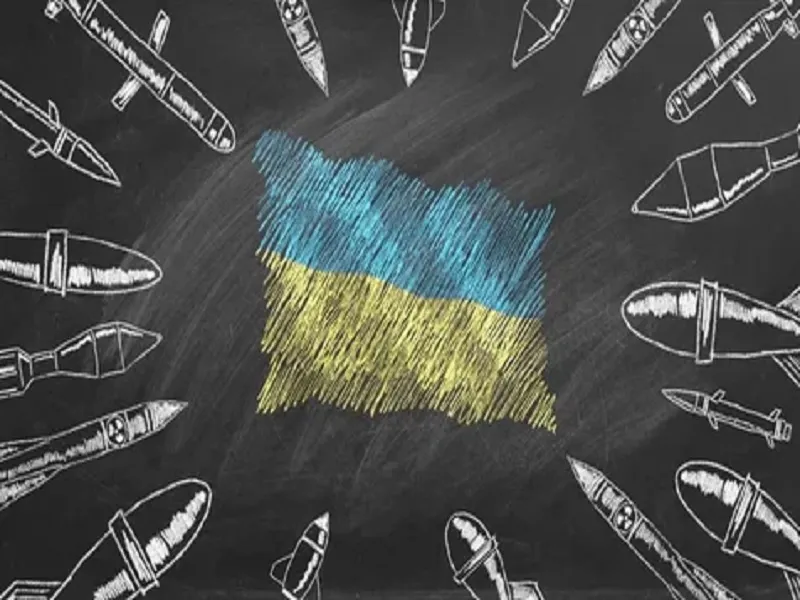
Russia’s Defense Ministry has warned local civilians and diplomatic staff in Kiev that it plans to launch a major retaliatory attack on the city center if Ukraine follows through on President Zelenskiy’s threat to attack Moscow’s Victory Day parade on May 9. Following this, Russia announced a ballistic missile test in Kamchatka from May 6th to 10th. Shortly after, the Russian Ministry of Foreign Affairs reiterated the Defense Ministry’s warning and made it known to the world.
This threat may not be a bluff for three consecutive reasons. The first is that Russia wants to prevent Ukraine from attacking Moscow’s Victory Day parade, for obvious reasons related to both optics and the safety of VIPs, and is therefore threatening overwhelming retaliation if it does so. The second reason is that Russia cannot threaten such a response without actually carrying it out if provoked. Failure to do so will irreparably damage its credibility and is likely to be followed by even bolder attacks.
And thirdly, Russia has finally shown that it is prepared to retaliate overwhelmingly against its decision-making center in Kiev, with additional threats identified by the Ministry of Foreign Affairs, if Ukraine carries out this high-profile provocation, as hard-line Kremlin factions have partially defeated moderates. To explain, President Putin has so far restrained his military out of belief in the “historic unity of Russians and Ukrainians” and concerns about an uncontrollable escalation spiral that could lead to World War III.
When President Trump returned and responded positively to Biden’s rejected proposal for dialogue to resolve the NATO-Russia proxy war in Ukraine, Putin and his fellow moderates dangled a resource-based strategic partnership to encourage commitment. The United States accepted such a partnership, but Russia rejected the required commitments presented as preconditions, and the United States rejected Russia’s own such requests and did not force Ukraine or NATO to comply either.
President Trump has refused to escalate the Ukraine conflict amid the impasse, but has given the go-ahead to roll back Russian influence around the world with the aim of forcing Putin to make a US-demanded compromise: freezing the conflict in exchange for sanctions relief without resolving the underlying issues. The policy, known informally as the “Neo-Reagan Doctrine,” has put pressure on Russia in at least 15 countries, undermining the credibility of moderates and prompting some, like President Vladimir Putin, to reconsider their views.
In the third Gulf War, Iran attacked U.S. military bases in the region without triggering an uncontrollable escalation spiral, but it persuaded President Putin to listen to Ukrainian hardliners who had called for a major attack on Kiev from the beginning. Public opinion, which will be crucial in the run-up to the next parliamentary elections in September, has long aligned with hardliners on this issue. Although Putin now appears to be conciliatory, it is only in retaliation for Ukraine’s attack on Moscow’s Victory Day parade.
Given these factors, it is unlikely that Russia is bluffing, in which case it would not only lose credibility abroad, but also the credibility of the ruling United Russia party in the eyes of voters four months before the next vote. There is already speculation that there will be a protest vote in favor of communist or nationalist opposition parties, which could prompt a range of reforms, but a mass protest vote based on hypothetical bluffs could usher in an era of uncertainty that Putin wants to avoid.
