


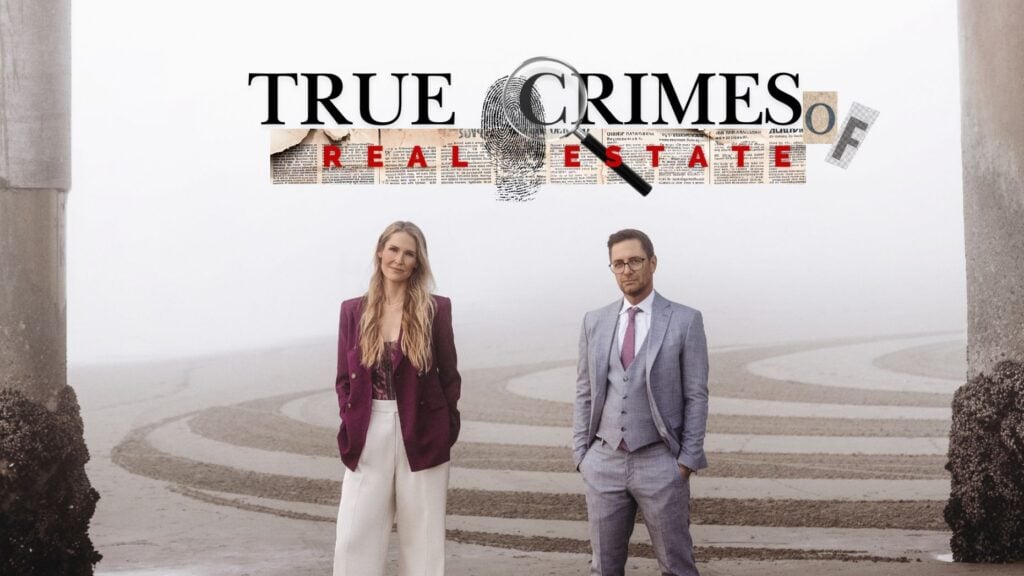
A California agent created three fake offers to prevent a luxury listing from expiring. Troy Palmquist and Summer Goralik examine how this scheme unraveled in the latest episode of “The Truth About Real Estate Crime.”
Sometimes, the biggest ethical violations don’t start with greed or even with intent. They start with fear.
When a newly licensed agent concocted three purchase offers to keep her listing from expiring, she meant no harm. She just wanted to keep the list. With the deadline approaching, she needed to buy more time by pinning her hopes on an extension to the listing agreement.
Listen to this week’s podcast, True Crime in Real Estate, above, to learn more about the $3 million luxury property and fake multiple offer scenario, and why the pressure, desperation, and panic of losing the property are never enough to justify crossing the ethical line.
Here are some of the most important points.
Technology has left its mark
Agents often underestimate how much forensic evidence exists within modern transaction systems. In this case, the rookie agent’s methods were exposed through transaction management records and document audit history.
The audit history shows when a document was created, who created it, who sent it for signature, when it was signed, and who signed it. The agent supervising this transaction confirmed that all documents and signatures were sent through the agent’s ZipForms account, which helped uncover the scheme.
Seller conducted its own due diligence
Consumers are more informed than ever, and in this week’s case, the seller became angry, then suspicious, and ultimately uncovered fraud by directly contacting the broker listed in the offer. They went back to the paperwork, called the broker, and discovered that the broker knew nothing about the listing.
Real estate transactions are built on trust, so as soon as a customer feels something doesn’t sit well with them, they start looking for answers on their own. Consistent transparency and honest communication are not just a professional obligation, they are the cornerstone of successful customer relationships.
The consequences and damages were not limited to failed sales.
In this case, both the broker, who knew nothing about the fraudulent activity, and the agent, who was aware of the fraudulent activity, experienced serious consequences. The seller sued the broker, and the broker ultimately paid a large settlement to resolve the dispute. The agent admitted wrongdoing and the judge revoked her license.
Even if an intermediary is not held liable by regulators, misconduct within a transaction can have significant legal, financial and reputational implications. Because agent violations directly impact both the agent’s credibility and the intermediary’s credibility, the damage goes beyond license revocations and legal settlements and undermines consumer confidence in everyone involved in the transaction.
Ironically, of course, the agent’s actions accomplished the exact opposite of her intentions. So, trying to save the list, she lost her career. Once a fabricated offer is discovered, its impact extends far beyond a failed deal, a reminder that short-term fixes often have long-term consequences, especially when built on deception.
Disclaimer: The information provided in this article is for general informational and educational purposes only and does not constitute legal advice. This discussion is primarily based on applicable laws, regulations and regulatory guidelines in the State of California, including those enforced by the California Department of Real Estate. Interpretations of laws and regulations vary by jurisdiction, so readers should consult a qualified attorney or their broker regarding how these issues apply to their particular situation or other states.
Troy Palmquist is the founder and president of HomeCode Advisors. Connect with him on LinkedIn.
Summer Goralik is a real estate compliance consultant and former CA DRE investigator in Huntington Beach, California. Connect with her on LinkedIn.
