


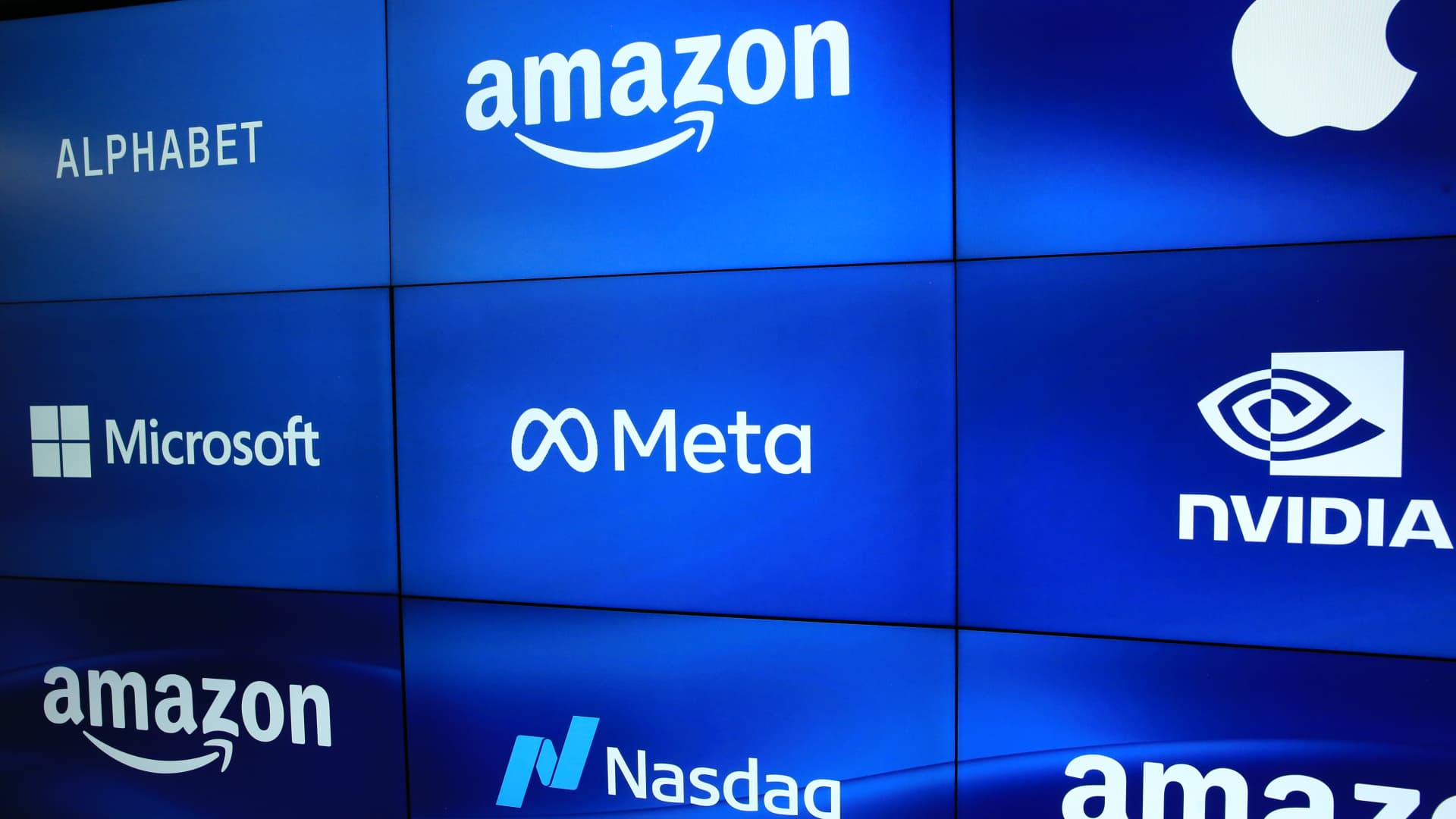
The Magnificent Seven have dominated the U.S. market for years, with a combined valuation of $21.7 trillion as of Tuesday’s close. But this number masks how much it lost in June. The group, which includes Microsoft, Nvidia, Alphabet, Apple, Meta, Tesla, and Amazon, has shed about $2 trillion in market capitalization as investors begin to reevaluate the investment case for these once-unbeatable giants. The Round Hill Magnificent Seven (MAGS), an exchange-traded fund that tracks these seven tech giants on an equal-weighted basis, fell 9% in June, the fund’s second worst month since its inception in 2023. The only month worse for the fund was March 2025, when it fell 10.5%. One reason behind the poor performance is that these companies, once desperate for huge cash flows, have become big spenders as they spend most of that cash on the artificial intelligence race. Torsten Slok, chief economist at Apollo Global Management, said free cash flow for at least four companies in the group (Meta, Alphabet, Microsoft and Amazon) fell sharply from a peak in 2024 to 2026. With AI spending expected to exceed $700 billion this year, the surge in capital spending on AI is raising concerns for investors who are accustomed to large share buybacks from these companies to cushion their investments. Gene Munster, managing partner at Deepwater Asset Management, told CNBC’s “Fast Money” last week that these companies are investing heavily in AI hardware because of growing confidence in its importance. Munster believes there is a focus on competent company leadership and an understanding of the long-term potential of AI investments, which means such investments can lead to accelerated revenue growth and improved returns on investment in the future. Mag 7 stocks under pressure All group stocks were in the red in June, with Microsoft down 17% for the month, its biggest monthly decline since December 2000. Microsoft recently told investors that rising memory prices could push capital spending to $190 billion in 2026. Tech giants’ overall profits are not evenly distributed. Amazon had the second biggest decline in the group at 12%, followed by Meta, which fell 11%. Apple’s stock price fell 7.3% during June. Alphabet, Nvidia, and Tesla fell 6%, 5.2%, and 3.5%, respectively. Still, some on Wall Street think the backlash has gone too far. In a sales commentary note on Monday, Bank of America remained bullish on hyperscalers such as Amazon and Alphabet, along with Oracle. However, Oracle is not a member of Mag 7. Semiconductors outperform MAGS The Mag7 rebound stands out especially against the semiconductor hype that has continued to soar over the past year. In the first half of this year, the iShares Semiconductor ETF (SOXX) rose 113%, while MAGS fell 2.5%. This disconnect shows that investors are rewarding the key parts of building AI, especially the people who make the chips, and penalizing those who pay for it.
