


A Democratic Senate candidate in Texas is trying to turn a key talking point of his Republican opponent against him. Attorney General Ken Paxton claims he is guilty of the same kind of voter fraud he has spent years trying to eradicate.
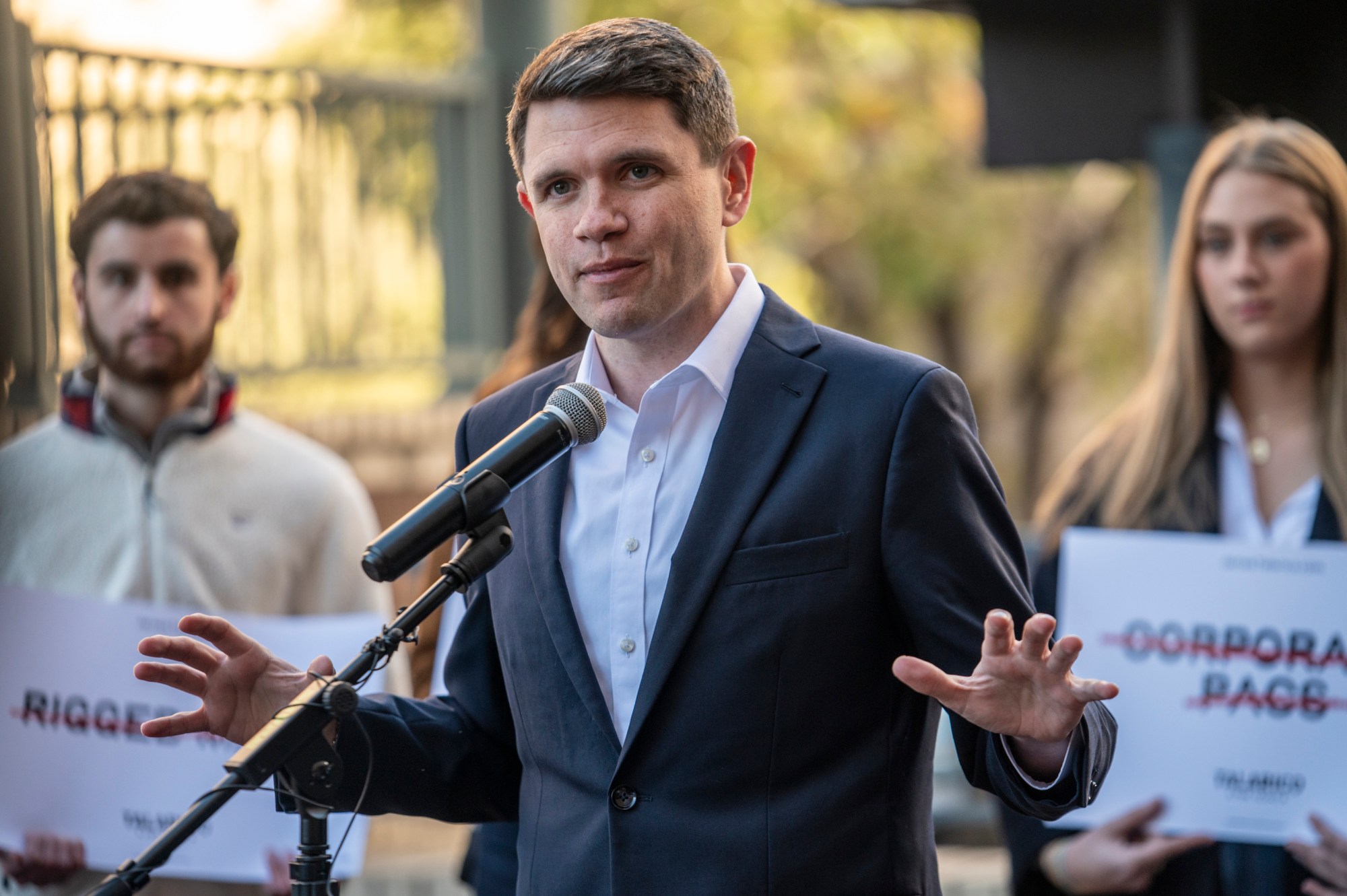
“As our state’s attorney general, Ken Paxton went on a witch hunt for voter fraud,” state Rep. James Talarico, who is challenging Paxton to replace Sen. John Cornyn, said at a campaign event in Houston. “As it turns out, he was voting fraudulently the whole time, illegally voting from the wrong address six times in a row.”
Talarico’s comments came after ProPublica and the Texas Tribune revealed that Paxton moved out of the home he shared with his wife, state Sen. Angela Paxton, in 2024 but continued to use that address to vote, including during the March Republican primary that defeated Cornyn. Three election experts told news outlets that Paxton may have violated state law.
Last week, the Collin County Democratic Party filed a complaint with the Texas Secretary of State, asking the office to investigate Paxton’s election fraud.
Paxton has repeatedly refused to answer questions from news outlets about voter registration and residency. On Tuesday, he held an unusual news conference touting the support of nearly two dozen sheriffs and attacking Talarico as soft on crime. Talarico denied the charges at his own press conference Wednesday, saying that as a member of Congress he voted for billions of dollars in funding for law enforcement.
When a Dallas Morning News political reporter asked Paxton why he voted in Collin County, the attorney general shook his head as a campaign assistant intervened.
“Today I’m just going to answer questions about law enforcement,” the aide said.
Mr. Paxton’s office and campaign did not respond to similar questions Thursday from ProPublica and the Tribune. He also did not respond to questions about Talarico’s comments.
Cal Jillson, a political science professor at Southern Methodist University, said the fact that Mr. Paxton has voted in six elections from an address that does not appear to be a residence supports long-standing charges by critics that he used public office for personal gain and may resonate with voters. This was a central theme in the Texas Legislature’s impeachment of Paxton on bribery and corruption charges in 2023. The state Senate voted to acquit Paxton.
“There were a series of legal challenges that he was able to escape, but voters are at least vaguely aware of that,” Jillson said. Jillson said the latest reports about his voting practices are “just another example of playing fast and loose with the law, which I have to be very familiar with as attorney general.”
Texas law allows voters to temporarily vote using a non-resident address as long as they intend to return home. Election lawyers told Newsroom that Paxton was unlikely to make such a claim given his acrimonious divorce in public. (Examples of reasons that may be considered legitimate include attending a university outside the area or military service.)
It is unclear what will happen to the complaint filed against Paxton.
State law requires the commissioner to “promptly” refer complaints to the attorney general if there is “reasonable cause to suspect that criminal activity has occurred.”
Secretary of State Jane Nelson’s last day in office was Friday, three days after the complaint was filed. Governor Greg Abbott has named one of his senior advisers, Robert Howden, to replace her. The office continues to refuse to answer questions from reporters, but Collin County Democratic Party Vice Chair Mary Higbe said the Secretary of State told her in an email Thursday that the complaint “is under review by one of its staff attorneys.”
The attorney general’s office did not respond to questions about whether it had received the complaint or whether it would hire a special prosecutor to investigate, given the matter concerns the attorney general himself.
John Taylor, a political science professor at the University of Texas at San Antonio, said the Republican-led state’s silence suggests it is trying to slow the investigation into Paxton. He said it’s difficult to reconcile the rhetoric from Paxton and the Secretary of State’s office that securing Texas’ elections is a top priority.
“You’re pushing the idea that you’re going to take a very tough stance on election fraud, and yet you have allegations that you don’t seem interested in pursuing,” Taylor said. “It’s like class hypocrisy.”
