


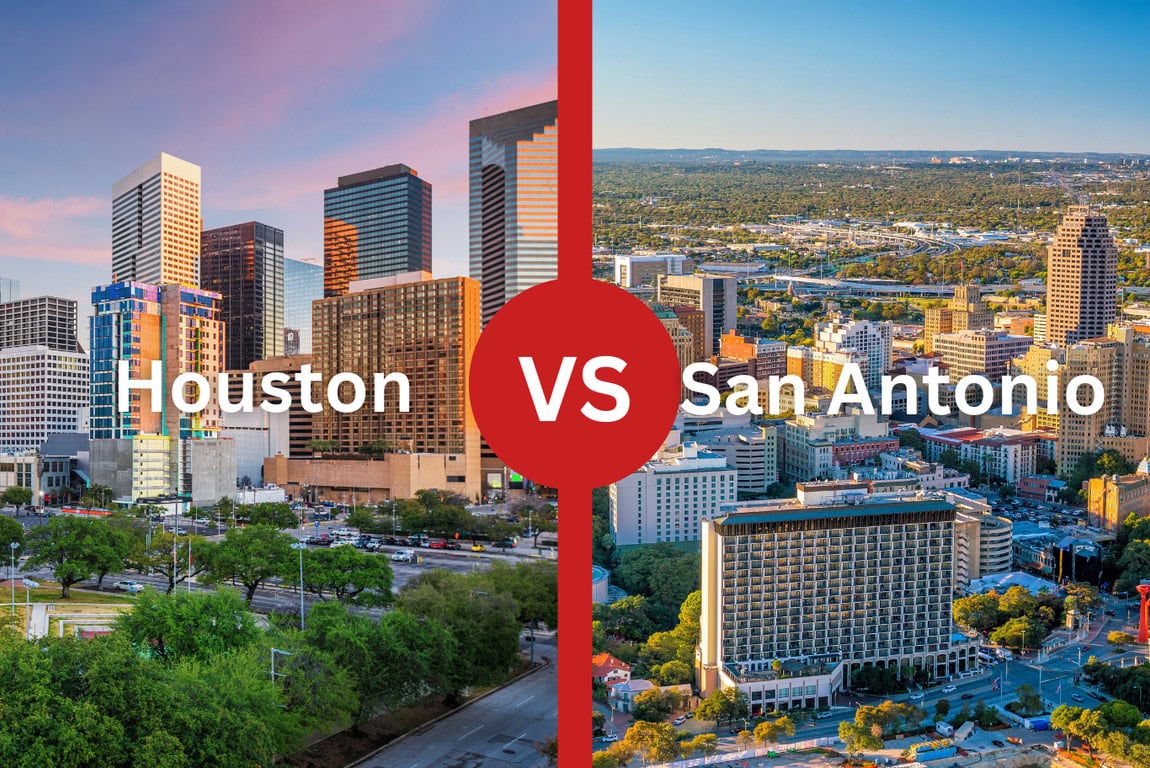
Considering a move to Texas? Choosing between a stylish apartment in Houston or a cozy home in San Antonio means choosing between two cities with unique perspectives on Lone Star living. I will. Houston impresses with its booming economy and urban energy, while San Antonio boasts historic buildings and a vibrant cultural heritage. Whether you’re drawn to Houston’s diverse industries or San Antonio’s iconic Tex-Mex scene depends on your lifestyle needs and preferences.
This article explores housing affordability, job market, and cultural highlights to help you find which Texas city feels most like home.
Houston vs. San Antonio Housing
Houston and San Antonio offer two very different housing experiences within the Lone Star State. From urban high-rises in Houston to historic homes in San Antonio, both markets are diverse enough to help you find your perfect fit. Compare costs, styles, and neighborhoods in each city.
houston housing
Houston’s housing market is as vast as the city itself, with everything from trendy condos downtown to sprawling homes in the suburbs. Neighborhoods like River Oaks and The Heights attract buyers looking for luxury and glamor, while areas like Katy and Sugar Land offer friendly communities with larger lots. Houston is known for its variety of housing styles, including modern buildings, historic homes, and even ranch-style properties.
Median home price: The median home price in Houston is approximately $347,250, providing buyers with a wide range of options at various price points. Average rental cost: Renting an apartment in Houston costs about $1,262 per month on average, with prices higher in areas like Downtown and Midtown.
san antonio housing
San Antonio’s housing market combines affordability with historic charm. San Antonio neighborhoods include Alamo Heights for luxury homes and Southtown for trendy city living. Buyers can find everything from historic properties to new construction in developing areas. San Antonio’s housing market caters to those seeking a combination of suburban and urban lifestyles at lower prices than Houston.
Cost of Living in Houston and San Antonio
The cost of living in Houston and San Antonio is affordable compared to other major U.S. cities, with Houston costing about 3% more overall. Key differences in utilities, groceries, and cost of living have a significant impact on the cost of living in these two Texas cities.
1. Utility
Utility bills in Houston are 13% higher than in San Antonio. This is due to the increased demand for air conditioning due to their large size and hot and humid climate. San Antonio’s drier climate and smaller population make energy costs more manageable and reduce the financial burden on utilities.
2. Groceries
Groceries in San Antonio are 5% cheaper than in Houston. Houston’s proximity to Gulf Coast shipping hubs increases convenience, but also slightly increases grocery prices. San Antonio benefits from its central location and efficient supply chain, which helps reduce grocery costs.
3. Transportation
Transportation costs are the same in both cities. Houston’s large layout and heavy traffic can increase commute times and fuel consumption, while San Antonio’s smaller size and less traffic congestion make commuting easier. However, both cities have similar costs for fuel, parking, and vehicle maintenance.
4. Healthcare
Healthcare costs in Houston are 12% higher than in San Antonio. Houston’s renowned medical institutions and specialty care drive up costs and offer world-class service at a premium. In contrast, San Antonio focuses on more affordable, community-based clinics and hospitals, making health care more accessible.
5. Lifestyle
The cost of living in Houston is 5% higher than San Antonio, reflecting its arts, dining, and sports scenes. San Antonio emphasizes cultural heritage and friendly activities, offering a richer lifestyle at a more affordable price.
Size and population of Houston and San Antonio: two giants of Texas
Houston and San Antonio are the two largest cities in Texas, each with unique characteristics influenced by their size and population. At 637 square miles, Houston is the largest city in Texas by area and is home to more than 2.3 million residents. San Antonio is slightly smaller at 465 square miles, but with a population of 1.4 million, it has a lower population density and a more relaxed atmosphere. Houston’s sprawl reflects a diverse economy and urban growth, while San Antonio balances urban development and historic charm within its small footprint.
Houston and San Antonio weather and climate
Although Houston’s climate and San Antonio’s climate share the warm, humid climate typical of Texas, there are subtle differences between the two climates. Houston’s proximity to the Gulf of Mexico makes it prone to heavy rains, tropical storms, and hurricanes, especially during the summer and fall. San Antonio is further inland, with less precipitation and less hurricanes, slightly hotter summers, and more pleasant winters. Both cities are warm year-round, making them appealing to those who prefer mild winters to snow and ice.
Houston and San Antonio job market
Houston: An energy and healthcare powerhouse
Houston’s economy is centered around the oil and gas industry and thrives on its reputation as the energy capital of the world. Companies like ExxonMobil and Schlumberger are driving significant job creation, and the city’s renowned Texas Medical Center is driving growth in healthcare and biotechnology. With an employment rate of 64%, a median household income of $63,000, and an average hourly wage of $30.54, Houston offers diverse opportunities across energy, healthcare, and technology. The rapidly expanding startup ecosystem is also attracting entrepreneurs and innovators, making it a versatile job market for a wide range of professionals.
San Antonio: Expanding Opportunities in Military, Medical and Tourism
San Antonio’s economy benefits from strong ties to the military, with Joint Base San Antonio being one of the area’s largest employers. The healthcare and biosciences industry is also a major contributor, backed by companies such as Baptist Health and HEB. With an employment rate of 62%, a median household income of $62,000, and an average hourly wage of $27.74, the city offers job opportunities commensurate with its low cost of living. Tourism also remains an important industry, attracting professionals to the hospitality and cultural sectors, while a budding technology scene is beginning to emerge.
Transportation in Houston and San Antonio
Houston: Increased dependence on cars and transportation
Houston’s transportation system is dominated by cars, as the city is spread out over a vast area. Public transportation is available, including Metrobus and light rail, which mainly serve the city center. While cycling is gaining traction, city infrastructure still cannot keep up with demand. Although a car is the most practical option for most residents, traffic congestion can be an issue during peak hours.
San Antonio: A car-centric city with a growing transportation system
San Antonio, like Houston, relies heavily on cars. VIA Metropolitan Transit operates the city’s bus network, serving major routes but not as comprehensive as in larger cities. Although bicycling and walking are common in areas such as downtown and the Pearl District, the city’s large spread means that cars are the primary mode of transportation for most residents.
Travel between Houston and San Antonio
Both Houston and San Antonio are major travel centers in Texas, offering comprehensive air, rail, and bus connections. Houston offers more international options due to its global business connections, while San Antonio focuses on regional and domestic travel.
Houston: George Bush Intercontinental Airport and William P. Hobby Airport offer a wide range of domestic and international flights. Amtrak’s Sunset Limited Route connects Houston to cities such as New Orleans and Los Angeles. Greyhound and Megabus service from downtown, and major highways like Interstate 10 and Interstate 45 provide convenient road transportation. Houston also has a growing cruise port with connections to Caribbean destinations. San Antonio: San Antonio International Airport focuses on domestic travel and has limited international flights. Amtrak’s Texas Eagle route provides rail connections to major U.S. cities, while Greyhound and Megabus serve travelers heading to regional destinations. The city is located along Interstate 35 and Interstate 10, making it the perfect starting point for a road trip across Texas and the Southwest.
Lifestyle and Activities in Houston and San Antonio
A day in the life of a Houstonian
Living in Houston is all about diversity and opportunity. A typical morning might include grabbing breakfast tacos from a local food truck or heading to a busy farmers market before diving into jobs in industries like energy, healthcare, and technology. In the evening, you can often dine at one of the city’s famous restaurants or enjoy live music at a local venue. Spend your weekends exploring the Museum District, watching sports, or kayaking on Buffalo Bayou.
Popular attractions in Houston:
Google Street View of Space Center Houston
Outdoor activities in Houston:
Google Street View of Bayou Greenways Trail
Houston attractions: Galleria for shopping Minute Maid Park for Astros games Menil Collection Downtown Aquarium Galleria Water Wall
A day in the life of a San Antonian
San Antonio is a city that combines historic charm with modern living. Start your morning with a breakfast plate of barbacoa and coffee from a local cafe, followed by a stroll along the River Walk. Work life is centered around industries such as tourism, healthcare, and military services. Evenings are often spent dining at Tex-Mex restaurants or attending community events. Spend your weekends visiting cultural attractions, enjoying the city’s parks, or visiting nearby Hill Country wineries.
Popular places to visit in San Antonio:
Google street view of the Alamo
Outdoor activities in San Antonio:
Google Street View of Government Canyon State Natural Area
San Antonio attractions: Tower of America San Antonio Botanical Gardens Natural Bridge Caverns SeaWorld San Antonio La Villita Historic Arts Village
Houston and San Antonio food and culture
Houston: Space City
Houston’s food scene is a testament to its cultural diversity, with cuisines from more than 70 countries available throughout the city. From Midtown’s Vietnamese pho to Areef’s Nigerian jollof rice, the city’s culinary landscape is a world tour in itself. Houston is also known for its barbecue and Tex-Mex cuisine, with brisket tacos and queso being the stars. Events like the Houston Livestock Show, Rodeo, and International Festival bring the city together and celebrate its cultural richness. Houston’s Museum District and street art scene reflect its thriving creative community, offering everything from classical art to contemporary installations.
San Antonio: Alamo City
San Antonio’s food and culture is deeply rooted in its history, blending Mexican and Texas traditions into a unique culinary identity. The city is famous for its fluffy tacos, tamales, and chili con carne, and you’ll find family-run taquerias serving authentic flavors alongside modern fusion restaurants. Events like Fiesta San Antonio and the Tamale Festival demonstrate the city’s love for its historical heritage and local food scene. In addition to being a culinary destination, the River Walk is also a cultural hub with live music, art fairs, and seasonal celebrations that highlight San Antonio’s unique charm.
Houston and San Antonio sports scene
Houston: City of Champions
Houston’s sports scene is characterized by its diverse offerings and passionate fan base. The Astros brought baseball glory to the city, and the Rockets have a passionate basketball following. The weekend is all about football, with the Texans drawing fans to NRG Stadium. Houston also boasts an active soccer scene with the Dynamos and Dash, reflecting the city’s multicultural spirit. With a history of hosting events such as the Super Bowl and the NCAA Final Four, Houston’s sports culture thrives on the big stage.
San Antonio: Basketball Center
San Antonio’s sports identity revolves around the city’s beloved NBA team, the Spurs, creating a tradition of excellence and community connection. AT&T Center is a sea of silver and black on game day, reflecting the city’s deep basketball pride. San Antonio also supports growing soccer fever with San Antonio FC and enjoys collegiate sporting events. Active residents enjoy recreational activities, and the city’s parks and nearby Hill Country provide space for biking, hiking, and golf.
