


Prove the value of your training with analytics and dashboards
In today’s dynamic learning environment, organizations are beginning to realize that training is more than just an expense. It’s an investment that drives performance, engagement, and business growth. But proving this value has always been a challenge. Learning management system (LMS) analytics and dashboards are transforming the way companies measure learning impact. Modern eLearning, powered by integrated data insights, is transforming training programs from perceived cost centers to measurable growth assets.
Whether you’re running corporate training, education programs, or partner enablement, data-driven learning via an LMS, training management system (TMS), or learning experience platform (LXP) is no longer an option. It’s essential.
Sponsored Content – Article continues below
Trending learning management systems (LMS)
From guessing to insight: The power of learning analytics
Traditional training approaches such as classroom-based instructor-led training (ILT) and early e-learning systems often lack visibility. Trainers could see attendance numbers, but they couldn’t see if learners were truly interested, understanding, or applying new skills. Today, modern LMS platforms generate data from every learner action, including course completion, module time, quiz scores, video participation, discussion activities, and even post-training applications. This data flows into a real-time analytics dashboard, providing a complete picture of the learning journey.
Analytics helps organizations take the guesswork out. You can answer specific questions rather than assuming the course will work.
Which courses have the highest completion rates? Which content formats engage learners the most: videos, quizzes, or live sessions? Which employees or departments showed improved performance after training? Where are learners dropping out and why?
These insights enable L&D teams to continually improve learning programs and ensure they invest resources where they will have the greatest impact.
Turn your LMS into a strategic tool
With its powerful analytics capabilities, an LMS does more than just provide training. It drives strategic decision making. Organizations can connect training outcomes to business KPIs such as sales growth, productivity, compliance, and employee retention.
For example, companies implementing a blended learning approach that combines online e-learning modules with live virtual instructor-led training (VILT) sessions can use analytics to see how digital learning complements classroom interactions. The dashboard shows that learners who completed both the online module and the live session performed 30% better on real-world tasks compared to those who only attended the ILT session.
This data-driven approach helps decision makers justify training budgets based on hard numbers. This changes the conversation from “Training costs money” to “Training increases efficiency, revenue, and employee satisfaction.”
The role of dashboards in the modern learning ecosystem
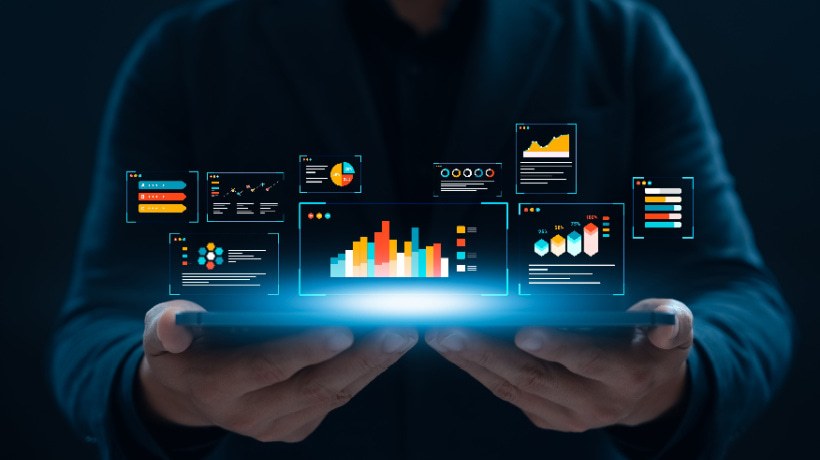
A dashboard is the visual heartbeat of your LMS, TMS, or LXP. Transform raw data into clear, actionable insights. Modern dashboards are more than just static reports. They are interactive, customizable, and role-based. for example:
Learners can see progress reports, course completion badges, and personal skill metrics to keep them motivated. Instructors can track class attendance, engagement levels, and assessment results to adjust their teaching methods. Managers can assess their team’s learning progress, compare departmental performance, and identify training gaps. Executives can connect learning metrics to organizational goals such as faster onboarding or higher compliance rates.
Dashboards make learning transparent and goal-oriented by centralizing data into one visual platform.
Beyond LMS: How TMS and LXP power data-driven learning
While an LMS is primarily focused on course management and delivery, a TMS streamlines logistics, schedules sessions, manages instructors, allocates resources, and tracks budgets. Integrating LMS and TMS analytics provides a 360-degree view of not only how learning is performed, but also how efficiently it operates.
Similarly, LXP analytics goes a step further by analyzing learner preferences, content consumption patterns, and social learning behaviors. LXP personalizes recommendations, similar to how Netflix suggests content based on your interests and career goals. When an LMS and LXP work together, organizations can measure both learning outcomes and the learner experience to ensure content truly resonates.
Connect learning data to business value
The goal of LMS analytics is more than just generating reports. It’s about connecting training to business results. for example:
sales enablement
Analysis shows that employees who completed product training modules through e-learning saw a 20% increase in sales in the following quarter. Compliance training
Dashboards confirm that 98% of employees complete required training on time, reducing legal risk. customer training
Companies that use an LMS to educate their customers can track customer engagement, leading to higher satisfaction and retention rates. Employee retention rate
Learning analytics may reveal that teams with consistent training opportunities have lower turnover rates.
Quantifying these results moves training from a “soft skills investment” to a measurable driver of performance and profit.
Predictive analytics: shaping the future of learning
Next-generation LMS platforms incorporate predictive analytics using AI and machine learning to predict future outcomes. Rather than simply reporting past behavior, the system predicts who is likely to drop out of a course, what content will be in a particular role, and what skills will be in demand next quarter.
For example, attendance patterns in VILT sessions can predict which learners are likely to discontinue participation. Automated alerts can prompt instructors to intervene early. Predictive analytics transforms learning from reactive to proactive, ensuring continuous improvement and personalized learning.
Making learning measurable in a blended world
Today’s learning environment is a blend of multiple modalities, including e-learning, ILT, VILT, and self-paced microlearning. In this complex environment, analytical dashboards unify everything under one lens. Organizations can now see:
How online and offline learning mutually reinforce each other. Which channels deliver the highest ROI? How learner performance improves over time across different modalities.
A blended learning strategy supported by analytics ensures that training is unfragmented and interconnected, creating a seamless experience where every learning moment adds measurable value.
Bottom line: Turn training into a growth engine
Gone are the days when training was viewed as a cost. Advanced analytics and dashboards in LMS, TMS, and LXP platforms now allow organizations to clearly demonstrate the ROI of their learning programs. Don’t just track learning by measuring engagement, performance, and business outcomes. They are shaping it strategically.
As AI, automation, and data visualization continue to evolve, analytics will further redefine how learning drives growth. Whether it’s corporate onboarding, customer education, or skills development, data is the bridge between effort and effectiveness. Ultimately, analytics makes learning measurable, meaningful, and profitable, transforming any training initiative from a cost to a true organizational asset.
