


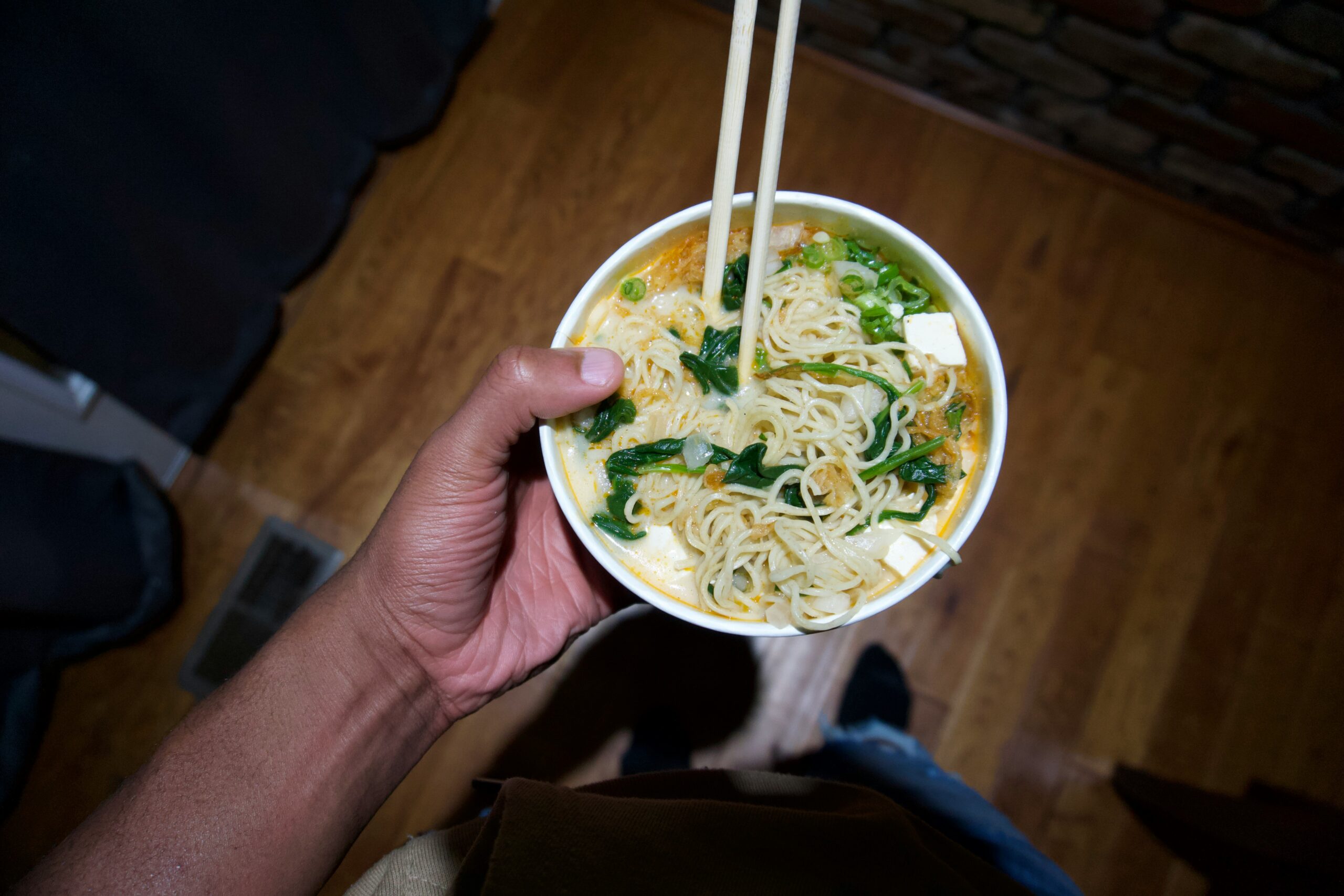
question:
Consider a market for fresh vegetables or instant noodles. Suppose that fresh vegetables are a normal good and instant noodles are an inferior good. Suppose that Congress bans fertilizers and pest control chemicals commonly used in vegetable cultivation. Without this input, rot and pest damage will increase and vegetable yields will decline.
(a) Using a supply and demand diagram, explain how this policy would affect the equilibrium price and quantity of fresh vegetables.
(b) Explain how an increase in the price of vegetables affects the real purchasing power of households.
(c) Considering that vegetables are a normal good and instant noodles are an inferior good, explain how the policy affects the demand for each good.
(d) Use a demand and supply diagram to show the change in the equilibrium price and quantity of instant noodles.
(e) What are the unintended consequences of this regulation on people’s eating habits?
Solved:
Two features of this setting drive everything that follows. the normal/inferior distinction between the two products and the fact that regulation increases the cost of producing vegetables. Together, they determine how policies affect prices, quantities, and household diets.
(a) Fresh vegetable market
This ban does not necessarily prevent consumers from wanting to reduce their vegetable intake in the first place. This will increase the cost of supplying vegetables. Without prohibited inputs, farmers would receive fewer vegetables from a given amount of land, labor, and capital. Some of the production is lost due to lower yields and some due to increased pest damage. At any price, farmers are willing to sell fewer vegetables than before.
In a standard supply and demand framework, this is a leftward shift in the vegetable supply curve. In the first place, demand has not changed. The market adjusts through a higher equilibrium price and a lower equilibrium quantity. Consumers are paying more for vegetables and buying fewer vegetables.
(b) purchasing power;
Rising vegetable prices reduce real household income. Nominal income remains the same, but the budget that previously bought a bundle of goods now buys less because one of the goods has become more expensive. Families who want the previous amount of vegetables have to spend more money to get it and leave less money for other things. Households with fixed vegetable expenditures should reduce the amount of vegetables they accept. In either case, budget constraints will be severe.
The magnitude of this impact depends on how much vegetables your household grows. For most households, the percentage is modest, so the real income loss from this one price increase is substantial but small. What is important here is not because the market is large, but because it is a channel through which regulations in the vegetable market are transmitted to other food markets.
(c) Demand for each good
They act differently on the two products and can help you distinguish between the two different effects.
Substitution effects result from changes in relative prices. Currently, vegetables are more expensive than instant noodles, so consumers are shifting from vegetables to noodles while keeping their real income constant.
The income effect arises from the loss of real purchasing power. Its direction is determined by whether the good is normal or inferior. Vegetables are commonplace, so a decline in real income will push down vegetable consumption. Because noodles are inferior products, the consumption of noodles increases as real income declines.
For vegetables, substitution and income effects mutually reinforce each other to reduce consumption. When the relative price of vegetables is high, consumers move along the demand curve for vegetables and buy fewer vegetables. Since vegetables are a normal good, a decrease in real income also shifts the demand for vegetables to the left.
In the case of noodles, the two effects point in the same direction. Substitutes will increase the demand for noodles as the price of vegetables will be relatively high. The income effect also increases the demand for noodles because the quality of the noodles is poor and real income decreases. This is an analytically interesting case. Precisely because the noodles are inferior, the income effect amplifies the substitution effect rather than offsetting it.
(d) Instant noodle market
This regulation also applies to vegetable cultivation, so there will be no fluctuation in the supply of noodles. The first thing that changes is demand. From part (c), the demand curve for noodles shifts to the right because both the substitution effect and the income effect increase the demand for noodles. Along the unchanged noodle supply curve, this produces a higher equilibrium price and a higher equilibrium quantity. Consumers buy more noodles and pay more.
There is a notable feedback effect. When the price of noodles rises, the attractiveness of noodles decreases relative to what it was immediately after the change in demand. To the extent that the two products are substitutes, this increase in the price of noodles increases the demand for vegetables more than it would otherwise, partially offsetting the leftward pressure on demand for vegetables due to part (c). This weakens the adjustment, but does not reverse it. The initial supply shock for vegetables still exists, and unless there is reason to think that the feedback is strong enough to overwhelm the initial shock, vegetables will remain more expensive and less consumed than before the regulation.
(e) unintended consequences;
Unintended consequences follow directly from price theory. Regulations aimed at limiting the chemicals used by vegetable farmers are increasing the cost of producing vegetables. Higher production costs reduce supply, increase prices, and reduce consumption. Households face limited budgets, so higher prices reduce their real purchasing power, leading some consumers to substitute cheaper, inferior products such as instant noodles.
Policies targeting one margin may therefore worsen outcomes at another margin. The regulations could make fresh vegetables more expensive, leading people to eat fewer vegetables than usual and turn to processed, less nutritious alternatives. This mechanism works not by anyone’s intentions, but by constraints, relative prices, and the margins that households actually adjust.
