


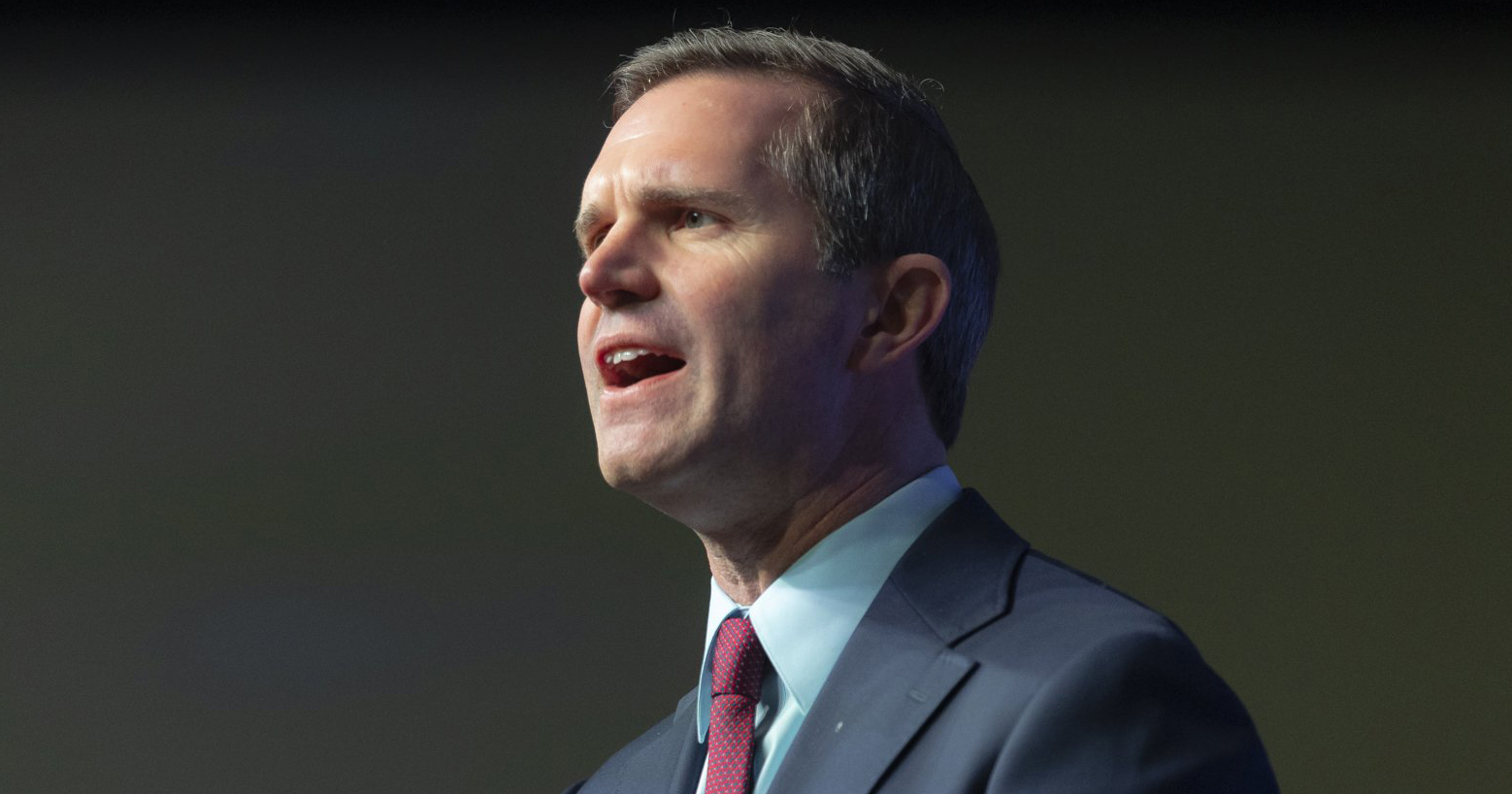
By the end of 2020, Kentucky’s newly elected Gov. Andy Beshear had one goal above all others: Keep people alive. The state was battling two merciless threats. COVID-19 was killing hundreds of people each month, and deadly drug overdoses were among the highest in the nation. Calling addiction a disease that breeds in isolation, Beshear worried people would stop seeking treatment for fear of contracting COVID-19.
So Beshear set out to make drug treatment easier to access. Kentucky joined more than 40 other states in lifting some restrictions on Medicaid, which served most of the Kentuckians enrolled in substance abuse programs: Recovery centers were allowed to offer expensive treatment to clients without seeking approval from state Medicaid insurers.
By 2023, as the pandemic waned, other states restored Medicaid requirements that treatment centers gain prior approval before providing addiction treatment. Kentucky stayed the course. That year, providers offered more than 1,100 spots for people seeking long-term treatment that allows them to live in a facility, a state record and more slots per capita than any other state.
But as the Medicaid bills for all that treatment started piling up, so did the warnings.
In 2024 letters to Beshear’s administration and in at least three public meetings, experts across the health industry said that as a result of the 2020 changes, drug treatment providers were billing too much for subpar care that was leading to worse outcomes. By December 2025, the Kentucky attorney general’s office said Medicaid fraud in drug treatment had become a primary “area of concern.”
Despite the warnings, the Beshear administration did little to rein in the skyrocketing state spending.
Almost all those warnings came true.
In a February 2025 meeting about soaring Medicaid costs, Kentucky Medicaid Commissioner Lisa Lee said the previous year’s spending on behavioral health and addiction treatment had reached an unprecedented $2.3 billion. Stuart Owen, who works for a Kentucky Medicaid insurer, told a state advisory committee months earlier that much of that spending was driven by the drug treatment industry, including “unscrupulous providers who are exploiting the heck out of that for money.”
The payout was especially lucrative for one company, Addiction Recovery Care. ARC was Kentucky’s largest drug treatment provider and the largest recipient of state funds between 2019 and 2025. This spring, the Lexington Herald-Leader, in partnership with ProPublica, reported on how ARC exploited Kentucky’s loosened spending controls and may have falsified billing.
Beshear has been unapologetic about state spending on drug treatment. In an interview in early June with ProPublica and the Lexington Herald-Leader, he pointed to the continued decline in drug overdose deaths as proof that he made the right choice when he did not force treatment centers to show that costly drug recovery services were medically necessary before treating people for addiction.
“If we’d gone back in time too early and changed things too drastically, how many more people would have died that we’ve saved? With four straight years of drug overdose decreases, they can throw blame at me,” Beshear said. “We’ll talk about dollars, but there are people’s kids that are still alive today because they were able to get addiction treatment services and get them quickly.”
While Kentucky’s overdose deaths declined significantly between 2020 and 2025, experts said the drop was not unique. Other states hit hard by the opioid epidemic also saw year-over-year decreases in fatal overdoses, including states that didn’t loosen Medicaid billing rules, like Tennessee and West Virginia.
Academic studies mostly agree that the drop in the death rate around the country had more to do with declining opioid prescriptions, an increase in the use of the drug naloxone to reverse overdoses, and less fentanyl in the drug supply. Medicaid and behavioral health experts in Kentucky have said in state hearings that some of the services drug treatment companies billed the most for were not directly associated with a decline in overdose deaths.
Nonetheless, Kentucky’s policies allowed ARC and other companies to bill more and more for services like peer support groups rather than those led by a licensed doctor or therapist. At one time ARC treated about one-third of the Kentuckians seeking drug treatment in the state; more than half of the services it billed for were the same lower-level services that Medicaid experts warned were being abused, according to state data.
The FBI has been investigating ARC for two years, and more recently, the company’s troubles have intensified. This week the Department of Justice announced it had reached a $16 million settlement with ARC over Medicaid fraud allegations. The company directed employees to falsely bill Medicaid for services like peer support, according to the allegations, which stem from a 2023 whistleblower lawsuit filed by three former ARC employees.
The settlement resolved the allegations, the Department of Justice said, and there has been no determination of liability. In another investigation, the DOJ last month indicted ARC’s leader, Tim Robinson, for wire fraud and money laundering for a separate alleged scheme to defraud multiple lenders. He has pleaded not guilty to those charges.
The company said in April it “has never knowingly or fraudulently billed Medicaid for services, and there is no evidence that the organization encouraged employees to falsify group notes for billing purposes.”
The Department of Justice recently indicted Tim Robinson, right, founder of Addiction Recovery Care, for wire fraud and money laundering. Ryan Hermens/Lexington Herald-Leader
ARC has over the last two years been forced to close most of its facilities, resulting in a 56% decrease in long-term residential treatment beds statewide, according to the most recent data available.
By 2025, Republicans had seen enough and passed a bill requiring treatment centers to seek approval from insurers before providing treatment services. Beshear vetoed the bill, saying it “will put up barriers to and delay healthcare for Kentuckians.” Republicans overrode the veto, citing waste, fraud and abuse.
A Raft of Warnings
At public meetings and in letters throughout 2023 and 2024, Medicaid insurers and actuaries warned that Beshear’s decision not to reinstate the spending guardrails sooner had allowed billing abuse by drug treatment providers to proliferate.
Some of those Medicaid insurers sent warning letters to providers, some who were suspected of overbilling, on how to appropriately bill. At least one also tried to limit excessive billing by setting its own guidelines for services deemed “intensive, high cost and/or have the potential for overutilization,” according to a memo from Passport by Molina Healthcare, one of Kentucky’s Medicaid insurers, referring to peer support services. Peer support is similar to a 12-step program.
In August 2024, the Kentucky Association of Health Plans, which represents the state’s Medicaid insurers, sent a letter telling the state Cabinet for Health and Family Services that weak oversight had allowed “unnecessary” spending on treatment and that the services treatment centers were billing the most for weren’t leading to better health outcomes for patients.
The letter warned that addiction treatment providers were overbilling for services that weren’t based on evidence or provided by a licensed doctor or therapist.
Part of the solution, the association said in subsequent public hearings, was to reinstate the spending guardrails, known as prior authorization, that Beshear had removed during the pandemic. The prior authorization process is supposed to prevent providers from billing fraudulently or excessively for medically unnecessary services by forcing providers to get permission from insurance companies before administering care.
Tom Stephens, president of the group representing Kentucky’s five Medicaid insurers and the letter’s author, said in an interview that it was not the first time Medicaid insurers had shared concerns with the Beshear administration; it was “simply one example of concerns that had been raised over time.”
Asked about this letter, Beshear spokesperson Scottie Ellis wrote that the governor “monitored the concerns expressed publicly and those shared with his administration” and that the state health agency worked with Medicaid insurers to address them. Ellis declined to answer follow-up questions about what specific measures the administration took during that time.
More warnings followed. The next month, Somerset Mayor Alan Keck also wrote to the Beshear administration asking it to reinstate Medicaid spending controls.
Keck, whose rural southeastern Kentucky county was hit hard by opioids, told the state health secretary that treatment centers across his region were recruiting patients from out of state and using company addresses to establish residency for them in order to bill Kentucky Medicaid. He also said some companies were fraudulently billing Medicaid by misrepresenting the services they provided.
“Our communities are seeing an influx of sober living facilities that are taking advantage of Kentucky’s Medicaid system and the lax requirements that linger from the Covid-19 pandemic,” Keck wrote to then-health Secretary Eric Friedlander.
Keck, who lost a Republican primary for governor in 2023, said recently that Friedlander never responded to his letter. He believes Beshear’s administration should’ve done more to rein in the drug treatment industry’s “explosive growth.”
Beshear’s spokesperson didn’t address questions about whether the administration responded to Keck.
In November and December 2024, officials from Anthem and WellCare, two Medicaid insurers, reinforced their concerns in meetings with legislators and Medicaid officials.
We’re taking a closer look at how ARC treated the people who came to the organization seeking help with their sobriety. If you’re a current or former client or employee, we want to hear from you.
The state’s own data from that period supports the insurers’ claim that the state was paying heavily for services that required little or no time from licensed doctors and therapists: Kentucky behavioral health providers were paid more than $147 million for peer support services in 2023 and 2024, Lee, the state Medicaid commissioner, told lawmakers in February 2025. During that time, Medicaid payments for psychoeducation jumped from $40.4 million to more than $168 million.
Psychoeducation is normally a part of regular appointment when a clinician explains a diagnosis and treatment plan to a patient. Most of the money spent in Kentucky on psychoeducation went to ARC. Medicaid insurers warned Kentucky was one of the only states that allowed this service to be billed for separately, and providers were abusing it.
At the heart of all of this was the suspension of prior authorization, which had served as the only check on the overuse and overbilling for low-quality care. Without it, Kentucky’s treatment landscape became a Medicaid free-for-all, said Shelby Steuart, a professor who studies health policy at the University of Maryland.
“It just became an opportunity for people to make money,” she said.
When asked about these warnings and the reasons Beshear didn’t reinstate Medicaid spending guardrails sooner, the governor’s office said his decision “helped save lives.”
Ellis, the spokesperson for Beshear, said in an email that amid the public warnings, the Cabinet for Health and Family Services, the state’s health agency, met with Kentucky’s Medicaid insurers “to discuss concerns” about the spike in spending on drug treatment.
She said that the administration sent a letter in November 2024 to clarify when and how to bill for certain services Medicaid insurers had flagged, which resulted in a more than $100 million decline in billing from 2025 to 2026. But, as the attorney general’s Office of Medicaid Fraud and Abuse Control told lawmakers in December 2025, billing increased by $40 million for other services that experts warned were being abused.
Ellis said the policies should be measured by lives saved. “In the end, actions taken by Gov. Beshear and his administration have decreased overdose deaths for four straight years,” she said.
“Willfully Ignorant, Derelict in Their Duties”
In 2024, ARC disclosed what it called billing errors that resulted in overpayments from the state, according to emails obtained through Kentucky’s open records laws.
About that time, Kentucky’s Medicaid insurers began to raise questions about excessive billing and started to sever contracts with the company. ARC turned to the state’s health agency for help, asking the health secretary to delay reinstating spending controls and to enact a system that would force Medicaid insurers to continue working with ARC.
“Time is of the essence,” ARC founder Robinson wrote in a September 2024 email to Friedlander.
Beshear’s administration balked at forcing insurers to work with the company, but ultimately declined to reinstate tighter spending controls. That year ARC was paid a record $103 million by Kentucky Medicaid, mostly for services Medicaid insurers warned were being abused.
In a June interview, Beshear defended that decision and denied that his 2020 order led to a rise in Medicaid fraud or abuse.
Beshear said that by the time Kentucky’s Republican-controlled legislature reinstated spending controls in July 2025, he was in the process of coordinating with the state’s health agency to enact some spending guardrails, but acknowledged that “admittedly, the Cabinet was probably taking too long,” he said.
Republicans have accused Beshear of mismanaging the state’s Medicaid program. During the 2025 legislative session, they revoked the governor’s power to make changes to Kentucky Medicaid without their permission. Beshear vetoed that bill, which included a provision to reinstate tighter spending controls, but the legislature overrode his veto.
Republican Sen. Chris McDaniel, who championed the bill, said in March 2025 that Beshear’s administration “had to be one of three things: willfully ignorant, derelict in their duties, or complicit. It was just too much money in one space for them not to have known better.”
Beshear in June said he’ll take the hit; at the end of the day, he said, the tide of addiction in Kentucky has receded, and it was worth it.
“If we continue at this pace, there’s a chance we end an epidemic that started in our lifetime,” Beshear said. “Opening up services through Medicaid in general to more people has been one of, if not the, most important things we’ve done to get people back on track.”
