


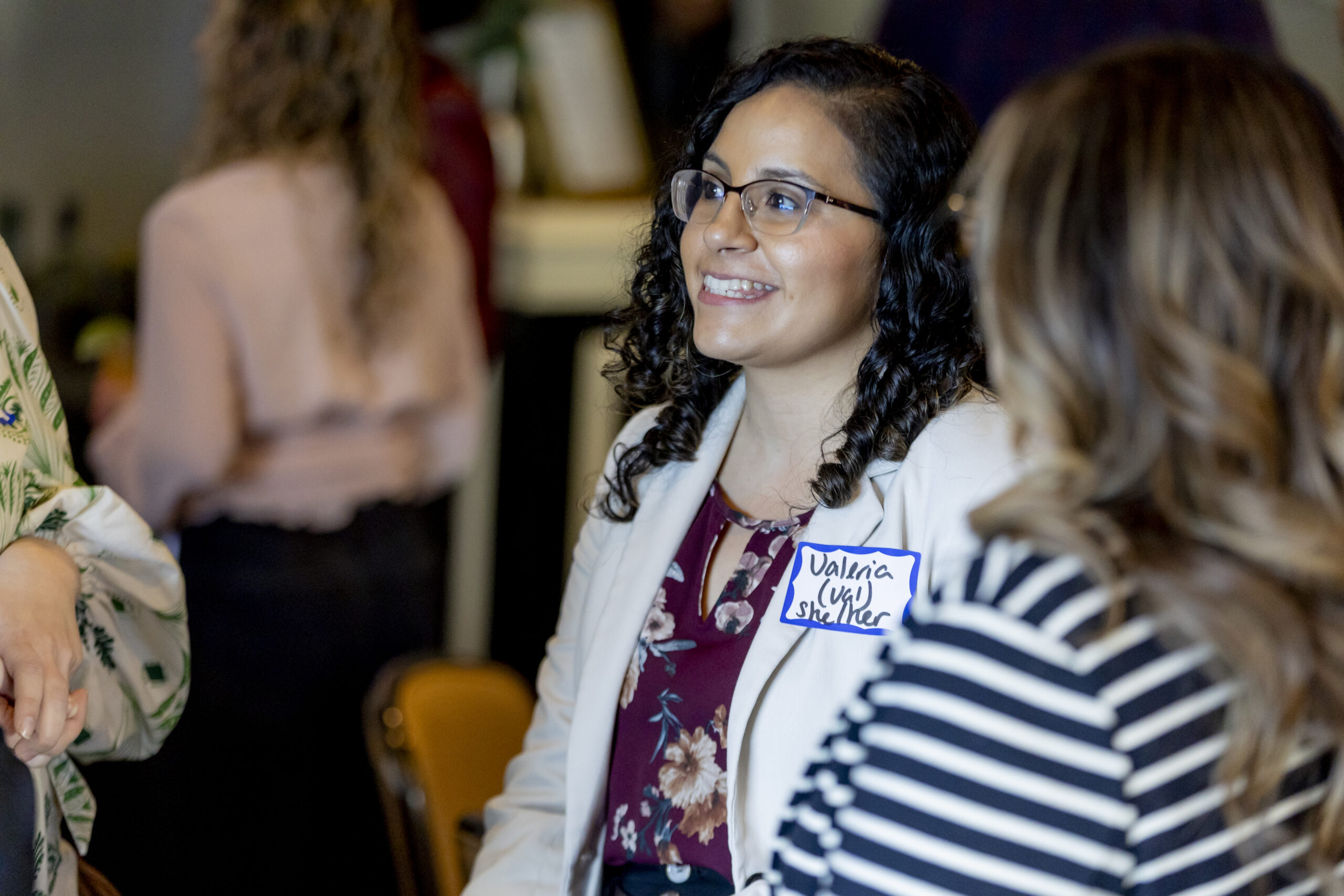
When Val Rodriguez founded Empowering Families in Western Nebraska, she already knew her organization was making a difference. They were supporting immigrant families, developing young leaders, building bridges across cultures, and increasing civic engagement. It was a seemingly simple question that she couldn’t answer. How do you measure whether people actually feel like they belong? That question led her to the Belonging Barometer.
Originally, Rodriguez discovered the Belonging Barometer while completing graduate research on how demographic changes are shaping community life. What appealed to her was her simple, no-frills approach. Simply print out the survey, make a few thoughtful adjustments for your local community, and start listening. She adjusted some questions to better reflect her county and conducted a 10-question survey, collecting responses from 369 residents through places where people already congregate, including churches, community events, soup kitchens, email and text messages. It wasn’t a complicated or highly technical process, but it gave her the insight she needed to get started. The result surprised her.
Although many residents reported feeling connected to people and places they knew well, such as their church, neighborhood, and close friends, they were far less likely to feel connected to the broader community or believe they could influence the institutions that shape their lives. Trust in the local system was low, and many described an “us versus them” picture across the community. These findings were not specific to any particular race or ethnicity, nor were they based on immigration status. Local residents in Scottsbluff County, including white residents, have a low sense of belonging. These discoveries changed everything.
Rather than treating the Belonging Barometer as a one-time survey, Empowering Families began using it as an ongoing management tool. One example is Youth Arise, a seven-week civic leadership program for at-risk high school students. Participants complete an affiliation assessment before and after the program, alongside other leadership measures. In one recent cohort, the percentage of students reporting a strong sense of belonging increased from 61% to 89%.
The organization also uses Affiliation Barometer findings to create new programs. Conversations with Native American residents revealed that sense of belonging varies greatly depending on the environment. Participants said they felt connected at the Lakota Lutheran Center but not at other community institutions, such as public meetings.
Perhaps most importantly, the introduction of the Belonging Barometer has inspired Empowering Families to rethink its mission and evolve its purpose. The organization used what it learned to develop new cultural programs, including Lakota language classes and cultural retreats aimed at strengthening both a sense of belonging and cultural pride. Initially focused on education, civic engagement, and empowerment, Empowering Families now clearly defines its work around building a sense of belonging in communities through education, civic engagement, and building bridges.
The next step is to create a countywide belonging strategy that involves health care, education, economic development, nonprofits, and local government. The Belonging Barometer findings also helped Empowering Families clarify the need for this initiative and position it as a fundable community initiative, providing a framework for securing resources to sustain and expand the Belonging Initiative.
Rodriguez believes the biggest lesson is that organizations don’t need expensive consultants or complex research projects to get started. They need an easy way to listen, learn, and act on community feedback. “You guys are trusted figures in the community,” she said. “You are trusted messengers.” For Empowering Families, belonging is no longer an abstract concept. It became something they could measure, improve, and build on together.
Are you ready to get started?
Download the free Belonging Barometer quick start guide and survey questions to start measuring your community belonging.
