


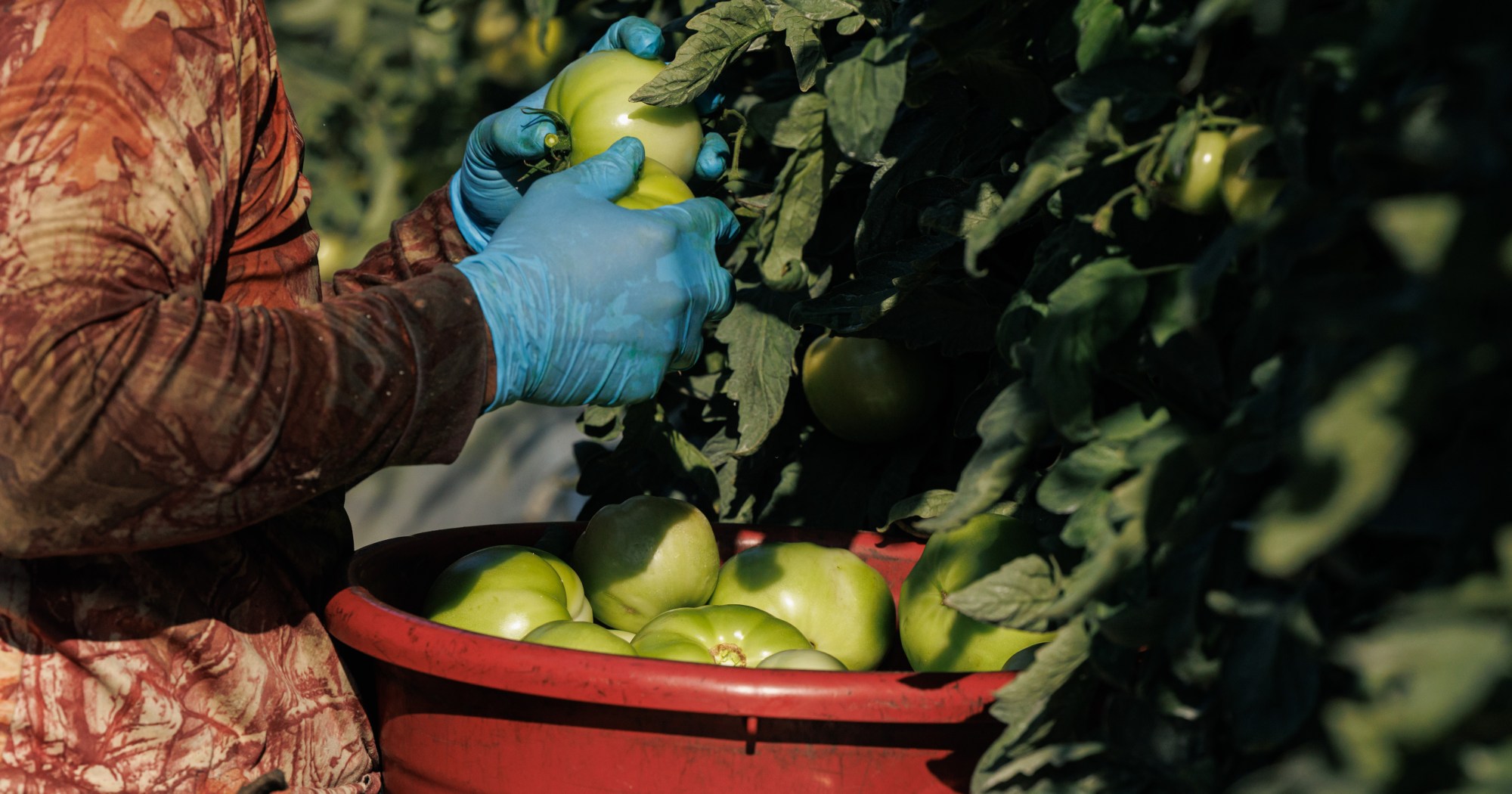
It’s been almost two years since I began reporting on the mistreatment of foreign farm workers in Georgia. Some of the workers I tracked came to the United States legally through the H-2A visa program, but were harmed and exploited by labor contractors despite supposed protections guaranteed by the federal government.
Over the past two years, I’ve been thinking a lot about how the government’s obligation to keep foreign workers safe conflicts with another priority: helping American farmers stay in business.
Farmers have long called for reductions in H-2A regulations. That’s partly due to the rising costs of the program, which sets a minimum hourly wage and requires farmers to pay for workers’ housing and transportation. In a letter to the U.S. Department of Labor last year, one Georgia farmer wrote, “It felt like all the policies related to the H2A program were designed solely to benefit immigrant workers.”
All of this reminds me of a freezing cold weekend in January 2025, early in my reporting, when I attended a farmers’ conference in Savannah, Georgia. What farmers demanded at that rally and what happened in the months that followed illustrate the tension between keeping workers safe and fixing the farm.
After passing through tractor salesman booths, labor regulator booths, tables of peach jam and dried blueberries, and a brightly lit convention hall, I arrived at a room full of farmers who wanted to know what a second term for President Donald Trump would mean for an industry that relies on foreign workers and faces a rising number of bankruptcies.
A small group of lawyers and lobbyists made several presentations to farmers. One of them asserted that Trump could make “significant” changes to the plan, including by making it easier to hire H-2A workers and lowering their wages. And if the lobbyists’ plan is successful, farmers will save even more money with fewer labor protections for their workers.
“Everything is on the table,” said Braden Bousek, an attorney who has represented the agricultural industry in challenges to the H-2A program’s requirements.
President Trump’s immigration policies will significantly reduce the number of immigrants crossing the border next year and accelerate deportations of people without legal status to live in the country. But one key pathway, the H-2A visa program, will remain wide open. And the government, under pressure from the agricultural industry, will soon embrace the kinds of changes that lobbyists communicated to farmers that frigid January weekend.
Lawyers and lobbyists told farmers at the conference that three key things needed to change in the H-2A program to get the economic relief farmers were seeking.
The first was to overturn some of the rules enacted by the Biden administration. The regulations gave workers the right to seek certain union protections, such as protecting workers from unfair treatment by their employers. Farmers opposed the rule, believing it would make it difficult to run their businesses.
At the meeting, former U.S. Department of Labor Assistant Secretary Leon Sequeira was heard telling farmers how several ongoing lawsuits could help “nullify” some of the rules. Last June, blueberry farms in Georgia joined 17 other states in suing the administration, arguing that the rule exceeded what Congress authorized. That lawsuit, along with two others, led to an injunction temporarily suspending portions of the rule.
Sequeira, the lawyer for one of the three lawsuits, later told me that this legal effort “does not negate further protections for workers.” Rather, it is intended to protect farmers from the overreach of the U.S. Department of Labor.
“People can certainly disagree about whether workers should have more protection under the law,” he told me. “But as multiple courts have said, that is a decision Congress makes when passing laws, not the authorities.”
Five months after Trump took office, the Trump administration halted enforcement of President Joe Biden’s rules. He then proposed canceling some of it. That proposal is pending.
The second change was to slow or stop wage increases for H-2A employees, which had skyrocketed between the first Trump and Biden administrations. After months of industry pressure, the Trump administration lowered hourly wages last year in a move it hopes will save farmers more than $2 billion a year. With these savings, H-2A workers are projected to lose up to 32% of their annual wages, according to the Economic Policy Institute, a think tank.
The last thing I heard at the conference was an ambitious legal strategy to further the interests of farmers.
One of the attorneys, Ann Margaret Poynter, explained that three recent U.S. Supreme Court decisions have combined to reduce the power of the federal government. One decision would limit the ability of federal agencies to enact new regulations. Another is making it harder for government agencies to fine companies that violate some federal laws. And third, it would make it easier for employers to challenge long-planned federal regulations.
Poynter said these decisions could pave the way for future lawsuits challenging the visa program and could increase farmers’ chances of winning their cases.
All three of these efforts are important, she explained to the farmers at the meeting, to “prevent some of the costs of being compliant with the H-2A program from falling on their shoulders.”
I recently contacted the lawyers and lobbyists who spoke at the conference and asked them how they felt about the progress of the plan they described.
Bowsek, now a lawyer in Tennessee, declined to comment for this article.
Both Poynter and Sequeira said the Trump administration’s initial changes to the program improved the structure for farmers. Sequeira also said the changes are just the beginning of the agriculture industry’s wish list.
Poynter and Sequeira said larger changes to the H-2A program sought by the industry would require action from Congress. They pointed to recently introduced bills that propose limiting wage increases, eliminating red tape for farmers and allowing additional sectors of the agricultural industry to participate in H-2A. (Labor and immigrant rights groups oppose the bill, saying it would harm farmworkers and amount to administrative overreach.)
Sequeira said the Labor Department “can only do so much” until Congress changes the statute.
