


[Today’s Iran war post launched before complete. Please return at 8:00 AM EDT for a final version]
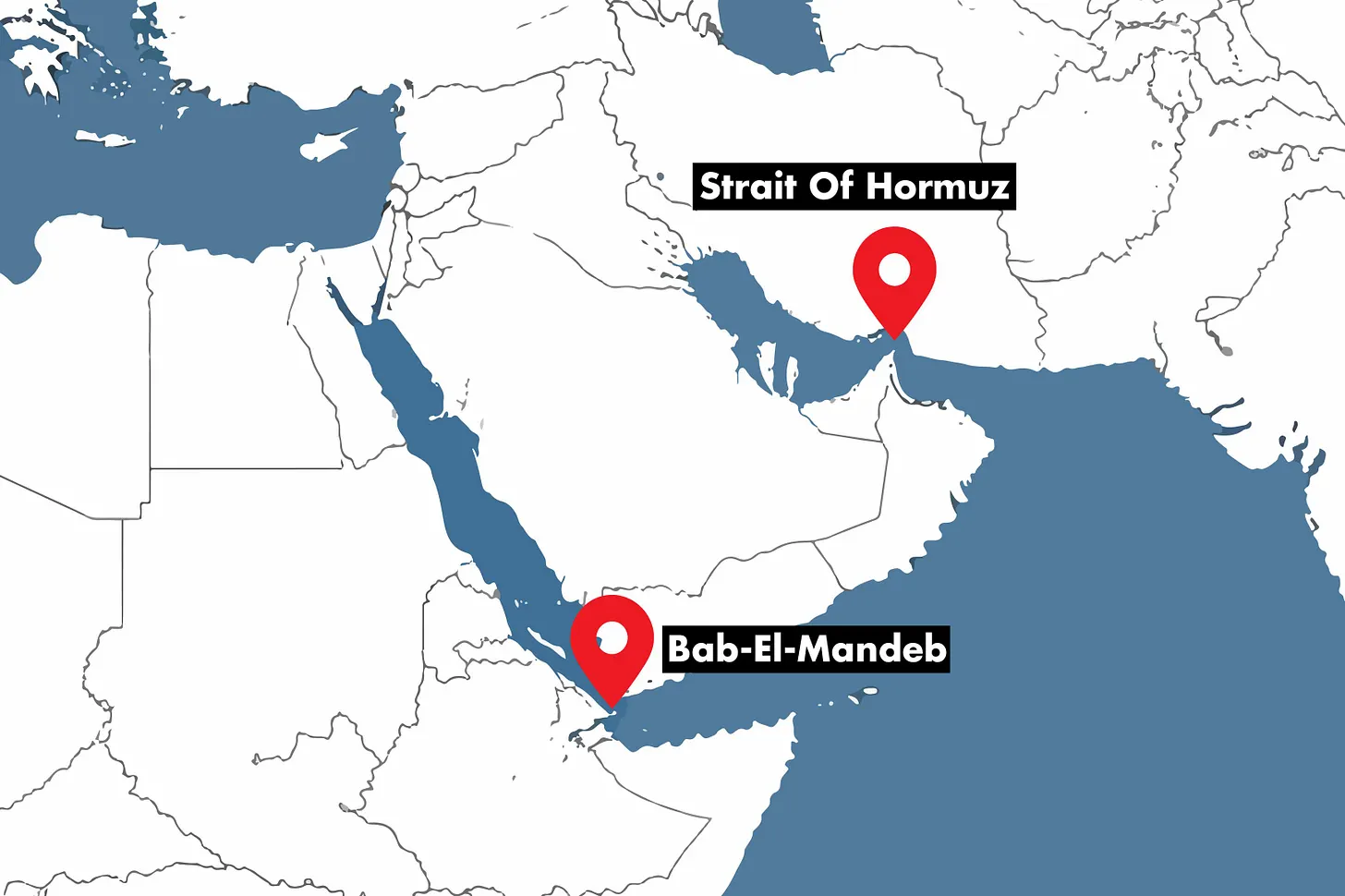
Ansar Allah’s closure of the Bab el Mandeb strait, Trump’s commitment to more kinetic escalation this week as Iran selectively damages critical petrostate energy and economic infrastructure, reports of fracture in Saudi Arabia and Israel and the continued slow bleeding out of the global economy all point to pressures continuing to build on connected economic, military, and political fronts. Yet as we will point out, too many forecasters are making linear forecasts, as if things will continue more or less as they are now, such at Robert Pape suggesting that Trump can continue the conflict on something like the current footing for six months. They are ignoring that pressures in any of these systems, or across systems, can and likely will generate sudden, large dislocations.
As we have described in connection with financial crises, when too much energy is pumped into a system, it will undergo a sudden change to a less ordered state. Ice becomes water. Water becomes steam.
After the rupture of the Great Crash and then the Depression and the creation of a bulwark of rules and supports to prevent anything like that happening again, the tacit assumption was the US and other advanced economies would not suffer the sort of near or actual banking system collapse that occurs in developing countries (where the IMF’s tender ministrations buffer short-term damage at the cost of “reforms” that hurt the working classes). They might have slower moving “crises” like the S&L crisis, where institutions are put down and the costs, in terms of recessions and distribution of losses, are distributed broadly if not fairly.
The near-failure of the global financial system in September-October 2008 came about due to the authorities engaging in mere short-term patch ups during the three preceding acute phases, and then no one in the officialdom considering what would happen if Lehman became insolvent. Incredibly, it collapsed in the worst way possible, with the skimpiest bankruptcy filing allowed. Even though Lehman had hired the top bankruptcy lawyer in the US, Harvey Miller, he had not been authorized to saddle up and make any preparation. Miller was shocked not just at the fact of the sudden implosion but that no one at the Treasury or Fed had contacted him, or apparently any other bankruptcy pro, to ascertain what a Lehman bankruptcy might set off.
In 2008, we merely had one crisis, in derivatives that turbo-charged underlying real economy subprime mortgages. Right now, on the financial front alone, we have multiple potential train wrecks: an AI stock/bond bubble collapse, the overlapping stresses in private debt, and crytocurrencies. And unlike 2008, when massive Chinese stimulus blunted the impact of the meltdown, as we report in Links today, the Chinese debt overhang is extreme and China’s national champion EV industry is flagging.
What happens to all those financial glash points as the underlying Strait of Hormuz and now (unless Saudi Arabia unexpectedly backs down) Bab el Mandab economic squeezes intensify to the point of creating severe price shocks and shortages in critical supplies like diesel? I do not expect happy outcomes.
In other words, not only is each of these pressure realms – economic, military, political – each subject to independent crises, it seems very likely that they are, to revive old crisis-era concepts, tightly coupled. A severe disruption in one, like a big jump in oil prices or LNG shortages, can trigger sudden, disruptive action in the military and/or political arenas.
Let’s turn first to the sign of mounting stress on the military front. Trump has committed himself to the punishment of Iran to get them to let go of the Strait of Hormuz, as in capitulate. But as many have said, not only does the US lack the ability to do so, but it is about to be exposed as the emperor that has no clothes, as in woefully short of means, much sooner than most press outlets have conditioned the public to expect.
On top of that, as a Janta Ka segment we featured yesterday stated and Alastair Crooke confirmed on Judge Napolitano yesterday, Iran is systematically pushing the US out of based on the Gulf, with the US trying to retreat to Jordan. The next phase is to force the US out of Jordan to Israel, which will then set up the systematic destruction of military assets there. We’ll soon turn to a new Larry Johnson piece where he anticipates the US trying to apply lavish porcine maquillage to this forced retreat. Johnson calls it “debasification”.
As we will soon discuss, that increase the odds of a desperate Trump engaging in an ultimately ineffective show of strength, possibly in the form of a shock-and-awe bombing campaign on Pickaxe Mountain, where the US believes Iran’s enriched uranium and centrifuges are housed.1 Brandon Weichert and Karen Kwaitkowski believe the US could mount a nuclear strike.
In addition, the other fantasy about how the US will subdue Iran, via economic harm, is coming up short. The sanctions regime is so severe that the war proper is not doing incremental damage to the economy.2
First to the big picture, growing evidence of US military impotence and what desperate measures the US might employ in response.
‼️ The truth of the situation is becoming shockingly clear to more and more people in Washington.
But the dilemma remains: withdraw and relinquish West Asia to the Iran / Russia / China bloc, or continue to fight and relinquish the entire empire. https://t.co/iR0CveiMy6
— Will Schryver (@imetatronink) July 20, 2026
⚡️⭕️ New Telegraph report: a US official says Washington does not have enough missiles to sustain an all-out war with Iran, amid a Washington Post assessment that Trump’s escalation path against Iran has hit a dead end. Iran is described as able to withstand losses despite…
— Middle East Observer (@ME_Observer_) July 21, 2026
In case you had any doubts, the US escalation has not impeded the Iranian success in choking the Strait of Hormuz:
Ten days into the new phase of the war (which the US said would degrade Iranian attack capabilities in the Strait of Hormuz), the IRGC keeps hitting oil tankers. Overnight, another vessel was hit and the crew had to jump into the lifeboats. https://t.co/oO92ekR3SM
— Javier Blas (@JavierBlas) July 21, 2026
And from Lloyd’s List in Hormuz tanker transits slump as attacks mount and dark voyages dominate:
Tanker transits through Hormuz fell further last week, with dark transits now accounting for nearly 70% of all movements
Non-Iran-linked VLCC inbound transits collapsed, signalling evaporating owner confidence
Another tanker was struck on Tuesday near Oman, days after three Dynacom vessels were hit, threatening a chilling effect on owners and operators in the region
And to Ansar Allah making the sorry state in the Strait of Hormuz worse, from Asia Times in Houthis announce maritime embargo of Saudi Arabia:
Houthi rebels in Yemen on Monday announced they were imposing a maritime embargo against Saudi Arabia in yet another threat to global petroleum supplies amid the US war on Iran.
Yahya Saree, spokesperson for the Houthis, said in a video announcement that the militia would be enforcing the shipping embargo in retaliation for last week’s bombing of Sanaa Airport, which the group blamed on the Saudis…
According to Javier Blas, energy and commodities columnist at Bloomberg, Saudi Arabia has been shipping roughly 4.5 million barrels of oil per day through shipping channels in the Red Sea, with “most of it” traveling through the Strait of Bab al-Mandeb.
The Houthis’ announcement of an embargo against the Saudis comes as the US has continued burning through its crude inventories.
Data released by US Energy Information Administration revealed that US crude inventories fell by 1.7 million barrels over the week ending July 10, leaving stocks at their lowest level since 1983.
The Saudis could of course back down now that Ansar Allah has thrown dow the gauntlet. But they too are doubling down. From Global21 in In the Bab el-Mandeb Strait, chaos is unfolding rapidly:
The Houthis announced this week the closure of the strait to Saudi vessels…
Until last week, Saudi Arabia was exporting around 4 to 4.5 million barrels per day through the port of Yanbu on the Red Sea. Of that total, approximately 2.5 million barrels needed to sail south, crossing the Bab el-Mandeb Strait to supply the Asian market…
The alternative, circumnavigating the African continent, adds between 6,000 and 6,500 kilometers to the journey, equivalent to 10 to 14 extra days of continuous sailing. The additional cost, solely in fuel and crew operational expenses, could reach up to US$1.5 million per vessel.
The cost of maritime insurance has also skyrocketed and some insurers are refusing coverage.
The Saudis are refusing to negotiate and have already issued alerts to their navy and allied ships. It is precisely at this point that the situation could escalate, and significantly.
The European Union maintains Operation Aspides, with a strictly defensive mandate: protection of legitimate commercial traffic in the region, without authorization for strikes on Yemeni territory.
In contrast, the United Kingdom and the United States, which also operate in the area, act under separate commands with missions of an offensive nature targeting sites in Yemen.
Years ago, a coalition of around 30 ships in the region already faced difficulties containing the Houthis, who at the time possessed an arsenal inferior to the one they have today.
Now, with the ongoing conflict involving Iran, the political will led by the US could drag European countries into a broader escalation, beginning with attempts to force the reopening of the strait.
Mind you, Mr. Market will still rally based on the flimsiest of pretexts. Yesterday, it was the not-as-cheery-as-pretended news that there was diplomatic outreach to Iran, with it not even being clear whether the US was behind it or the intermediaries were spinning their wheels.
But again, what determines where ships will travel is cost and safety. Operators and crews are risk averse. Bloomberg’s landing page underscores that issue:
From Shipowners Offer Huge Bonuses to Get Crews to Sail Hormuz:
One shipowner is attempting to coax crews to sail through the Strait of Hormuz by offering them an extra six months pay if they’re willing to cross the vital oil channel, offering seafarers a stark choice between large financial rewards and the risk of death.
Sinokor Group, the world’s largest owner of supertankers, distributed such an offer to its seafarers for a round trip to pick up oil from either Saudi Arabia or Iraq and unload it in the Gulf of Oman. The firm offered six months extra salary if they make a return voyage, which it said would take about a month in total, according to a document distributed late last week and seen by Bloomberg….
“They are being offered huge bonuses by some companies,” according to Captain Pradeep Chawla, chairman of GlobalMET, a body that works with the International Maritime Organization to promote seafarer training and education, without specifically referencing the Sinokor offer. “We have heard stories of a large number of crew members getting off, but they are able to find people who are willing to go.”
And again, the US is not merely being shown as unable to protect commercial vessels in the Strait of Hormuz. It is also being systematically turfed out of the theater. I encourage you to read Larry Johnson’s detailed post, DeBasification… A Fancy Word for Booting the US Out of the Middle East, in full. Key sections:
Iran has launched targeted attacks during the past two weeks on key US bases in Kuwait, Bahrain, Saudi Arabia, Qatar and the United Arab Emirates. This has produced a de facto evacuation of US forces and equipment from most of these bases. The US Navy’s Fifth Fleet Headquarters in Bahrain is in shambles; the Combined Air Operations Center (CAOC) at Al Udeid in Qatar has been closed and moved to Shaw Air Force Base in South Carolina. And Iran continues to pound bases in Bahrain, Kuwait and Qatar to ensure that no US aircraft or missile launchers remain intact at those locations.
The US also has relocated the $250 million MQ-4C Triton. In early May 2026, the US dispatched the MQ-4C Triton drone to Jordan…
Following massive missile strikes by Iran on 11 and 12 July on Jordan’s two airbases hosting US combat aircrafts, including the MQ-4C Triton, the US pulled the plug on keeping the Triton in Jordan….
During the first 43 days of the 2026 Iran war (Operation Epic Fury, beginning 28 February), Iran systematically targeted the sensor and communications layer of the US military’s integrated air defense architecture across the Persian Gulf…
By the end of the first 43 days, Iran had hit at least 12–19 radar and SATCOM systems across seven countries, with total damage estimated at $3.15 to $5+ billion.
And Iran is keeping up the punishment:
⚡️🚨 IRGC statement (Communique No. 40): Iranian forces struck a compound housing US forces in Jordan, reportedly killing a number of soldiers, marking a casualty claim in the ongoing wave of attacks on American-linked sites in the region. (IRGC statement via IRIB News, Iran…
— Middle East Observer (@ME_Observer_) July 21, 2026
Now to yet another Trump Administration desperation move that might get done:
They’re going to drop a nuke on this place. Just watch. Either we are with the B-61-11 and B-61-12 gravity bombs and/or Israel will fire nuclear-tipped cruise missiles from their Dolphin-class sub. https://t.co/K3MS4e2YQM
— Brandon Weichert (@WeTheBrandon) July 21, 2026
More detail from a talk between Karen Kwaitkoswki and Weichert:
From a lightly edited machine transcript:
Weichert: We’ve got about 20 B61 gravity bombs, nuclear bombs at Incirlik, and Trump is Trump is fixated on Pickaxe Mountain. Now, my understanding is that Pickaxe is not fully operational yet.
Mhm.
Is it possible the president plans on trying to send some kind of a message to Tehran, don’t keep this going by dropping a B61-11 or 12 um on pickaxe knowing it’s kind of isolated, knowing that it’s not fully operational, but yet it would still potentially send a very serious message.
Do you think that’s possible? And what would the ramifications be?
Yeah, I I do think it’s possible because they’re going to tell Trump, like you said, it’s remote. It’s a mountain.
They’re operating deep in the mountain.
And our B61s, we’re going to fly in there like we did along with the other big bombs, 12-day war. We’re going to fly in there. They can’t do anything.
Their air defense is zero. And then we’re going to put those things right down deep. And they’re not going to explode. They’re not going to detonate this nuclear. It’s going to be sir. It’s going to be just like an underground demonstration and you know we’ve done that for years and we’re not bound by any treaties because US just quit all of them. So we don’t have any nuclear treaties. Um we’re going to do that and and if you sold Trump would buy that.
Trump would buy that.
>> Absolutely.
>> Then it’s like the biggest bomb ever >> and he’ll be remembered as that. The guy who dropped the biggest bomb ever.
>> That’s right. And he’ll say he didn’t kill anybody or he only killed like you know 100 or 200 people instead of like this massive thing. And um that could be sold to Trump very easily. The problem is >> it already has >> you think? Oh god that’s sad.
>> And then in my mind you no you got the B6112s which are airbururst that’s at Inserick but then you’ve got B6111s at Whiteitman and we know those B2s have been flying in and out of the region straight from White.
>> Yeah. Yeah. If he did an underground I think he would he would >> that’s a bunker buster. That’s a nuclear bunker.
>> Bunker buster. A nuclear bunker buster.
____
1 Given both Iran’s and Hezbollah’s skillful use of decoys, what do you think the odds are that Iran staged a fake move of materiel?
2 Ahmadian discusses the continuing US/Israel efforts to increase domestic pressure starting at 46:00:
From Ahmadian in a lightly cleaned up machine transcript:
The third announcement came from Trump himself, President Trump. He said we sent in arms in January. He said it very clearly with no you can’t just interpret his words.
We sent arms to help the Iranians that is to help the opposition to bring down the system. And so we have a clear image as to what happened in January and that never stopped afterwards. We on a daily basis, on a weekly basis, we hear many reports of Iranian security forces seizing arms that are coming from border places in Iran. Arresting people who bring them in. An effort by the Israelis to weaponize the Iranian street.
As opposed to that, what is the what are the authorities in Tehran doing? Banking on the street as well, that is having people in the street trying to diffuse any effort by the Israelis and the Americans to move the streets in a way that is similar to January 2026…
You know economics is front and center when it comes comes to the Iranian streets. The Americans and the Israelis focused on the economics to put pressure on the Iranian streets, basically collectively punishing them for them to move against their administration, their government, their authorities on the behest of Israel and the United States. That didn’t happen in the war and I don’t see it happening moving forward.
But that’s a bet also another losing bet for the Israelis and the Americans. Now, the Iranians are under pressure. And when you look at the rhetoric from the Iranian authorities dealing with the United States, you could see that their main focus is Iran’s economics.
If there is no outcome, economic, financial outcome for Iran in this negotiations, as I said earlier, I don’t see any logic for the Iranians to deal with the United States after what it did in the country. Their main aim is for the oil embargo to be lifted and the uh frozen assets to be freed, get back to the country and have a change in the economics of the country because that would benefit Iranians as opposed to the collective punishment that has been there uh in the form of the maximum pressure and then in the form of you know multiple wars.
The war came in with more pressure, economic pressure on the society, but it’s really not that different. You know, people usually resort to, you know, generic talking points about Iran being under pressure, but when you look at the indicators, they talk about the depreciation of the value of the currency. But if you look at it before, right before the war and right after the war, you’d see that it gained actually 2 to 3% of value. If you look at the inflation, it didn’t really change that much before the war and after the war.
It’s still high.
There is pressure on the ordinary Iranians and on the society, but it doesn’t mean that the war changed the entirety of the equation. It brought in more pressure per se. The pressure was there. Maximum pressure basically sanctioned the entirety of the Iranian economics, financial sectors, everything. And they got to a to a level that because there’s nothing to basically sanction, they’re sanctioning people. They sanction you know entities that have nothing to do with economics because they don’t have much to sanction anymore in Iran.
