


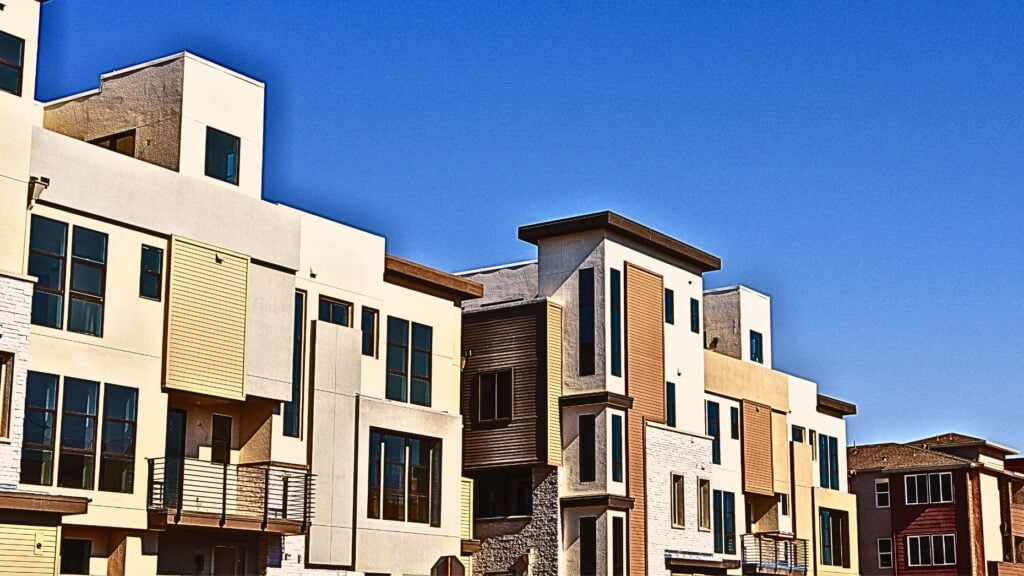

Multifamily investors often recall the phrase “you can’t live on the internet” to explain their long-term bullish stance on the market. As a staple, multifamily housing has proven to be highly resilient to recessions, energy crises, geopolitical crises, and ever-changing demographics.
Therefore, multifamily housing remains a sound commercial real estate investment and a favored asset class among lenders and investors.
Still, apartment complexes are not immune to what happens beyond property lines. In 2026, that reality will become even more serious. Global conflicts, volatile energy markets, potential economic recession, and debt maturity barriers combine to shape both risks and opportunities in multifamily housing.
Markets react nervously to unpredictable situations. Investors therefore face a critical need to understand how these interrelated forces can impact demand, absorption, rental rates, and purchase opportunities.
2026 debt maturity wall
Many CRE loans mature in 2026. According to the Mortgage Bankers Association, $875 billion in commercial mortgages are set to mature this year, potentially forcing lenders to make difficult choices. Should you refinance, perhaps at a significantly higher interest rate, or should you sell the property if you don’t have the cash flow to repay the loan?
Many investors took out loans when interest rates were historically low. Given the sharp rise in interest rates from 2022 onwards, these borrowers face difficulty refinancing on affordable terms. Higher interest payments would reduce liquidity, further stressing multi-family property owners who may be dealing with vacancies, falling rents and rising costs.
However, if the borrower faces increased risk, buyers may see an opportunity. Outside of overbuilt regional markets, opportunities to purchase multifamily housing are scarce, especially for distressed properties. This opens up access to capital for buyers, which the Mortgage Bankers Association says will be plentiful, and will likely result in an 18% increase in loan origination rates over last year.
While real estate may not be affected in the same way, distressed sellers may be more motivated, resulting in items being available at below market prices. Smart investors with a tolerance for risk should aim for discounts, especially when it comes to markets with weak fundamentals or poorly managed real estate.
The impact of global instability on capital flows
War and geopolitical tensions create uncertainty throughout the economy. In March 2026, after the outbreak of the Iran war, the Dow Jones Industrial Average rose or fell by at least 0.8% in 11 trading days. Instability affects multifamilies in many ways.
Conflicts directly disrupt global capital flows, as institutional investors tend to retreat to perceived safety due to uncertainty. Because demand is based on need, multifamily housing is often a haven and a defensive asset class.
Of course, the picture becomes more nuanced when you consider the growing role of US multifamily acquisitions and foreign investors who may pause their investments due to domestic risks. If that happens, liquidity in major markets will decrease, putting downward pressure on valuations.
In the multifamily market, geopolitical tensions often impact the economy. According to Multihousing News, renters are facing rising rents, and the longer the war drags on, the more severe the consequences will be. The most important of these is energy.
Impact of energy prices on apartment complexes
When global instability leads to an energy crisis, the whole world feels the tension, even in the short term. The multifamily housing sector is also not immune.
Rising fuel prices have a direct impact on tenant budgets and can put a cap on rent growth, even in a robust market. Higher prices can increase construction costs and lead to project adjustments, delays, and cancellations. It also increases real estate costs for utilities, heating, and maintenance. Some markets prohibit operators from passing these costs on to renters, prompting further regulation.
Rising energy costs also bring inflation to the forefront. Multifamily housing has long been considered an inflation hedge because it lacks discretionary power (again, you can’t live on the internet). When wages rise accordingly, rents often rise as well.
However, inflation can erode renters’ real incomes, leading to higher unit turnover and resistance to rent increases. These are typically short-term issues faced by carriers during business cycles. Investors who are prepared are best positioned for such fluctuations.
What about the recession?
Historically, multifamily properties have been more resilient to economic downturns than other asset classes. However, not all properties perform equally well during recessions.
For example, Class A properties, especially those in urban areas, may see an increase in vacancies if renters seek more budget-friendly apartments. Class B properties, on the other hand, are more stable and more likely to retain existing renters while capturing new demand from higher-end unit prices.
JPMorgan says regional markets facing oversupply are more susceptible to recession than markets where demand remains strong. Operators in areas with a lack of supply have more influence over vacancy rates and rents. Still, economists suggest watching for changes in behavior that result from negative jobs numbers. Rising unemployment rates could lead to challenges such as rent arrears and evictions.
If a recession occurs, forward-looking investors will benefit by helping start the next multifamily turnaround. Delays in construction will correct the oversupply and set the stage for unit price and rent increases during the recovery period.
Win as a multifamily during uncertain times
The multifamily sector is incredibly resilient. The pandemic-era growth phase has evolved into a static and even sluggish period of oversupply and flattening rents. Now, the company faces new obstacles that threaten its near-term growth. Multifamily vacancies are expected to increase in 2026, according to the National Association of Home Builders, creating new challenges for investors and business owners.
But market veterans have experienced economic shocks and global turmoil before. They understand that the winners in this environment will be those who are agile and able to adapt to rising prices and job disruptions. They prioritize operational efficiency and select purchasing opportunities. They also predict second- and third-line impacts of changes in the world.
Apartment complexes are not insulated from global events. It reflects them. Operators who understand reality will be better equipped to deal with occasional shocks.
Michael H. Zaransky is the founder and managing principal of MZ Capital Partners in Northbrook, Illinois.
