


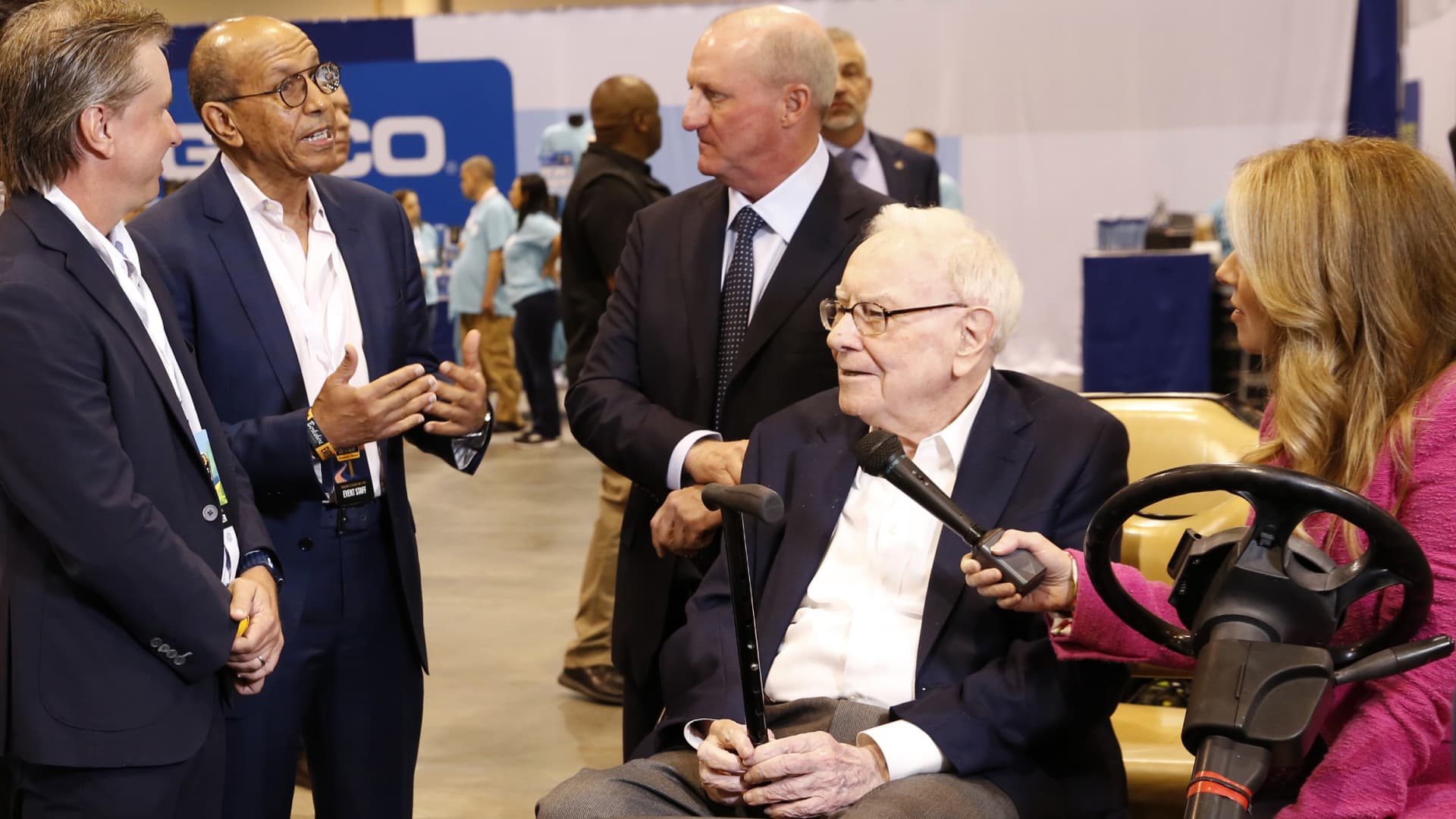
Warren Buffett and Greg Abel walk through the Berkshire Hathaway annual shareholder meeting held on May 3, 2025 in Omaha, Nebraska.
David A. Grogen | CNBC
Berkshire Hathaway’s stock fell Monday after the company reported a sharp decline in fourth-quarter operating profit, but new CEO Greg Abel showed little sign of an immediate strategic shift in his initial communications with shareholders.
The Omaha-based conglomerate’s Class A shares fell 5% to begin the week. Berkshire’s fourth-quarter operating profit fell more than 29% to $10.2 billion from $14.56 billion in the same period last year, contributing to the stock price decline. The decline was primarily due to weaker insurance business, with underwriting profit down 54% to $1.56 billion from $3.41 billion in the same period last year.
The results represent an early challenge for Mr. Abel, who will succeed Warren Buffett as CEO in early 2026. Investors widely praised Mr. Abel’s first annual shareholder letter for reaffirming Berkshire’s longstanding financial strength and culture of disciplined investing, but some expected a more positive signal on capital allocation given the company’s swollen cash balance.
Berkshire ended 2025 with more than $370 billion in cash and Treasury holdings. In his letter, Abel reiterated that the company does not plan to begin paying dividends unless it believes its retained earnings can generate more than $1 of market value for shareholders.
“We were a little surprised there was no dividend of any kind, but even more surprised by the apparent reluctance to pay a dividend,” KBW analyst Meyer Shields said in a note. “Given Berkshire’s current cash position, which is very significant, and, just as importantly, the outlook for sustained cash generation, we saw some potential for continued dividends following a CEO change.”
Mr. Abel instead emphasized reinvestment and opportunistic stock buybacks when Berkshire’s stock trades below its intrinsic value, maintaining the capital allocation framework that Mr. Buffett has long supported.
Still, not all analysts were bearish. UBS’s Brian Meredith said Berkshire’s defensive characteristics could support the stock, even though quarterly results were weaker than expected.
“Given the heightened geopolitical tensions, we expect BRK stock to outperform the broader market,” Meredith said in a note to clients. “BRK is generally considered to be highly defensive. Historically, BRK stock has outperformed during periods of market volatility, benefiting from diversified revenue sources, liquidity position, and primarily U.S.-focused operations.”
Meredith added that Berkshire’s annual letter reiterates these core principles and values. Looking to 2026 and 2027, he expects management to focus on improving BNSF’s operating margins to bring them closer to peers and increasing policy retention while maintaining Geico’s profitability.
