


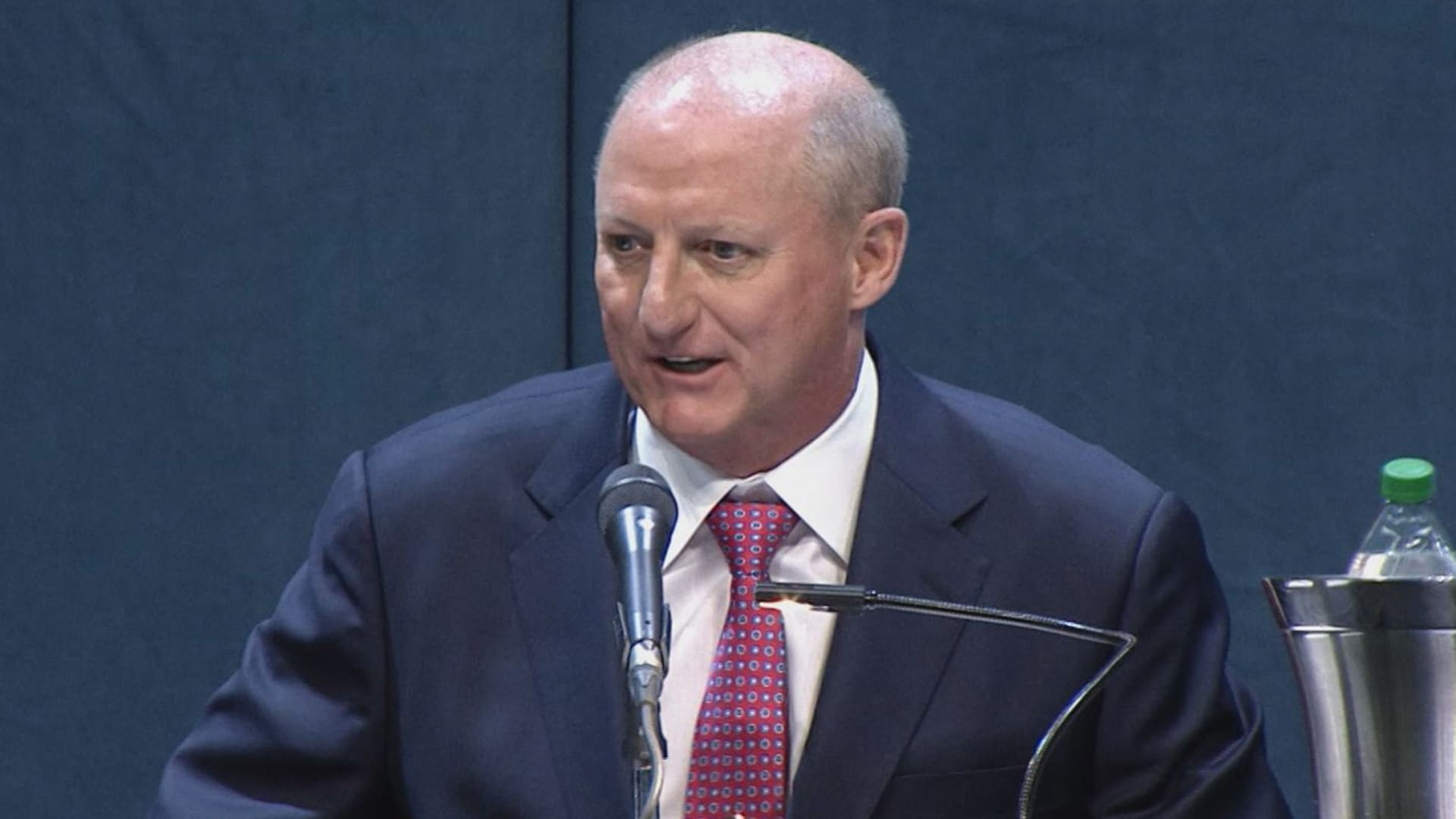
Berkshire Hathaway’s Greg Abel used his first annual letter to shareholders as chief executive to reassure investors that the conglomerate’s culture of financial conservatism and disciplined investing established under Warren Buffett will continue “forever.”
“I am honored by the board’s decision to appoint me CEO of Berkshire and am humbled to succeed Mr. Warren as I write my first annual letter,” Abel wrote in the opening letter to the company’s annual report, released Saturday along with Berkshire’s quarterly results. “Warren’s actions are clearly very difficult to follow.”
Mr. Abel, 63, will take over the reins from Mr. Buffett, 95, who will step down as CEO in early 2026 and remain chairman, signaling continuity rather than change. The new CEO has laid out a clear framework of core values to continue running the conglomerate: maintaining financial strength and maintaining strict capital discipline.
“We maintain a fortress-like balance sheet to ensure Berkshire’s fundamentals remain intact,” he wrote. “We maintain this financial strength through conservative and prudent use of debt. Our sufficient liquidity allows us to meet our obligations even under the most adverse conditions and to respond quickly when opportunities arise.”
Other values he emphasized included a decentralized management model and a “reputation for integrity.”
Berkshire’s cash pile stood at $373.3 billion at the end of 2025. Abel described this pile of cash as strategic dry powder, allowing the company to act decisively when opportunities surface without compromising its resilience. Mr. Abel also used the letter to dispel the idea that the large cash position indicates Berkshire is exiting investments.
But Mr. Abel said Berkshire’s longstanding resistance to paying dividends will continue.
“Our approach to cash dividends remains that Berkshire will not pay dividends unless it is reasonably likely that each dollar of retained earnings will generate more than $1 of market value to shareholders,” Abel wrote, adding that the board reviews the policy annually.
Stock portfolio supervision
Abel emphasized that Berkshire applies the same disciplined framework whether it is acquiring an entire business, buying stock in a public company or buying back its own stock.
“We will carefully assess the value, be patient, and intend to hold for the long term, preferably forever,” he wrote.
He added that Berkshire’s stock portfolio will remain concentrated in a small number of U.S. companies, including Apple, American Express, Coca-Cola and Moody’s, and said Berkshire expects it to compound over decades. Notably absent from that list is Bank of America, which ranked as Berkshire’s third-largest holding at the end of 2025.
Mr. Abel said Berkshire would make “significant adjustments” to its positions if the long-term economic outlook changes, but that trading activity would remain limited and focused in its approach.
He also resolved a key issue surrounding the leadership transition: direct oversight of the stock portfolio. Ted Weschler will continue to manage approximately 6% of the portfolio, including investments previously overseen by investment manager and Geico CEO Todd Combs, who recently left JPMorgan.
“At Berkshire, equity investing is fundamental to our capital allocation activities. The responsibility ultimately rests with me as CEO,” Abel wrote.
long term initiative
Abel is known within the company as a hands-on operator, with many subsidiary CEOs reporting to him. The Edmonton, Alberta-born Canadian executive worked for Berkshire for 25 years. Abel joined Berkshire in 2000 when the conglomerate acquired MidAmerican Energy and ultimately became CEO in 2008. Prior to that, Abel worked at CalEnergy, transforming a small geothermal company into a diversified energy business.
He emphasized that he views this role as a long-term commitment, as he intends to manage Berkshire for decades.
“Our ownership timeline extends beyond the tenure of any individual CEO,” he wrote. “I won’t be CEO of your company for the next 60 years, which is an ambitious plan based on simple math. But 20 years from now, when I have only a fraction of Mr. Warren’s tenure left, my intention is for you and your descendants to be proud that your company has become even stronger.”
He noted that Buffett remains actively involved as chairman, coming into the office five days a week and continuing to provide input.
Abel also said Berkshire will not follow Wall Street’s typical pace of quarterly earnings reporting.
“We are focused on quality, not frequency. If significant issues arise, you will hear from me, but given our long-term view, not through quarterly comments,” he wrote.
