


A report released Tuesday by the Consumer Policy Center suggested that litigation will ensue unless brokers, real estate portals and regulators first intervene by increasing transparency.
Consumers need to know whether the agents they’re working with are paying referral fees as part of the deal, according to a new report released Tuesday by the Consumer Policy Center.
The report, written by Stephen Brobeck and Wendy Gilch, concluded that existing rules about whether, when, and how referral fees are disclosed to consumers are not sufficiently transparent or enforced.
The report says real estate portals, which have honed their money-making lead generation processes, are also playing a role in making things clearer for consumers.
“Before entering into a contract, buyers and sellers should receive clear disclosures about referral fees from the referral company and then from the agent, and most importantly, that the referral fee is paid to the referral company by the buyer’s agent,” the report states. “The exact amount of the fee should also be disclosed.”
The report comes as the industry grapples with the concept of referral fee disclosure, as the industry focuses on giving consumers choice in real estate transactions.
In November, the National Association of Realtors umbrella group rejected proposed changes to the Realtor Code of Ethics that would have expanded the requirement for real estate agents to disclose to clients when they receive compensation or commissions for referrals.
Since then, several large brokerages and real estate agent associations have moved to enact their own disclosure requirements. But a new report says more needs to be done.
“Referral fee services can be harmful to buyers and sellers, especially if the fees are high,” the report says. “High fees encourage high commission rates, jeopardize the quality of consumer service, and are associated with deceptive practices.”
The report focuses, in part, on how real estate search portals have shifted in recent years to a contingency fee model where agents are only paid after a deal closes.
“While some of the largest companies, including Zillow and Realtor.com, offer subscription services with monthly fees, all currently focus on referral fees per sale,” the report said. “From an agent’s perspective, many agents would rather be paid a percentage of the commissions they earn than a monthly marketing fee that doesn’t guarantee a sale.”
This system means that consumers are more likely to work with successful agents. The funds provided to leading portals through referrals also enable companies to offer consumers a wide range of homes on the market.
“However, individual consumers, especially buyers, who deal with commission-based referral companies also face risks and costs,” it added. “Most importantly is the non-negotiable 3 percent commission rate, associated with 30-40 percent referral fees. That high commission puts the quality of service at risk and is also associated with deceptive marketing practices.”
The report said it uses anecdotal evidence to suggest that referral rates are driving up fees.
Zillow suggested in its response that the report was based on little evidence.
“The report has little evidence for its claims and often relies on comments posted anonymously on social media rather than verified sources,” the company said in a statement. “If understood correctly, the authors point out that Zillow is focused on providing potential homebuyers with connections to high-performing agents, as well as the benefits of referrals to agents themselves.”
When researchers asked referral companies, including major portals, for purchasing agents, they typically received multiple agent names.
“However, in November 2025, when we contacted three portals about a particular property, we were referred to only one purchasing agent,” the report said. “The agent had a special relationship with the company as a Zillow Premier agent, Realtor.com concierge agent, or Redfin employee or partner agent.”
Such filters “limit meaningful consumer choice,” the report said.
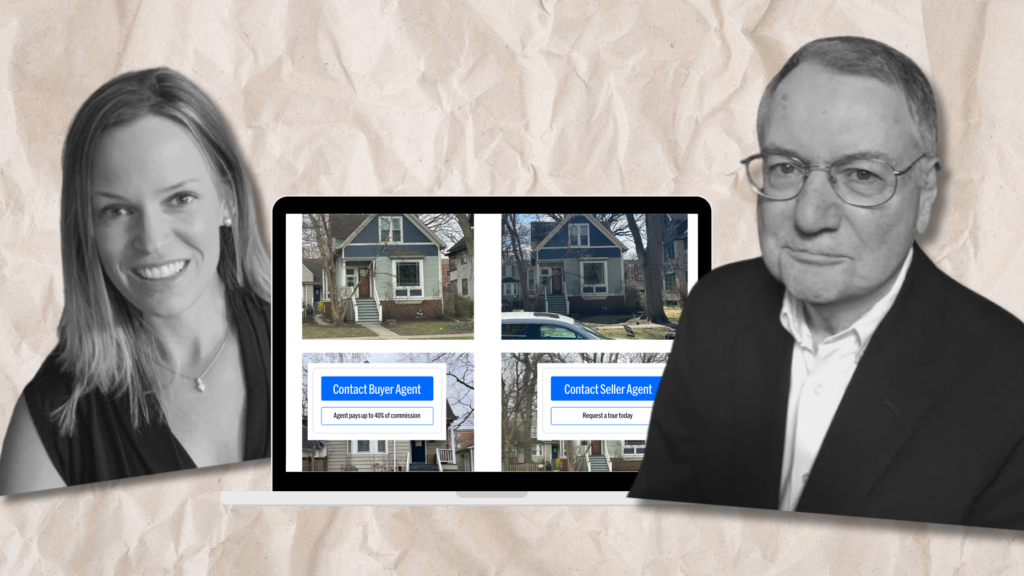
“It’s important that the contact button specifies whether the buyer will be referred to a buyer’s agent or a listing agent,” it adds. “It is also important for home listings to provide buyers with a clear and equal opportunity to choose who to contact.”
If the industry moves to tighten referral disclosures, it should also apply to major property portals, the report said. If not, litigation may ensue.
“Questions have arisen as to whether these required disclosures also apply to referral companies, particularly Zillow, Realtor.com, and Redfin,” the paper said. “As it should be, if state legislatures and regulators do not act, the issue could be resolved through litigation.”
Inman has contacted the real estate portals named in the report and will update this article with any additional comments.
Email Taylor Anderson
