


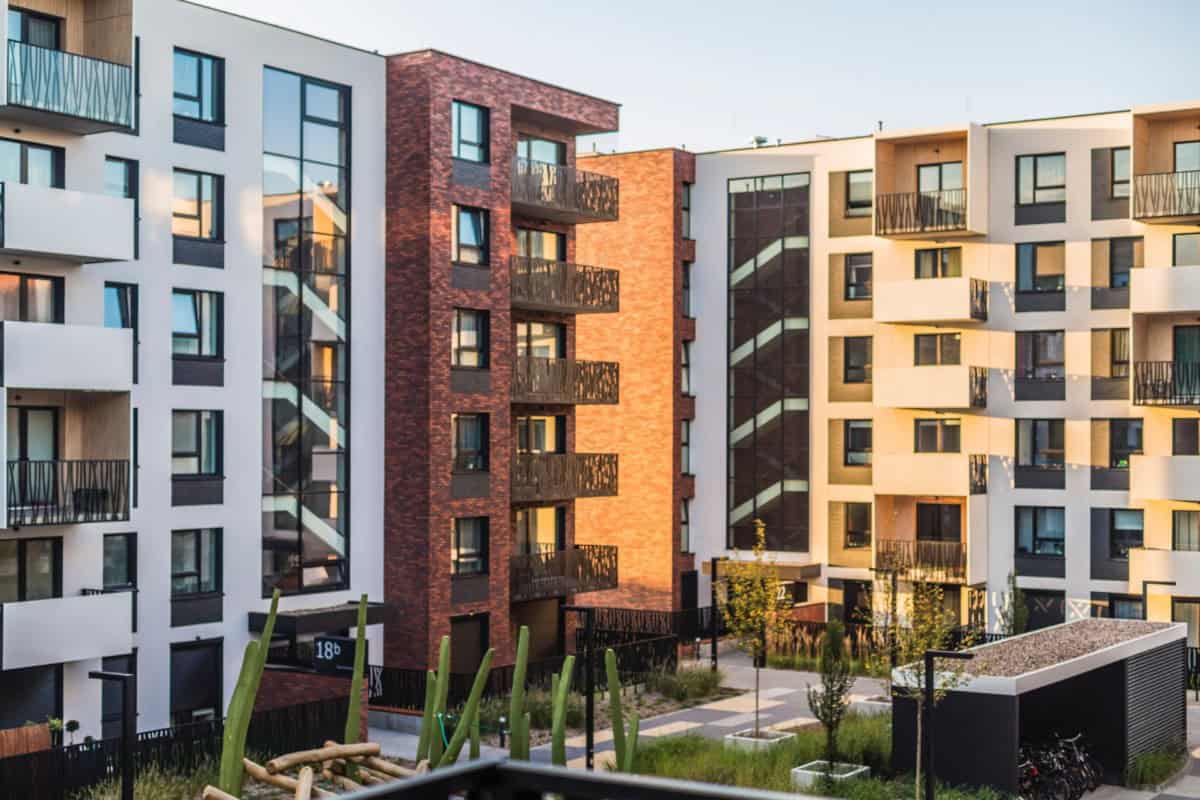
Living in a condominium or apartment complex provides residents with a great sense of security. There is usually a good reason for this. Many apartment complexes have secure access controls that carefully manage authorized entry. You typically don’t see this level of access control in single-family homes unless you live in a gated community. That being said, there are still various condo and apartment security tips and considerations that multifamily housing professionals recommend you take into account.
Whether you currently live in an apartment or are considering purchasing a condo in Austin, Texas, Chicago, Illinois, or Charlotte, North Carolina, this Redfin guide will provide you with important condo and apartment security tips to ensure your home remains a safe sanctuary.
1) Check if the building has an access control system
Everyone has the right to feel safe in their home, no matter where they live. Some apartments and condominiums have both individual unit entrance security and complex-wide security systems. These systems allow administrators to meticulously control who is allowed access to the complex itself.
Modern security approaches: Touchless access control and cloud-based systems have become increasingly popular in recent years. Rapid integration: Access control security systems are being integrated into both residential and commercial properties faster than ever before to improve the security of condos and apartments. Property management priorities: Property managers are now prioritizing improved security solutions leveraging smart home technology while reducing the risk of disease transmission by minimizing unnecessary contact.
Next steps: Before investing in an apartment or condo, be sure to do your due diligence and ask the right security questions.
2) Check the lock and window
One way to increase the security of your condo or apartment is to ensure that all building entrances and unit doors have secure locks and additional security features such as peepholes, chain locks, key codes, cameras, and remote unlocking.
Key updates: Check with your administrator to find out how often you should update both your keys and key codes. Theft test: Check that windows are securely locked and secure from the outside. Put yourself in the thief’s shoes. Can I break in through the window?
If you are renting or want to harden these points of entry at low cost, there is no need to make any permanent changes to your property. As AptAmigo’s blog manager Dr. Carrie Fuller suggests, “For sliding glass doors and windows on the first floor of a rental property, we recommend cutting a simple wooden dowel to fit the track of the door or window. This removable piece prevents the window from sliding open during installation, but allows the renter to quickly escape in the event of an emergency. This method is not only rent-friendly, but also easy, quick, and low-cost to implement.”
3) Learn about security in common areas
Most condos and apartments have a variety of shared amenities such as gardens, rooftop lounges, pools, and gyms. However, such facilities can attract trespassers, so it is essential that property managers take security measures to reduce these risks.
Optimal Surveillance: Check to see if your complex has commercial-grade security cameras installed for optimal surveillance and peace of mind. Vulnerable areas: Be aware of dark corners and crevices in common areas such as hallways, parking lots, laundry rooms, stairwells, and mail rooms. These are perfect areas for intruders and robbers to easily hide or sneak around.
Delivery areas are prime targets for opportunistic thieves, so mailrooms and lobbies are especially vulnerable. Patrick Bartlett, director of property operations at Robe Travel, points out that “package theft can occur anywhere there is a shared entrance. Use secure lockers if available, and for high-value items, opt for signed-for delivery or a nearby drop-off location.”
4) Parking lot and garage security is a must
Garages and parking lots are also hot spots for petty crime, and precautions should be taken to reduce the risk.
Real-time monitoring: Some community complexes have remote security cameras that can monitor the area around your garage or parking lot in real-time. Smart integration: Integrate these security cameras with cloud-based systems and smart devices to alert personnel and field employees to potential incidents and respond efficiently. Proactive intervention: Some remote monitors can also use on-site audio to verbally approach perpetrators and eavesdrop on security breaches. Law Enforcement Response: Video detection capture can also be used to notify authorities, which usually results in a quick response from law enforcement.
5) Make sure your security standards match your HOA fees
The purchase price of a new community complex unit is not the only indicator that should be used to determine the level and quality of security features expected from the complex. The HOA (homeowners association) fees charged should also be commensurate with the level of security for the condos or apartments offered by the complex.
HOA Responsibilities: The HOA is responsible for maintaining the portion of the building that is outside the walls of the unit. What the fees cover: HOA fees cover various living costs in the community, including the cost of building repairs and maintenance, upkeep of common areas and facilities, and maintaining and operating appropriate security systems.
Red flags: Therefore, a community complex that charges high HOA fees while operating with substandard security features is a worrying combination that must be addressed or avoided.
6) Check bike storage facilities to optimize apartment security
If you are considering storing your bike in a new complex, it is essential to check the safety of the bike storage facility. Bicycles can be ridden and taken away, making them relatively easy to steal.
Ideal setup: Ideally, the storage area would have live monitoring capabilities, which would greatly reduce the risk of theft. Identifying threats: Behaviors like repeated wandering or returning home without a bike are red flags for potential security threats that can be thwarted with the help of live monitoring by security personnel.
7) Get to know your neighbors
Getting to know your neighbors, or at least being able to recognize them, is an easy and inexpensive apartment or condominium security tip.
Key benefits: Easily spot suspicious activity. Community Support: Plus, your neighbors can watch over your place, care for your pets, and protect your home during summer and winter vacations.
8) Install a home security system
A home security system allows you to monitor your apartment with indoor and outdoor cameras from your smartphone and alert authorities if necessary.
Remote management: You can also turn off lights and appliances if you leave the house and forget to turn them off first. Insurance Benefits: Depending on the home security system you choose, you may also qualify for a discount on your home insurance. Renters’ options: If you live in an apartment complex, drilling holes in your walls is usually discouraged. Fortunately, there are wireless alarm systems that don’t require wiring to the walls, making your apartment safer. Portability: Having an apartment alarm system can also lower your renters insurance rates. The system is unwired, so you can take it with you to your next location.
Apartment security: leave no stone unturned
Ultimately, you deserve to feel safe in your new home, and apartments and condominiums have a responsibility to provide adequate security to their tenants. What you consider acceptable depends on your personal needs and preferences, and how the level of security provided compares to the property price and HOA fees.
What matters is that you feel comfortable in the complex, including the extent of security provided. So ask important questions, especially if you live alone. Take the time to understand what systems your complex operates on and whether any upgrades are planned in the near future.
Before purchasing an apartment or condo, it is important to evaluate the security aspects of the community complex and feel comfortable with it. Once you sign on the dotted line, you may not be able to force changes.
FAQ: Apartment security tips
1. Can I install a security camera outside my apartment door?
First, check your rental agreement and building rules. Because hallways are shared, your landlord or HOA may restrict exterior cameras to protect your neighbors’ privacy. If a standard camera is not allowed, consider a peephole camera or no-drill video doorbell.
2. What are the most common entry points for apartment intruders?
The most common entry point is the front door, followed by ground floor windows and sliding glass doors. Many intruders simply enter through unlocked doors. Always lock your doors and windows, even when you are inside your apartment.
3. Is my landlord or HOA legally responsible if my apartment is stolen?
Generally, landlords and HOAs are not legally responsible for stolen personal property unless they maintain the necessary basic security, such as working locks and secure gates. Therefore, it is essential to purchase renters insurance or condominium insurance to protect your belongings.
4. What is a quick and budget-friendly way to secure an apartment?
In addition to wooden window dowels, other inexpensive, effective, and fully removable security options include portable door jammer bars, stick-on wireless window alarms, and timed smart light bulbs to make it look like someone is home when you’re away.
5. What should I do if a common area security feature (such as a gate or lock) is broken?
Immediately report this in writing to property management or the HOA. Written records (such as emails or portal maintenance requests) create a paper trail. This protects you, encourages prompt repairs, and holds our community accountable to safety standards.
