


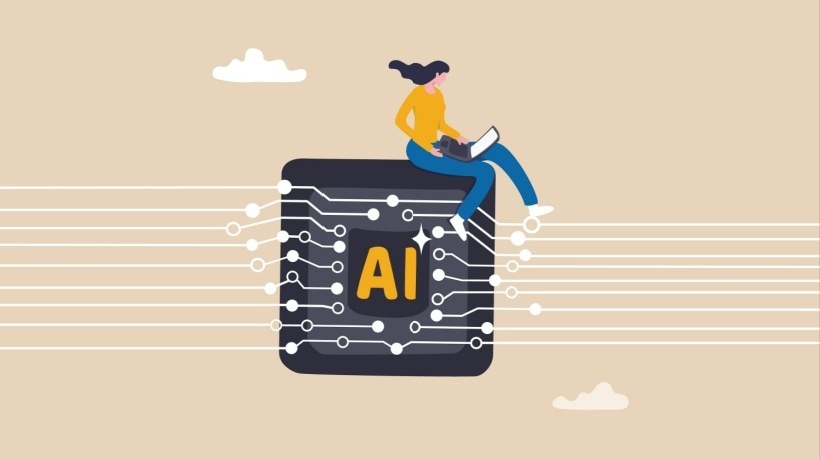
The Future of Work: The Impact of AI on the Industry
Artificial intelligence (AI) is no longer a concept of the future. It is our present reality and an important part of our future. As an industry of automation, machine learning, and data-driven decision-making, the career landscape is evolving faster than ever. For professionals and students, adapting to this change means rethinking how we learn, what we learn, and the skills we prioritize. In this article, we explore how AI is transforming education and the workplace, what skills are in demand, and how individuals are prepared to thrive in the age of AI in the workplace.
The rise of AI in the workplace
AI is changing every industry
From healthcare and finance to marketing and logistics, AI is streamlining operations, improving accuracy and unlocking new business models. According to a report by McKinsey, AI could reach up to $4.4 trillion per year for the global economy [1]. But this opportunity brings about transformation. Work has evolved, some have disappeared, and new ones are emerging.
Automation vs. enhancement
One of the biggest fears about AI is unemployment due to automation. However, many experts argue that AI is more likely to expand the role of humans than completely replacing them. Tasks that involve daily and repetitive tasks are automated, but roles that require creativity, empathy, critical thinking and strategic planning are more valuable.
The World Economic Forum predicts that 85 million jobs could be banished by AI by 2025, but there is a possibility that a new role for 97 million people will emerge adapted by a new division of labor between humans, machines and algorithms. [2].
The Future of Work: Important Skills
From hard skills to power skills
In the age of AI, technical knowledge alone is not enough. The most in demand worker combines domain expertise with “power skills” such as communication, adaptability, and innovation.
Top skills in digital literacy in the AI era
A basic understanding of AI, data, and analysis. Critical thinking
Analyze information and make informed decisions. Creativity
Think outside the box, especially if you’re short on AI. Emotional intelligence
Understanding and managing emotions in professional interactions. collaboration
Work across teams, fields and cultures. Agility and lifelong learning
Quickly adapt to new tools and methods.
LinkedIn’s 2024 Future of Skills Report showed a 48% increase in demand for adaptability and problem-solving skills across job lists around the world.
Rethinking education for the future with AI in the workplace
Traditional learning is no longer enough
Standardized curriculum that emphasizes memorization is becoming obsolete. An AI-driven world requires learners to tackle real-world issues, tackle interdisciplinary projects, and focus on qualification skills [3].
Personalized, AI-driven learning
Not only does AI disrupt the job, it also changes the way you learn. It is provided by an AI-powered platform.
Personalized learning path
It is based on the pros and cons of the learner. Real-time feedback
Using natural language processing. Interactive and immersive experience
Use augmented reality (AR)/virtual reality (VR) gaming learning module
It boosts these motivations and engagement.
Examples of AI in learning:
Language learning platforms use machine learning to personalize language lessons. AI-powered private tutors provide personalized academic support. Currently, some e-learning platforms offer courses on AI, machine learning and soft skills with adaptive recommendations.
Preparing for your career tomorrow: steps you should take
1. Accept lifelong learning
The idea that education ends with a degree is outdated. The future belongs to lifelong learners who continuously update their skills and knowledge. Platforms like EDX, LinkedIn Learning, and Skillshare offer the latest content in bite-sized, perfect for busy professionals [4].
2. Learn the language of AI
You don’t need to be a data scientist, but you need to understand how AI works and how its applications can make you competitive. Learn the basics of:
Machine learning. Natural language processing. Big data. Cloud computing. Ethical AI. 3. Build a T-shaped skill set
This means developing deep expertise in one area (vertical stroke of T) and developing a wide range of knowledge (horizontal stroke) across the field. For example, marketing experts should also understand data analysis and automation tools [5].
4. Develop soft skills
Soft skills become a key differentiator in the world where AI handles technical burdens. Focus:
Storytelling using data. Leadership and empathy. Hybrid or remote configuration teamwork. Negotiation and conflict resolution.
Smarter learning with AI-powered webinar workflows
One practical way to mature in today’s rapidly changing world is to attend a webinar or host. And now, webinar workflows using AI make things easier and more effective than ever [6]. Here’s how AI is transforming the entire process:
Smarter Plans
AI tools help you choose the best topics and timeslots based on your audience’s behavior. Automatic content
Write catchy titles, invitations and reminders in seconds along with your AI Copy Assistant. Live Enhancement
Get real-time captions, translations, and even AI-modeled Q&AS during the webinar. Instant Summary
After the event, AI can also generate transcripts, elicit important insights, and create follow-up emails. Better engagement
AI can improve the following webinars as it tracks what worked (and what didn’t).
In short, AI-powered webinar workflows remove stress from hosting and learning, and are smoother, smarter, and more human-focused.
AI and Human Collaboration: A Powerful Future
Human + Machine = Super Team
It’s better to see AI as a collaborator than to consider it as a competitor. The most effective experts in the future are those who know how to work with AI. In healthcare, AI tools can analyze medical scans, but doctors are still needed to interpret those insights and communicate them with empathy to their patients.
Ethical and responsible use of AI
As AI is integrated into daily work, it is important to consider ethical semantic biases in algorithms, data privacy, and transparency. Future-prepared learners must be able to read and write ethically as well as tech-savvy.
What your employer is looking for
Changes in employment practices
Companies are currently focusing on skills beyond their degrees. Google, IBM, and Apple no longer require university degrees for many roles, prioritizing proven skills, portfolios, and accreditations. According to PWC, 74% of CEOs are concerned about the availability of key skills, creating high-class skills and reskilling their top priorities [7].
Final Thought: The Future belongs to adaptability
The age of AI is not a threat, it is an opportunity. The right mindset and skills allow individuals to prevent their careers in the future and unlock new paths for growth and innovation. The formula for success is simple but powerful:
Curiosity + Continuous Learning + Human-centered skills = Resilience in the AI era
Whether you’re a student preparing for your first job or a mid-term career expert looking for a pivot, the key is to be adaptable, active and stay welcoming to learning.
References:
[1] Super Agency in the Workplace: Empowering People to Explore the Most Possibilities of AI
[2] The Future of Work: Accepting the Potential of AI Job Creation
[3] Measurement of Master Skills: What you need to know
[4] 7 Tips for Using LinkedIn for E-Learning
[5] AI and data analytics in business: Balance between automation and human intelligence
[6] How to speed up your webinar workflow with artificial intelligence
[7] 23rd Annual Global CEO Survey: Navigating the Trends of Uncertainty
Editor’s Note: The opinions expressed in the article reflect the author’s personal views.
