


From one-time content management to efficient content management
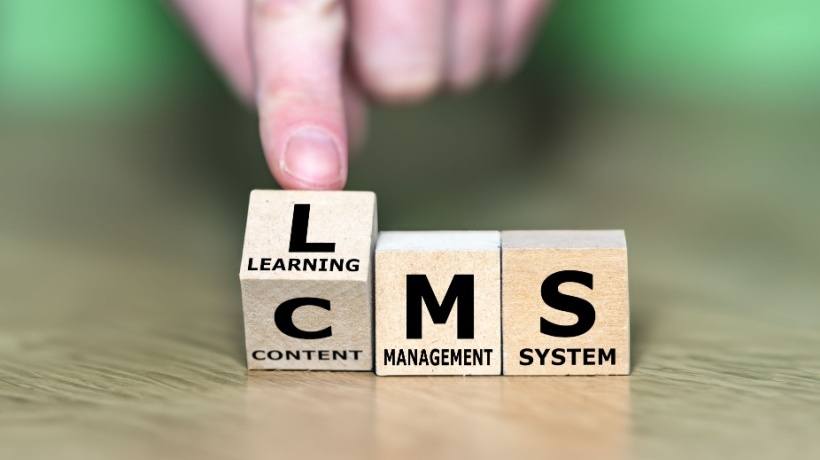
If you’ve ever created your own in-house learning content, you’ve probably used course creation tools. Traditional standalone authoring tools typically allow you to build one eLearning course at a time using pre-selected templates and upload it to your LMS or learning platform. Although these tools serve a purpose, standalone authoring tools have limitations. There are limits, especially when it comes to creating truly engaging and interactive learning content at scale that can be reused and updated as the learning ecosystem grows and organizations change. If you’re struggling to keep up with your organization’s eLearning demands, it may be time to switch from a standalone authoring tool to a learning content management system (LCMS) with integrated authoring tools. This gives you the flexibility to do more with all the content you create with a consistent system for creating, managing, and publishing content. With an LCMS, you can now get work done from a single, powerful system, from e-learning modules to software simulations to knowledge base themes and more, rather than stitching together point solutions across disparate technology stacks. Masu.
A true learning content management system goes beyond authoring and focuses on managing content. If you have a large team or create a large amount of content, managing content can add up and become an insurmountable task while meeting multiple business goals. Frequent updates across many teams, languages, and a growing content library.
Why choose a learning content management system?
1. From basic SCORM to dynamic eLearning courseware
Creating one course at a time will fill up your bandwidth quickly. Being able to more intelligently build courseware in a way that allows you to reuse assets and meet multiple needs in a single course creation process helps you achieve your organization’s goals faster while saving time to improve the overall experience. will be able to achieve.
For organizations building simple, easy-to-understand eLearning courses, standalone authoring tools work just fine. These tools create better courses than PowerPoint presentations. The learner consumes the content on the screen and clicks Next to consume the next content. Repeat this throughout the course. Although these courses are quick and easy to create, learners get bored with content that looks and feels the same, and end up disengaging from the content and simply aiming to complete it.
Switching to an LCMS will greatly enhance your learning content creation (and ongoing management) process. Rather than creating one course at a time, the single-source approach allows you to create one piece of content and spin it into multiple assets across multiple channels with the push of a button. This makes the LCMS content authoring process more efficient by allowing you to scale more quickly by creating many assets at once, rather than just a single SCORM course.
For example, instead of creating 10 different courses that are tailored to different job roles or translated into different languages, the authoring capabilities of LCMS allow you to create one “master course” and use other can be automatically remixed into many formats, languages, and versions. Less “busy work” and just as much as you need. Imagine 15 languages in one course. Yes, with the right LCMS solution.
2. From limited templates to unlimited brand management
Most standalone authoring tools allow you to create a single branded template and use it for all learning content. This helps with consistency, but it also means that everything you create will look and feel pretty much the same, including colors, layouts, and images (sorry, Articulate, this is true) . If you want to keep your learners engaged over time, you can mix things up and keep everything visually more interesting.
LCMS gives you more control over the appearance of content such as SCORM courses, HTML templates, searchable knowledge bases, and small standalone assets without the additional effort required with standalone authoring tools. It will be. This is the best of both worlds, giving you more creative control and ensuring your learning is at its best without any extra work. It also gives you granular control over author permissions, so you can create content from the confines of your assigned team, even in a different department, product line, or region where a specific brand operates under specific parameters. You can avoid deviating. Meaning.
3. From duplicated effort to intelligent asset reuse
One of the most frustrating things about standalone authoring tools is having to repeat the same tedious tasks over and over again, especially if you’re building multiple courses or assets that are very similar. Even tasks like finding the right graphics for a course without re-uploading or duplicating files can be time-consuming, and what should be an easy task can quickly turn into a long and tedious task.
In contrast, an LCMS allows you to be smarter about how you manage and reuse assets such as courses and learning objects. Instead of creating a course once and using it only in your LMS, create a course once and use it multiple times in a variety of ways, such as breaking it down into bite-sized microlearnings or personalizing it by location or role. can. You may choose to provide certain information or change how content is delivered to you. This makes content creation more scalable, efficient, and impactful. You can also save a lot of time and energy by eliminating duplicate work.
4. From single-channel publishing to multi-channel publishing
When learning content authoring, creating content first is only half the battle. It’s easy to forget, but you’ll probably need to update your content at some point, whether it’s to keep it current, align with new brand guidelines, or add new information.
Publishing through a cloud-based publishing engine streamlines the content creation process across multiple channels. LCMS content resides on live links and can be posted to these links directly from the authoring interface. LCMS platform multichannel publishing engines like dominKnow | ONE and Convey make it easy to update and publish LMSs, workspaces (like Google and SharePoint), websites, knowledge bases, and more all at once. Masu. This saves you a lot of time by eliminating the need to go through the tedious process of updating content on each channel individually.
Accessibility is also a requirement in today’s content creation and distribution practices. The best-in-class LCMS is also WCAG AA 2.2 compliant, ensuring content is accessible no matter what device learners are using, maintaining the engaging interactivity that modern learners demand. while improving the level of mobile learning content.
How a financial services company eliminated duplicate course authoring
The financial services team was creating separate formal and informal compliance training. This left room for inconsistent information sharing between different content formats, doubling the content authoring process and development costs. There is no room for contradiction in the high-stakes world of financial compliance. Therefore, the company needed a new way to share critical compliance training across the company faster, easier, and less cumbersome.
This client uses dominKnow | ONE LCMS as a single, centralized content creation, management, and publishing platform and the Convey module for dynamically publishing content across channels.
A powerful LCMS allows your clients to create content once and publish it to multiple platforms, ensuring everyone receives consistent and accurate compliance training. This eliminates the duplication of effort in creating separate content for formal and informal learning, and saves clients over $100,000 annually in labor costs through more efficient authoring and QA. Additionally, adhering to the WCAG 2.2 accessibility standard requires that all content created by clients be 100% accessible, regardless of format or subject matter, potentially exposing clients to legal and financial risks. Sexuality is also reduced.
Read the full case study here.
Are you ready to make the switch?
Dominnow | ONE makes it easy for organizations of all shapes and sizes to take back control of the content authoring process and significantly increase the ability to create consistent, impactful, and engaging learning content across multiple formats and channels. It will be quick and easy to create.
Want to see how it works? Start your free trial of dominKnow | Today, we’ll show you how to switch from a standalone authoring tool to a robust, intuitive LCMS with its own built-in authoring tools to help you manage your content. See how easy the creation process becomes.
Dominnow | 1
Large-scale and efficient learning content management. Create, collaborate, organize, publish, and update seamlessly. An LCMS for teams working with large amounts of disparate content. Manage multiple authoring projects and content for all types of learning.
