


What Is Vicarious Conditioning?
Vicarious conditioning is a psychological learning process in which individuals acquire behaviors, fears, or emotional responses by observing others, rather than through direct experience. In simple terms, it means we learn how to feel or act by watching what happens to someone else.
This type of learning affects our daily lives more than many people think. For example, we might develop a fear after seeing someone get hurt, pick up habits from our coworkers, or learn what is acceptable in society by watching how others are treated. Vicarious learning also influences how we react to stress, authority, risk, and even success. It shapes our habits, emotional responses, and decisions, often without us realizing it.
In psychology, vicarious conditioning is linked to behavioral psychology and social learning theory. It explains how people learn to connect situations with emotional responses by watching others. When we see outcomes, like fear, rewards, or punishments, our brain processes this information and saves it as learned responses.
In this article, we will break down what vicarious conditioning really means, how it works from a psychological perspective, and why it matters in real life. You will explore clear definitions, practical examples, key experiments, and modern applications in areas like education, therapy, the workplace, and media. Shall we?
In This Article
How Vicarious Conditioning Works
Vicarious conditioning might seem complicated, but it’s actually very simple. We learn by watching others all the time, often without realizing it. Instead of learning from our own experiences, we pick up emotional reactions and behaviors just by seeing what happens to someone else. Let’s break it down step by step.
1. Observation
Everything starts with watching someone else, also known as a model. This could be a parent, a friend, a coworker, a teacher, or even someone in a video or on social media. The model does not have to be close to us personally, but we usually pay more attention when we relate to them or see them as important, skilled, or similar to us.
2. Witnessing Emotional Or Behavioral Response
Next, we observe what happens to that person. Maybe they react with fear, excitement, embarrassment, or confidence. Or perhaps we notice a clear outcome, like being praised, punished, rewarded, or avoided. These emotional and behavioral reactions are the key signals that our brain starts to process.
3. Forming Internal Association
Our brain connects situations with their outcomes without us even trying. We start to link certain behaviors or events with specific feelings or results. For example, when we see someone get hurt after touching something hot, we quickly learn that heat is dangerous, even if we never touch it ourselves.
4. Reproduction Of Behavior Or Response
Finally, when we find ourselves in a similar situation, we may copy the behavior or experience the same emotional response. We might avoid something, feel anxious, act confidently, or repeat a behavior that seemed to work well for someone else. At this point, learning has happened without direct experience.
Vicarious Conditioning Vs. Classical Conditioning
At first glance, vicarious conditioning and classical conditioning might seem similar because both explain how we learn emotional reactions and behaviors. However, the main difference is how we learn: vicarious conditioning happens through observation, while classical conditioning occurs through direct experience. Let’s break it down.
The Core Differences
Classical conditioning is learning by personally experiencing a connection between two things. This idea comes from Ivan Pavlov’s famous experiment with dogs. Pavlov rang a bell before giving the dogs food. Over time, the dogs started salivating at the sound of the bell alone. The bell became associated with food through repeated exposure. In everyday life, classical conditioning shows up more often than we realize. For example, if you once got food poisoning after eating a specific dish, you might feel nauseous just thinking about it. No one had to warn you. You learned that reaction because it happened to you.
Vicarious conditioning works differently. Instead of learning through your own experience, you learn by watching someone else. You observe their reaction, especially if it involves strong emotions like fear, pain, or reward, and your brain forms the same association. The emotional response is “borrowed” from someone else’s experience.
Classical Conditioning
Vicarious Conditioning
You experience the event yourself.
Learning happens through repetition.
Reinforcement or pairing is necessary.
You observe someone else.
Learning can happen instantly.
No direct reinforcement is required.
Can They Overlap?
Yes, and they often do. You might first learn a fear vicariously by watching someone react strongly to a situation. Later, a personal experience can reinforce that fear through classical conditioning. For example, watching a sibling panic around cockroaches may make you nervous at first. A later bad encounter with a cockroach can strengthen that response.
Understanding the difference helps explain why people can develop fears, preferences, or habits without knowing exactly why. Sometimes, the learning did not come from something that happened to us directly, but from something we witnessed.
Vicarious Conditioning Vs. Observational Learning
At first glance, vicarious conditioning and observational learning may seem the same because both involve learning by watching others. The main similarity is that you don’t have to experience the event yourself to learn from it. You learn through observation, which is why people often confuse them. However, while they have similarities, they are not exactly the same.
The Core Differences
Observational learning is a way we learn by watching others. It includes imitating behaviors, picking up skills, or understanding social rules. For example, a new employee can learn how to handle customer complaints by observing a colleague.
Vicarious conditioning is a more specific type of observational learning. It involves learning emotional or physical responses, like fear or excitement, through what we observe. For instance, if you see someone scream after hearing a loud noise and then feel scared of loud noises yourself, that’s vicarious conditioning. This type of learning focuses on emotions rather than just actions or skills.
The main difference between the two is what we learn. Observational learning covers behaviors, skills, and knowledge, while vicarious conditioning focuses specifically on feelings. Observational learning teaches us how to do something, while vicarious conditioning teaches us how to feel about something. Vicarious conditioning focuses on our emotional reactions. In contrast, observational learning doesn’t always require an emotional response. You can watch a video or a demonstration and learn how to put furniture together or solve a puzzle without feeling any strong emotions.
In summary, all vicarious conditioning is observational learning, but not all observational learning is vicarious conditioning. One shows us what to do, while the other teaches us what to feel. Understanding this helps us realize how we learn both knowledge and emotions from those around us and why our feelings can change just by watching others.
Famous Experiments And Studies
Vicarious conditioning is not just a theory from textbooks; it has been shown in interesting experiments that demonstrate how people learn by watching others. These studies help us understand how we can pick up emotions, behaviors, and fears by observing, without having to experience things ourselves. Let’s look at some key research that has helped us understand vicarious conditioning better.
Bandura And Social Learning Theory
One of the most famous names in psychology when it comes to learning through observation is Albert Bandura. Bandura’s work on social learning theory is directly connected to vicarious conditioning. His theory suggests that people can learn not only by doing but also by watching others and imitating their behavior. This means we don’t always need to experience consequences ourselves; simply seeing someone else rewarded or punished can shape our own behavior.
Bandura’s Bobo doll experiment is a classic example. In this study, children watched adults interact with an inflatable clown doll called “Bobo.” Some adults acted aggressively, hitting and yelling at the doll, while others played calmly. Later, when the children were left alone with the doll, those who had observed the aggressive behavior were much more likely to act aggressively themselves. This experiment showed that behaviors, both positive and negative, can be learned vicariously by simply observing a model. It highlighted how powerful observation is in shaping actions and reactions, which is at the heart of vicarious conditioning.
Fear Conditioning Studies
Vicarious conditioning isn’t limited to learning behaviors; it also plays a huge role in how we learn emotional responses, like fear. Researchers have conducted experiments where participants observe others experiencing fear or discomfort in certain situations. For example, one study had people watch someone react fearfully to a harmless stimulus, like a neutral sound or image. Later, the observers themselves started showing fear responses to the same stimulus, even though nothing directly harmful had happened to them.
These studies reveal that fear can be learned indirectly, through observation alone, which is called observational fear learning. Key findings show that humans, especially children, are highly sensitive to the emotional cues of others, which helps them avoid danger without having to experience it firsthand. Essentially, our brains are wired to learn from other people’s experiences, which can be protective but sometimes also lead to unnecessary fears.
What Research Says Today
Modern psychology studies vicarious conditioning and combines findings from neuroscience. For example, mirror neurons are special brain cells that activate when we watch someone else do something. This helps explain why we often share the feelings of others. These neurons are important for empathy and learning by watching others, providing a biological reason for vicarious conditioning.
Recent research examines how vicarious conditioning affects our behavior in daily life, including parenting, teaching, and media use. Observing someone else’s success or failure can influence our actions and feelings, often without us realizing it. Neuroscientists and psychologists now see this type of learning as a natural and helpful way for people to better understand and navigate social situations.
Applications Of Vicarious Conditioning
Vicarious learning has a surprisingly wide range of applications, from mental health therapy to classroom dynamics, workplace culture, and even marketing strategies. Let’s explore some of the ways vicarious conditioning shapes our lives.
Psychology And Therapy
One of the most obvious places vicarious conditioning comes into play is in psychology and therapy. Mental health professionals often pay close attention to how people pick up emotional responses from observing others, because it can have a lasting impact on behavior.
Anxiety Disorders
For people with anxiety disorders, vicarious conditioning can explain how fears and worries develop. Imagine a child watching a parent react with panic every time a dog appears. Even if the child has never been bitten, they may start feeling anxious around dogs just by observing the parent’s reaction. Therapists use this understanding to help patients identify the sources of learned fears and to retrain the brain through exposure therapy or cognitive-behavioral techniques. Recognizing that anxiety can be learned from others is often the first step in managing it effectively.
Phobia Development
Phobias are another area where vicarious conditioning is highly relevant. Someone may develop a fear of flying, illnesses, or public speaking simply by watching someone else respond with extreme fear. In therapy, this understanding helps professionals guide clients toward safe experiences that challenge these learned fears. For instance, seeing another person calmly handle the situation that triggers the phobia can help retrain the brain to react more calmly, a process sometimes referred to as “vicarious extinction.”
Trauma-Related Learning
Trauma doesn’t only affect the person who experiences it directly; it can be observed and internalized by others. Witnessing someone else going through a traumatic event, or even hearing about it, can create anxiety, fear, or avoidance behaviors. Psychologists and therapists study vicarious conditioning in trauma to understand phenomena like secondary trauma, which often affects first responders, family members, and even communities after a crisis. Knowing how trauma can be learned vicariously helps therapists design interventions to prevent negative emotional patterns from spreading.
Education And Learning
Vicarious conditioning is not just about fears or phobias. It also plays a huge role in education. Teachers, parents, and peers all act as models for learning behaviors, emotional responses, and social skills.
Classroom Behavior
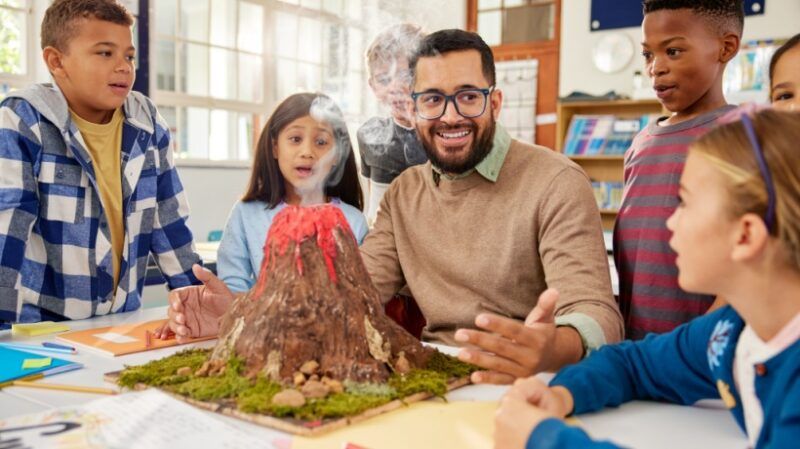
Students in classrooms often watch each other. If a child sees classmates staying organized and turning in homework on time, they might start doing the same. Conversely, if a child notices others avoiding work, they may copy that behavior. When teachers show curiosity, persistence, and positive interactions, it inspires students to do likewise. This makes the classroom a place for learning from each other’s actions.
Peer Modeling
Peer influence is incredibly powerful, and vicarious conditioning helps explain why. When a student watches a peer receive praise or rewards for a particular behavior, they’re more likely to adopt that behavior themselves, even if the reward isn’t directly given to them. This is why mentorship programs, study groups, and collaborative learning can be so effective. By simply observing peers succeed or fail, students learn both positive and negative outcomes without having to experience them firsthand.
Workplace And Organizational Behavior
Vicarious conditioning continues well into adulthood, especially in the workplace. Companies, teams, and leaders all rely on observation to shape behavior and culture.
Company Culture
Every organization has a culture, even if it is not clearly defined. Employees notice how others act, like who speaks up in meetings, who puts in extra hours, and how managers treat their teams, and adjust their own behavior based on these observations. If teamwork is rewarded and employees see their peers recognized for collaborating, they are more likely to adopt those same behaviors. On the other hand, if slacking goes unnoticed, that behavior may spread as well. Vicarious conditioning explains how workplace norms are learned and maintained without direct teaching.
Leadership Influence
Leaders are perhaps the most visible models in any organization. Their actions, both positive and negative, are powerful vicarious lessons for employees. A manager who handles conflict calmly and communicates transparently teaches the team to do the same. On the contrary, if a leader reacts with frustration or blame, that behavior can ripple through the organization. Understanding vicarious conditioning enables leaders to intentionally model the behaviors they want to see in their teams.
HR And Training Implications
Human Resources professionals use vicarious conditioning principles in L&D programs. For example, role-playing exercises, mentorship programs, and shadowing opportunities allow employees to observe desirable behaviors in action. Training isn’t just about direct instruction; it’s about giving employees a chance to watch and learn. Even eLearning platforms can integrate videos showing “ideal” workplace behavior, making vicarious learning a deliberate part of professional growth.
Marketing And Media
Vicarious conditioning also plays a surprising role in the way we consume media and respond to marketing. Advertisers, influencers, and social media platforms leverage this form of learning to shape consumer behavior.
Influencer Behavior Modeling
Social media influencers are essentially models for vicarious conditioning on a massive scale. Followers watch their behaviors, preferences, and reactions and often imitate them. Whether it’s fashion choices, workouts, or travel habits, people learn indirectly by observing influencers, even if they never meet them in person. Emotional reactions, such as excitement, joy, fear, or surprise, can also be experienced vicariously.
Advertising Psychology
Advertisers know that showing someone enjoying a product can influence potential buyers more than just describing it. Seeing a happy family using a cleaning product or a smiling friend trying a new gadget triggers vicarious emotional responses. Consumers experience a sense of reward or satisfaction through observation, which can be more powerful than traditional direct instruction or persuasion.
Social Proof Mechanisms
Social proof is another application of vicarious conditioning. Reviews, testimonials, and user-generated content work because people observe others’ experiences and form expectations for themselves. If you see multiple people enjoying a service or achieving results, you’re more likely to try it too. Marketers leverage this principle in everything from online reviews to influencer collaborations, creating a sense of safety and validation through observation.
Vicarious Conditioning In The Digital Age
Vicarious conditioning is all around us online. Social media has made it easier than ever to pick up fears, habits, or reactions just by watching others. When someone shares a shocking video or a personal story about an accident, a panic, or even a health scare, many of us experience a real emotional reaction, even if we weren’t directly involved. That’s vicarious conditioning at work.
One of the most striking effects is how fear and outrage can go viral. A single post or video can trigger waves of reactions, and suddenly, millions of people start responding emotionally, imitating behaviors, or sharing content without even thinking about it. Algorithms play a huge role, too. Social media is designed to show us content that grabs our attention, often amplifying dramatic or emotionally charged posts. This can unintentionally reinforce fears or biases because the more we see something, the more likely we are to internalize it. Over time, repeated exposure can shape our attitudes, decisions, and even habits, without us ever noticing.
Of course, this digital conditioning comes with mental health considerations. Constant exposure to stress-inducing content can increase anxiety, fear, or social comparison. It can even make small risks feel much bigger than they are. However, being aware of how vicarious learning works online can help us step back, choose what we engage with, and protect our emotional well-being.
Conclusion
Vicarious conditioning happens in everyday life. We often learn by watching others, whether it’s noticing someone’s fear, picking up habits, or seeing how people handle challenges. Being aware of this type of learning can help us manage emotions, make better choices, and understand behavior around us. Paying attention to these patterns can make you more mindful of your own actions and the influences around you.
Vicarious Conditioning FAQ
What is an example of vicarious conditioning?
Vicarious conditioning occurs when you learn by watching others. For example, a child may dislike a type of food after seeing a friend getting sick from it. You don’t need to experience it yourself. Observing others is enough to form the response.
Is vicarious conditioning the same as imitation?
No. Imitation is copying someone’s actions. Vicarious conditioning is the process of learning emotional or behavioral responses by observing the consequences of others’ actions. It affects how you feel or react, not just what you do.
Can adults experience vicarious conditioning?
Yes. Adults can learn fears, habits, and emotional responses from watching others. For example, seeing a coworker stressed about public speaking can also make you anxious. It affects all ages.
How does vicarious conditioning relate to social learning theory?
Vicarious conditioning is part of social learning theory, which says we learn by observing others. It shows how watching rewards, punishments, or emotional reactions shapes our own behavior and feelings.
Can vicarious conditioning be unlearned?
Yes. Negative responses learned by observing others can be reduced through safe experiences, exposure, and positive examples. Over time, repeated positive situations help unlearn fears or habits picked up indirectly.
