


In Colorado, students taunted their Black classmates by playing whipping sounds on their cellphones and saying they should be shot “to make us a better race.”
The only two Black students in a small district in Ohio were called the N-word by white peers starting on their first day. They got accustomed to hearing slurs like “porch monkey” and being told to go pick cotton.
And at a school in Illinois, white students included Confederate flags in their PowerPoint presentations for class assignments and shook a school bus as Black students were exiting to try to make them tumble off.
In each case, the U.S. Department of Education’s civil rights arm investigated and concluded that school districts didn’t do enough to stop racial hostility toward Black students. It struck agreements with those districts to require changes and to monitor them for months, if not years. They were among roughly 50 racial harassment cases the OCR resolved in the last three years.
But that sort of accountability has ended under the second administration of President Donald Trump. Nearly a year since he took office, the department’s Office for Civil Rights has not entered into a single new resolution agreement involving racial harassment of students, a ProPublica analysis found.
“The message that it sends is that the people impacted by racial discrimination and harassment don’t matter,” said Paige Duggins-Clay, an attorney with a Texas nonprofit that has worked with families who’ve filed racial harassment complaints with OCR.
The Education Department had been investigating nine complaints in the Lubbock-Cooper school district tied to racial discrimination, but Duggins-Clay said she and others involved in the cases haven’t heard from the department this year.
The OCR regularly resolves dozens of racial harassment cases a year and did so even during Trump’s first administration. In the last days of the Biden administration, OCR workers pushed to close out several racial harassment agreements, including one that was signed by the district the day after Trump was inaugurated. With Trump in office, the agency has shifted to resolving cases involving allegations of discrimination against white students.
At the same time, the administration has been clear about its goal of dismantling diversity, equity and inclusion programs across all facets of American life. This has been especially pronounced at schools and colleges, where the administration has also eroded protections for transgender students and considerations for historically disadvantaged groups.
Internal department data obtained by ProPublica shows that more than 1,000 racial harassment investigations initiated in previous administrations still are open. Most of those complaints involve harassment of Black students.
Not only has the Education Department failed to enter into any resolution agreements in those racial harassment cases, but it also has not initiated investigations of most new complaints. Since Jan. 20, it has opened only 14 investigations into allegations of racial harassment of Black students. In that same time period, more than 500 racial harassment complaints have been received, the internal data shows.
The Education Department did not respond to ProPublica’s questions and requests for comment. Trump is working to shutter the Education Department, and the agency has not updated online case information typically accessible to the public since he took office.
Under Trump, OCR even stopped monitoring many districts the agency previously found had violated students’ civil rights — including some that the OCR rebuked days before Trump took office. In most cases, districts had agreed to be monitored.
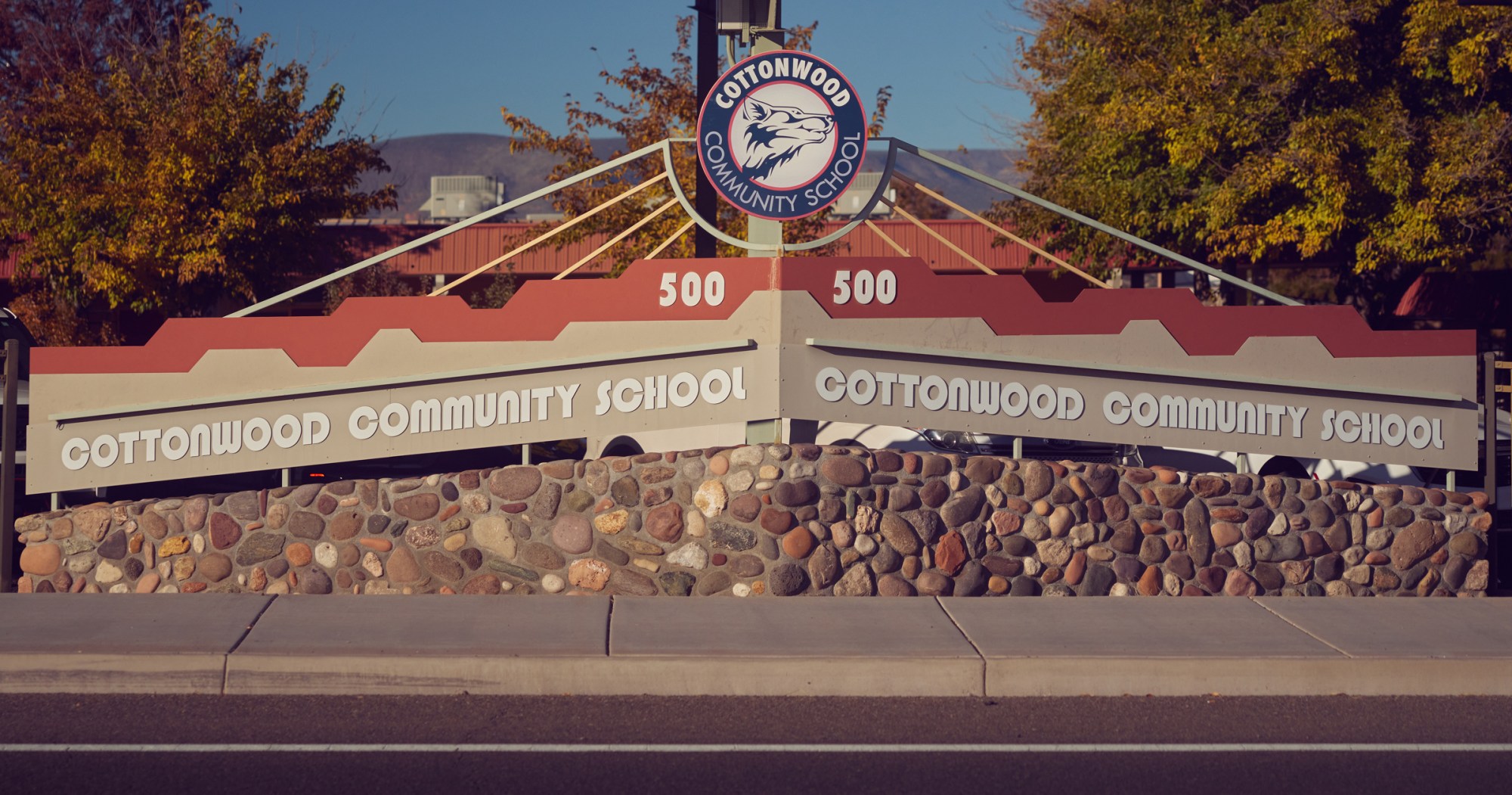
On Jan. 13, the OCR closed out a nearly three-year investigation into the Cottonwood-Oak Creek Elementary District in Arizona, which it found had made “minimal and ineffective” attempts to address racial and sexual harassment at the school.
A seventh grader who describes herself as Afro-Indigenous said school employees witnessed her being pushed, kicked and ridiculed for having darker skin, then having water poured over her head by a boy to “baptize” her for “the sin” of being gay, using a slur. But the school, according to records, merely documented the incidents and then removed the boy from music class for the last weeks of the school year.
Students in Cottonwood who identified as queer told an OCR investigator that they were having anxiety attacks and considering harming themselves after sustained harassment. Peers groped their bottoms and nipples and yelled, “That’s the homo way!” A teacher told OCR she heard a kindergartener use the N-word and saw swastikas doodled on notebooks, and students admitted saying “slavery is good” and “white power.” For many, the investigator found, school was a hostile, discriminatory place.
Kate Sierras filed a complaint against Cottonwood-Oak Creek Elementary District with the Office for Civil Rights on behalf of her daughter. Jesse Rieser for ProPublica
“Almost immediately my daughter’s whole personality changed. She just went from a vibrant, happy, confident person to a person with dark circles under her eyes,” said Kate Sierras, who filed a complaint with the OCR on behalf of her daughter, the girl who was “baptized.” Her daughter was heartbroken, she said.
“She started having panic attacks every day. It got to the point where I would drive her to school and she wouldn’t get out of the car.”
The district agreed to extensive training for staff, training for students and their parents, and a thorough audit of reported harassment for two school years. A district spokesperson said the district has tried to address OCR’s findings but that it never heard from OCR again after the agreement was reached.
“We’re prepared and ready to move forward as soon as they reach out,” the spokesperson said.
A Diminished “Dismissal Factory”
The OCR operates under a 1979 congressional mandate to ensure equal treatment at school for students regardless of race, gender or disability. As recently as last year, it remained one of the federal government’s largest enforcers of antidiscrimination laws, with nearly 600 civil rights workers.
It has weathered the prerogatives of each presidency. In Trump’s first term, the OCR took a less aggressive stance than in previous years. But as he entered office a second time, Trump was not ready to settle for incremental change. He pledged to carry out the long-held conservative dream of shutting down the Education Department. His education secretary, Linda McMahon, has decimated the OCR and shifted its purpose.
The Trump administration started the process of laying off hundreds of Education Department workers in March — about 300 of them from the OCR — and closed seven of the 12 regional civil rights offices. While court challenges played out, those workers have been on paid leave.
Amid the staffing chaos and the shift in priorities at the OCR, families’ discrimination complaints have piled up. When President Joe Biden left office, there were about 12,000 open investigations; now there are nearly 24,000. The majority involve students with disabilities, as has been the case historically.
At the same time, even getting complaints into the investigative queue is getting harder. Attorneys still on the job at OCR describe working in what they call a “dismissal factory.” Records filed in court cases show that most complaints filed by families have been dismissed without investigation.
“Real investigations are very infrequent now,” said Jason Langberg, who was an OCR attorney in Denver until this summer. “With more than half the workforce gone, pauses for various reasons, a shutdown — this is what you get.”
This month, the OCR ordered employees affected by the disputed layoffs back to work. In an email to those staff members on leave, the department said it still planned to fire them but now wants them to start working through its backlog.
Protesters rally outside the U.S. Department of Education building in Washington, D.C., as the Trump administration made cuts to the agency in March. Around 300 employees were cut from the OCR alone. Jason Andrew for ProPublica
The accumulation of cases that stalled mid-investigation include several in West Texas. One stems from allegations that white students accosted Black students with racial slurs and monkey sounds in the hallways at a middle school in the Lubbock-Cooper school district in 2022. Those complaints were being handled by the OCR’s Dallas office, which McMahon closed. “No information has been provided” about the cases since, according to a March court filing in one of the lawsuits to stop OCR layoffs.
Duggins-Clay, an attorney with the nonprofit Intercultural Development Research Association who has advocated for Lubbock-Cooper families, said the OCR had interviewed students and parents and was actively investigating their concerns through last year.
“We felt like OCR was close to making a determination. We thought we were going to be able to get a resolution in the next couple of months, early in 2025,” Duggins-Clay said.
She emailed the investigator in July and got an automated reply that the employee no longer had access to the email. “There has been no outreach, no communication, nothing. Period,” she said.
District officials said in a statement that they also haven’t heard from the OCR this year. The board of trustees passed a resolution in 2023 condemning racial harassment, and the district “remains committed to fostering a strong, welcoming climate for students and the community, and addressing concerns promptly and thoroughly whenever they arise,” the statement said.
The OCR did reach out in July to Jefferson County Public Schools in Louisville, Kentucky — to sanction it for its efforts to address discrimination against Black students. In September 2024, under the Biden administration, the district had agreed to address OCR’s finding that it disproportionately disciplined Black students and to put in place measures to halt unfair treatment.
Trump’s Education Department, however, warned the district that it “will not tolerate” efforts to consider racial disparities in discipline practices and accused the district of “making students less safe.” Then it revoked a nearly $10 million federal magnet-school grant and chastised the district for having sent extra funding to schools with more students of color.
The district revised its school funding formula in response but has asked an administrative law judge within the Education Department to reinstate the grant, which is designed to help further school desegregation nationwide and ensure all students have access to a high-quality education.
The OCR’s work has slowed, but racial harassment of Black students at school hasn’t, said Talbert W. Swan II, president of the Greater Springfield NAACP in Massachusetts. Only last year in his community, white students in the Southwick-Tolland-Granville Regional School District held a mock “slave auction” on Snapchat, bidding for the sale of Black students.
The district agreed to address racial bullying and to be monitored by the state attorney general through this school year.
“When you’re talking about 13-year-olds holding a slave auction, it lets you know that these racist attitudes are not dying,” said Swan, who also is senior pastor of the Spring Of Hope Church Of God In Christ. “They’re being reproduced over and over again from generation to generation.”
Civil Rights Enforcement Abandoned
In North Carolina, one district sees Trump’s view on civil rights enforcement as a way out of a resolution agreement reached at the end of the Biden administration.
An OCR investigation at mostly white Carteret County Public Schools had found that students had hurled racial slurs at two Black teenagers who had enrolled mid-year. Classmates cornered one of the boys in a bathroom stall and taunted him about his darker skin.
The boys’ family pleaded with school officials to intervene. In response to these incidents, administrators offered access to a staff-only restroom; the school’s police officer suggested that one of the boys leave school 10 minutes early, and the principal permitted the other to skip class. Administrators viewed the harassment at Croatan High School as isolated incidents because there were many different perpetrators, records show.
William Hart II, whose son and nephew were the targets of harassment, said it was so unbearable — and the district’s reaction so inadequate — that he and his wife moved the family to Florida after just four months in Carteret County. Both students graduated, and Hart’s nephew joined the U.S. Air Force. Both remain in therapy trying to make sense of the traumatic time.
“I never would’ve thought my boys would go through this. I thought my generation would be the last to deal with it. My father went to a segregated school growing up in North Carolina,” Hart said. “We thought it would be different.”
On Jan. 16, investigators struck an agreement with the Carteret County district. But in February, the district urged OCR to nullify its findings and the deal given the “dramatic changes underway in Washington, D.C.,” according to emails from the district to the OCR that were obtained by ProPublica.
The agreement was based on the previous administration’s “notion of diversity, equity and inclusion,” wrote Neil Whitford, the attorney for the district.
“The election of Trump as President has made it crystal clear that DEI at the federal level is dead,” he wrote.
Whitford told ProPublica in an email that the district has an excellent reputation and prides itself on having strong antidiscrimination policies. The district, he said, handled the racial harassment of the two boys well and has completed some terms of the resolution agreement even though it maintains it broke no civil rights laws.
Records show that no one from the OCR has responded to the Carteret County district since February, including to its request to dismiss the agreement and postpone any remaining reform efforts.
Have you recently filed a civil rights complaint or do you have a pending case? We need your help to get a full picture of how the dismantling of the Office for Civil Rights is affecting students, parents, school employees and their communities.
