


Missouri prosecutors overseeing an investigation into 2020 voting in Fulton County, Georgia, have been meeting since last fall with lawyers ordered by President Donald Trump to reinvestigate his loss to Joe Biden.
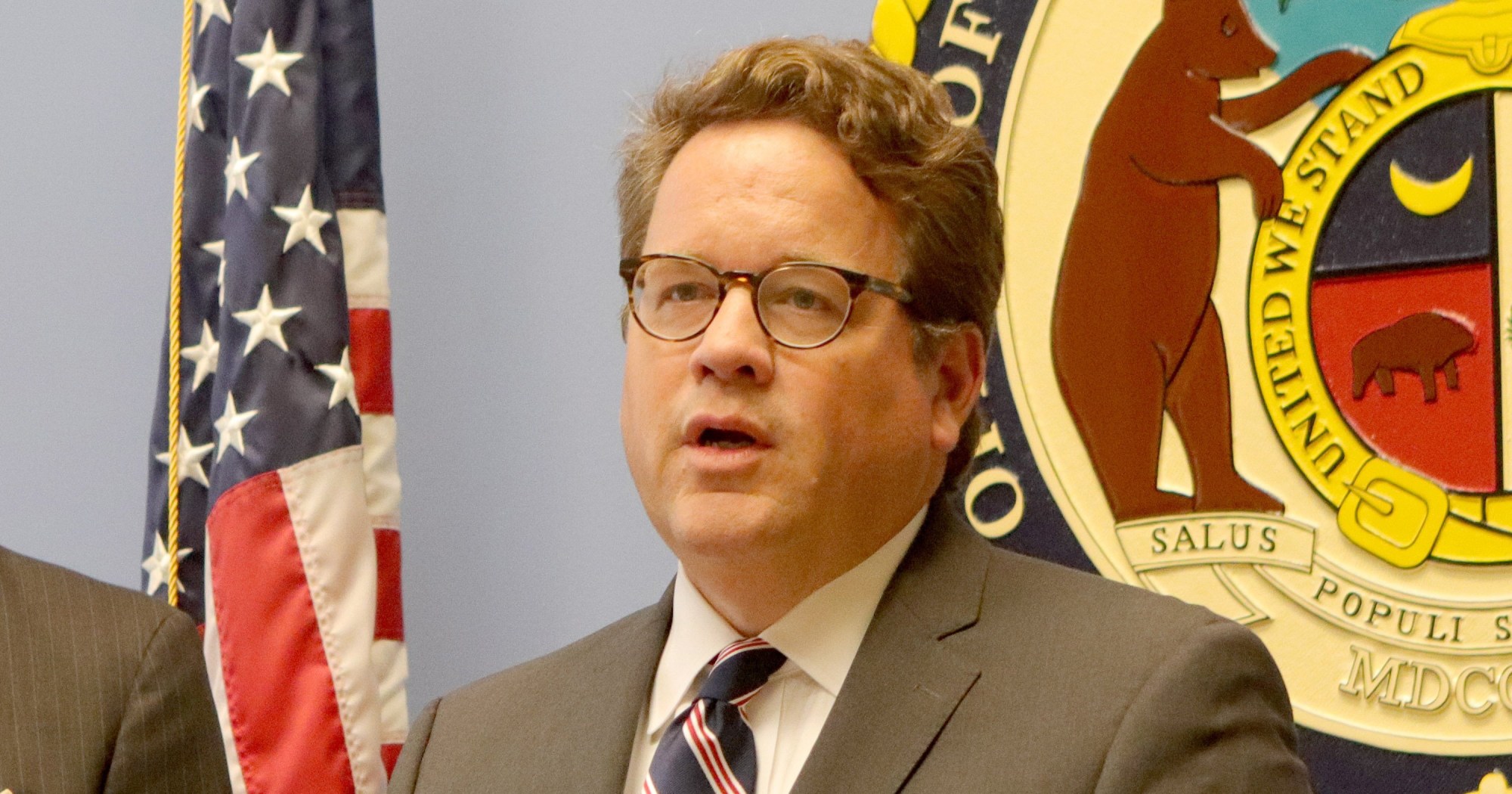
Thomas Albus, whom President Trump appointed last year as U.S. attorney for the Eastern District of Missouri, has held multiple meetings with top administration lawyers to discuss election integrity.
Also present at those meetings was Ed Martin, a Justice Department lawyer who most recently led a group investigating what the president described as the “weaponization” of the Justice Department against him and his allies, said a person familiar with the meetings who spoke on condition of anonymity for fear of retaliation.
Kurt Olsen, the White House lawyer tasked with reviewing the 2020 election, was also directed to attend at least one meeting, the people said. Both Mr. Martin and Mr. Olsen worked on behalf of Mr. Trump to overturn the results of the 2020 election, and a federal court sanctioned Mr. Olsen for making false claims about the reliability of voting machines in Arizona.
The meeting revealed new details about the lead-up to and those involved in January’s FBI investigation into Fulton County, which election and legal experts told ProPublica was a significant escalation of President Trump’s subversion of democratic norms.
U.S. Attorney General Pam Bondi appointed Albus and gave him special authority to handle election-related cases across the country, even though his previous work as a federal prosecutor did not involve election law or election-related cases. The meeting with Martin, Olsen and other Justice Department lawyers was about “election integrity,” the people said. That’s the term the Trump administration is using to describe its investigation into false claims that the election was rigged.
Martin, Olsen, Albus and others declined to answer ProPublica’s questions about the meeting or other detailed questions. The White House and Justice Department also did not respond to questions.
The talks came at a particularly important time.
Martin’s efforts to obtain campaign materials from Fulton County, a Democratic stronghold, have hit a wall. In August, he sent a letter to a Fulton County judge requesting that he allow access to tens of thousands of absentee ballots for a “Department of Justice investigation into election integrity,” but reportedly received no response.
Martin told Steve Bannon on a podcast aired before and after the meeting that while the White House gave Olsen formal authority to reinvestigate the 2020 election, “within the Department of Justice myself and several others are working on the same topics, including access to Fulton County ballots.” But Martin described the progress as a “challenge.”
Bannon, who served as Trump’s chief strategist during his first term, asked why Martin didn’t just “bring in some federal marshals and seize the ballots.”
“Look, we’ve got to get the ballots in,” Martin suggested, suggesting it was “easier said than done.”
Ed Martin posted a photo on social media of his meeting with Thomas Albus in Washington, DC. Via X
Eventually, Albus and Olsen began questioning witnesses in the case. Kevin Moncla, a conservative academic, told ProPublica that he spoke with Albus and Olsen several times and separately around the beginning of the year. He identified himself as Witness 7 in the affidavit that convinced a judge to authorize the raid, which mentions a 263-page report he wrote that activists believe may have justified the raid, ProPublica reported. Mr. Moncla has a long history of working with Mr. Olsen, dating back to Republican Arizona gubernatorial candidate Kari Lake’s efforts to overturn her 2022 loss.
In late January, just weeks after those interviews, Albus was listed as the government attorney for a search warrant authorizing the seizure of about 700 boxes of election materials in Georgia, far from Albus’ usual jurisdiction.
Former U.S. attorneys from both parties said it was unusual for federal prosecutors in one region to take on cases in other states or be given the nationwide authority given to Mr. Albus.
Under the Trump administration, leadership roles in the White House, Justice Department and FBI have increasingly been held by a small group of Missouri lawyers with long-standing connections.
Another federal official who attended the meeting was Jesus Osete, Chief Assistant Attorney General for Civil Rights. Before joining the Justice Department, Osete worked in the Missouri Attorney General’s Office, where he represented the state in at least five lawsuits against the Biden administration over vaccination mandates, immigration and other policies. Osete did not respond to requests for comment or a detailed list of questions.
When the FBI raided the Fulton County election center, Andrew Bailey, another lawyer in the same political circle, was in charge. Before joining the FBI as deputy director, he used his position as Missouri attorney general to pursue high-profile cases against prominent Democrats, and said he supports all efforts to investigate Biden, his family and his administration.
An FBI spokeswoman declined to answer detailed questions about Mr. Bailey.
Last year, veteran federal prosecutor Roger Keller of the Albus firm was recalled to help prosecute New York Attorney General Letitia James on mortgage fraud charges in Virginia after the original career prosecutor assigned to the case was replaced by a political appointee. After the judge dismissed the case, two federal grand juries declined to indict James again, and Mr. Keller returned to Missouri.
President Trump’s attorney general, D. John Sauer, previously served as Missouri’s attorney general under state attorneys general Josh Hawley and Eric Schmidt. He and Schmidt signed a Missouri court brief supporting efforts to overturn the results of the 2020 presidential election. Mr. Sauer later represented Mr. Trump in presidential immunity litigation, successfully arguing before the Supreme Court that Mr. Trump was entitled to broad immunity from prosecution.
Albus’ connections to other Missouri attorneys go back decades. But unlike some others, he has never held elected office, never had a high profile, and never ran a culture war campaign like Bailey or Martin. Instead, he spent most of his career as a federal prosecutor and a Missouri circuit court judge.
Emails show that Albus exchanged brief messages with Martin in 2007, when Albus was an assistant U.S. attorney in St. Louis and Martin was then-Governor Martin’s chief of staff. Matt Brandt. The emails are part of Blunt administration records that were released after they were released under Missouri’s Sunshine Law.
In an email exchange, Albus put in a good word for the St. Louis lawyer who was a finalist for the appellate court judgeship, which Blunt ultimately chose.
Mr. Albus served as Mr. Schmidt’s first assistant from early 2019 until Mr. Albus was appointed by Governor Mike Parson to fill a vacancy in the circuit court judgeship. Schmidt, now a U.S. senator, praised Albus as “one of the best prosecutors I’ve ever met” when he supported his nomination to be U.S. attorney in December.
Lawyers who appeared in Albus’ courtrooms described him as well-prepared, professional, and attentive, according to Missouri Judicial Performance Reviews. They said he followed the evidence, applied the law correctly and gave clear reasons for his sentence.
Albus has come under increased scrutiny since President Trump appointed him as interim U.S. attorney last summer. Much of that attention focused on the fraud case he inherited when he took office. Prosecutors alleged that a St. Louis developer falsely claimed to use minority- and women-owned subcontractors to qualify for city tax breaks, a practice that the Justice Department has previously treated as wire fraud.
One of the defendants was represented by Pam Bondi’s brother, attorney Brad Bondi.
Lawyers for the developers argued that even if the government’s claims were true, they were legally irrelevant because the Trump administration’s position is that tax breaks based on race or gender are illegal. Albus accepted these arguments and dropped the suit. As part of the settlement, Albus personally handed over a check from one of the developers to City Hall for approximately $1 million in compensation. He told the St. Louis Post-Dispatch that his office intervened “to make it clear” that he wanted the charges dismissed and handed over the check “to make sure we received it.”
In a letter to Pam Bondi and Deputy Attorney General Todd Blanche, Congressional Democrats said the dismissal of the St. Louis case and other cases in which the Justice Department intervened on behalf of Brad Bondi’s clients raised “serious and pervasive ethical concerns.” In the St. Louis case and another matter involving another client of Brad Bondy, whose charges were dropped, a Justice Department spokesperson said Pam Bondi’s relationship with her brother was “not relevant to the outcome.”
A spokesperson for the developers said their attorneys have only been in contact with the U.S. Attorney’s Office in St. Louis about the case and have not had any direct contact with Pam Bondi. He said the dismissal reflected “a recognition that this case should never have been filed in the first place.” Brad Bondi did not respond to a request for comment.
A few weeks later, during a meeting about election integrity, Albus posed in Martin’s office next to a framed photo of Trump and a copy of Phyllis Schlafly’s influential conservative manifesto, “Choice, Not Echo,” which argues that Republican voters are being manipulated by party elites and the media.
Martin posted the photo to X with the caption, “Good morning, America. How are you?”
