


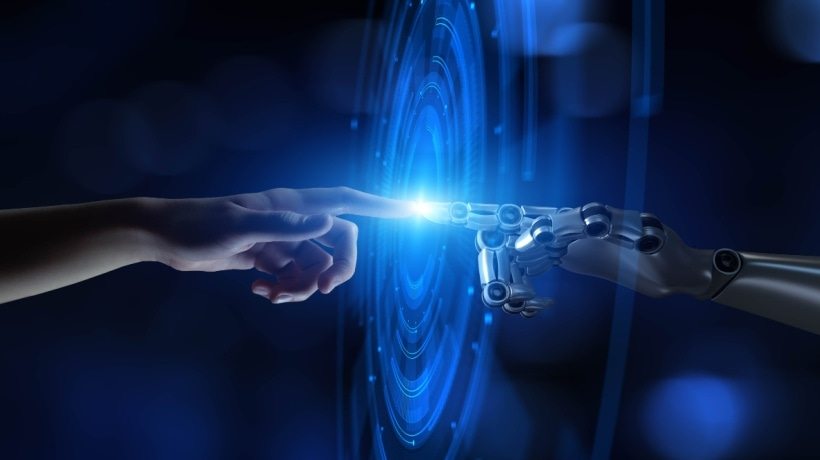
Human Insight and Artificial Understanding: The Great Fusion of Human and Machine Understanding
Education has always been shaped by its tools. The printing press democratized access to knowledge, computers redefined how knowledge is processed, and digital learning has made knowledge borderless. But artificial intelligence (AI) is an even bigger game changer. We not only support teaching, but also learn together with learners. It adapts, reacts, and refines itself based on human behavioral patterns. For the first time, educational technology can not only store and provide knowledge, but also participate in the process of understanding.
This evolution has brought education to a critical juncture. AI can now analyze how students learn, predict what they need next, and provide personalized support on a scale that human educators alone cannot achieve. At the same time, this new intelligence lacks the essence that makes learning meaningful: context, empathy, and purpose. The future of education is not determined by the machines that teach or the humans who resist them. It is defined by how the two can think together.
What AI will understand and what it will never understand
Artificial intelligence is a master of associations. Discover patterns in huge data sets and turn them into actionable insights. Identify where students are struggling, which concepts need reinforcement, and which learning paths will lead to success. But that understanding remains mechanical. I know it’s likely to give me an answer, but I don’t know why it matters. We can predict learning outcomes, but we cannot feel the personal triumphs of understanding or the frustrations of intellectual struggle.
In contrast, human understanding is interpretive. It is rooted in experience, emotion, and meaning. Educators bring not only expertise but also empathy. That means the ability to read subtle cues, encourage patience, and see mistakes as opportunities. Human understanding is essentially moral. The question is not only whether something can be done, but also whether it should be done. The strength of education lies in these interpretative abilities, and no algorithm can reproduce it. The challenge of modern education is not to compete with artificial understanding, but to integrate it without losing the humanity that is the purpose of learning.
The evolving role of the educator
The emergence of artificial understanding does not diminish the importance of teachers. Redefine it. Educators in the AI era are not just conveyers of information, but conductors of cognition. Teachers are now coordinating multiple forms of intelligence, harmonizing human insight with algorithmic assistance. AI automates mundane tasks such as grading, analysis, and adaptive recommendations, allowing educators to focus on creativity, instruction, and ethical reflection.
This new role requires a shift in mindset. Teachers must view AI not as an intrusion into their professional identity, but as an amplification of it. Great educators leverage AI to deepen their impact, rather than outsourcing. These lead to a more personalized learning environment for students while ensuring that technology is grounded in empathy and human values. In doing so, we preserve the relational nature of education while embracing its technological possibilities.
Collaborative intelligence in action
The fusion of humans and artificial intelligence creates moments where neither can succeed alone. Consider a scenario where a student struggles with a complex subject despite consistent efforts. The AI system tracks student progress and notices certain patterns. This means that students excel on certain questions but consistently stumble on others. The system adapts to provide targeted practice that focuses on specific areas of difficulty. Provide instant feedback on each attempt to pinpoint where your reasoning breaks down.
However, AI cannot see what the educator notices during the interaction. In other words, students are approaching the subject with completely the wrong mental framework. They are trying to memorize patterns rather than understanding principles. Educators ask questions that reframe the subject as a whole so that students understand it not as a set of rules, but as a logical system with internal consistency. This single intervention changes the way students perceive the material.
Over time, the AI continues to adapt the practice based on performance data, but the student now approaches the practice with a fundamentally different understanding. Human intervention provides conceptual clarity. AI provides the repetition and variation needed to master it. When students finally reach understanding, the AI records their progress. But only educators understand what that progress means: transformation from chaos through human insight.
This is joint information. Neither could create change alone. AI provided precision and scale to pinpoint where understanding was faltering and adapt in real time. Educators provided insight and reframing and helped students see the subject matter in a way that made sense. Together, they created a personalized and deep learning experience.
Designing collaborative intelligence
Instructional design currently operates at two interconnected levels: human cognition and artificial cognition. The first focuses on emotional, psychological, and developmental growth. The second focuses on how AI systems interpret learner data to make adaptive decisions. When placed intentionally, these layers form what can be called a collaborative intelligent design.
In this model, an AI component analyzes engagement, pacing, and performance and provides tailored feedback to students. Educators, on the other hand, interpret those insights and contextualize them within larger human stories. A sudden drop in engagement can send a signal to the AI that it needs to adjust the difficulty. For educators, that same pattern can reveal a personal conflict, a change in motivation, or a need for additional encouragement. AI responds with algorithmic precision. Humans respond with wisdom depending on the situation.
The result is a personalized and purposeful experience. It is no longer enough for a course to be well structured. It must also be attractive. Co-intelligent courses do more than just adapt to learner behavior. It evolves with them and interprets not only what they are doing, but who they are becoming as thinkers.
This approach requires educators to understand not only how students learn, but also how AI learns. Knowing how algorithms interpret and apply data allows instructors to design experiences that complement, rather than compete with, machine reasoning. In essence, instructional design becomes the art of balancing the two minds, human and artificial, and enhancing the strengths of each.
Asymmetry risk
Human-machine collaboration holds extraordinary potential, but imbalance poses real dangers. When AI takes over the learning environment, there is a danger that education will become efficient but soulless. Students may achieve outcomes without experiencing growth. They complete modules, pass assessments, and earn credentials, all shaped by invisible systems that optimize metrics that may not match their true understanding. Learning becomes transactional rather than transformational.
Conversely, when educators ignore AI, the learning process remains thoughtful but inefficient, failing to meet the needs of diverse learners in the digital age. Instructors who refuse to use adaptive tools may provide deep human insight for students who are able to keep up, but some students may fall behind without receiving the individualized support they need. Good intentions cannot expand without intelligent systems to extend their reach.
Actual progress depends on equilibrium. Artificial understanding must act as a mirror, not a master. It should inform, not replace, human judgment. Maintaining this balance requires ethical governance and transparency. Agencies need to establish a clear framework for how AI will make decisions, use data, and maintain human oversight. Students should understand when they are interacting with AI and rely on human judgment if they feel the algorithm’s decisions are wrong. The value of AI lies not in its autonomy but in its alignment with human intentions.
Students as co-thinkers
Students must also evolve in this new situation. Tomorrow’s learners are cognitive collaborators, not just receivers of knowledge. Working with AI requires a set of literacies that go beyond content mastery. Students must learn to question output, recognize the limitations of algorithms, and apply critical reasoning to digital insights. AI needs to understand that it can inform their thinking, but it cannot define it.
When students learn to use AI responsibly, they become more reflective, not less reflective. They begin to think of learning as a shared dialogue between human curiosity and artificial intelligence. In this sense, AI becomes a metacognitive tool, allowing learners to gain a deeper understanding of the learning process. Students who receive AI-generated feedback on their written work must determine which suggestions match the intended meaning and which suggestions distort the intended meaning. They need to assess whether the AI understands their argument or is optimized for clarity at the expense of nuance. The constant negotiation between human intent and algorithmic suggestions fosters judgment.
The goal is not to create dependence on technology, but to foster independence within it. By teaching students to think mechanically, educators prepare them to thrive in an intellectual ecosystem where adaptation, not memorization, defines success.
Toward sharing intelligence
Perhaps the most transformative outcome of this era is the emergence of shared intelligence, a symbiotic relationship between human insight and artificial understanding. Together, these can create accurate and deep learning experiences. AI brings scale, speed, and analytical power. Humans bring empathy, ethics, and imagination. When these abilities come together, education becomes not only more effective but also more deeply human.
The future of education will not depend on what forms of intelligence prevail, but on how well intelligences can work together. The ultimate goal of AI in education is not to replace human wisdom, but to augment it, giving educators the means to see further and students the opportunity to think deeper.
We need to be clear about what we are building. The promise of shared intelligence goes beyond just higher test scores or faster learning. It is the possibility of education that truly looks at each learner and adapts to who they are, not just what they know. It’s an opportunity to expand empathy, sustain personalized attention, and ensure students don’t get lost in a crowded classroom or lost in a massive online course. Shared intelligence means that while the benefits of individualized instruction (adaptation, patience, customized explanations) are thousands upon thousands, the wisdom that only comes from human experience (encouragement, reframing, moral guidance) remains invaluable.
This is not a distant future. It’s happening now in the classroom, where teachers use AI to identify struggling students before they give up, where adaptive systems provide practice tailored to individual needs, and where educators reclaim time once spent on administrative tasks and invest in human work that machines can’t do. The question is not whether this convergence will continue, but whether we will shape it intentionally or let it unfold by chance.
As education enters this new era, one truth remains constant. That is, learning has always been an act of sharing discoveries. Now, the circle of discovery has widened to include new partners in our thinking. When human insight meets artificial understanding, the result is harmony, not competition. That means creating educational experiences that honor both what makes us human and what allows us to build the tools to enhance our humanity. The true measure of success is not whether machines can teach, but whether they help us become better teachers, better learners, and ultimately better thinkers. After all, intelligence (whether human or artificial) only matters to the extent that it helps us understand ourselves and the world more fully.
