


Bridging the school support gap with teletherapy
America’s public schools educate more than 7 million students with disabilities who require specialized treatment services. However, many public schools struggle to provide such services due to understaffing and limited resources. According to 2024 data from the National Center for Education Statistics (NCES), 55% of public schools cite a lack of mental health staff as a factor preventing schools from providing effective mental health services to students. However, teletherapy can help bridge this gap. Teletherapy is helping schools across the country improve student academic, behavioral, and social-emotional outcomes by connecting students with qualified professionals who can provide targeted treatment. Here’s what you need to know about teletherapy in special education and how it benefits students with diverse learning needs.
In this article…
What is teletherapy in special education?
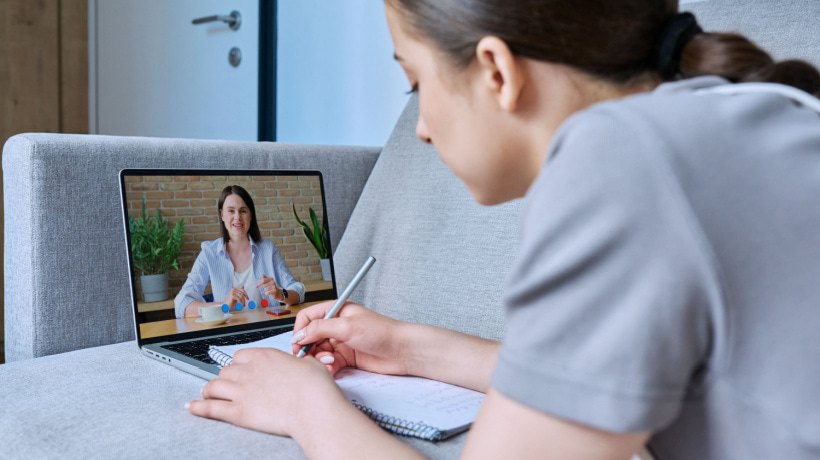
Teletherapy in special education refers to the use of digital technology to provide therapy services to students with disabilities.
Instead of meeting with students in person, therapists will use video conferencing platforms, online apps, text messaging, email, and other digital communication tools to connect with students virtually and provide support.
There are four main forms of teletherapy in special education:
Occupational Therapy (OT) Physical Therapy Speech Therapy (SLP) Mental Health and Behavioral Therapy
Teletherapy for students was born out of a shortage of qualified mental health professionals in public schools, said Kate Eberle Walker, CEO of the teletherapy provider. “The school will do its best to recruit.” [qualified professionals]”And in some cases, you’re short on staff and that spills over to the kids, and they’re not able to get their therapy sessions,” Walker said on the “Raise the Line” podcast in 2021. “And teletherapy really became part of education in the context of, ‘We can help connect therapists to kids,'” she added.
How does teletherapy work in special education?
Teletherapy works by connecting therapists and students through a secure online platform, allowing them to work together on important skills such as communication and self-regulation. During each session, therapists leverage clinical and educational expertise and integrate digital learning tools, such as interactive whiteboards and visual aids, to effectively engage students, assess learning needs, and build specific skills. Here is a more detailed breakdown of the teletherapy process:
1. Therapist matching
Based on information provided by schools and parents, teletherapy vendors match students with qualified therapists, such as speech therapists, occupational therapists, and psychologists.
2. Schedule and connect online
The school’s special education team will work with the vendor to coordinate reservations. The team will find a quiet environment for students to work in and provide them with laptops to use for sessions. Students log on to sessions via a video conferencing platform such as Zoom or Google Meet.
3. Session delivery
During sessions, therapists incorporate exercises, games, interactive lessons, and multimedia to help students achieve specific goals. For example, a speech therapist might incorporate video clips from animated movies to target a student’s social communication skills. A school facilitator will monitor the session and intervene if necessary. Weekly sessions last between 30 and 60 minutes.
4. Feedback and progress monitoring
Therapists track student progress and provide real-time feedback. Sessions may be recorded with school and parent permission and used to monitor progress. After the session, the therapist gives homework for the student to complete and plans for the next session.
Is teletherapy effective for students with disabilities?
Research shows that teletherapy is effective for students with disabilities. For example, a study published in the Cureus medical research journal found that telemedicine effectively supported the treatment and rehabilitation of children with disabilities during the COVID-19 lockdown. And in general, many schools are just as happy, if not more so, with using teletherapy for their students as they are with in-person therapy. In an eLuma survey of K-12 leaders, 81% of respondents said virtual therapy is as good or better than in-person therapy.
Here are some findings from related research and case studies on what successful special education teletherapy looks like in practice.
The director of special education at Peoria Public Schools reported a decrease in externalizing behaviors after implementing teletherapy. Tomball Independent School District reduced in-school suspensions by 71% after partnering with an online special education and mental health service provider. Flint Hills Special Education Cooperative reported a 92% customer satisfaction rate after implementing an online therapy provider.
5 Benefits of Teletherapy in Special Education
Teletherapy in special education offers many benefits by harnessing the power of technology. These benefits include everything from enhanced access to specialized services to continuous, uninterrupted care for students with disabilities.
1. Expanding access to professional services
With teletherapy, students no longer have to travel far to access professional services. Instead, you can go online and receive high-quality treatment services from qualified professionals. These professionals are trained to address students’ specific needs, including speech therapy, occupational therapy, and mental health counseling.
This customized support means that students receive the intensive instruction and intervention they need to make tangible improvements in school and in their daily lives. For example, a teletherapy platform might connect a sixth grader who is struggling with social communication with a certified speech-language pathologist who can provide comprehensive support in that area.
2. High quality care from diverse clinicians
The Springtide Research Institute found that young people of color are more likely to agree that it is “important” for mental health counselors to share their racial or ethnic background. However, finding qualified clinicians who reflect the diverse identities of students is a challenge for time- and budget-constrained school districts.
Fortunately, teletherapy makes it easy to connect students with professionals who reflect their cultural and linguistic backgrounds. For example, teletherapy platforms can match Black female students with Black female therapists. Or from a Spanish-speaking student to a Spanish-speaking therapist.
Research supports affirming diverse student backgrounds in therapy. For example, research from the American Speech-Language-Hearing Association found that speech-language pathologists who demonstrate cultural humility and rapport strengthen therapeutic relationships with students from diverse backgrounds.
3. Continuity of care
Teletherapy is available 24 hours a day, seven days a week, including during summer vacation and other school holidays when in-person counseling services are limited or unavailable. Therefore, during these school closures, schools only need to work with teletherapy vendors to provide extended school year (ESY) services to their students. This allows students to receive care without delays or interruptions. Otherwise, students risk falling behind in progress or reversing hard-earned gains.
A prime example of the risk of treatment interruption is the COVID-19 pandemic. At the time, many schools were struggling to provide in-person mental health support to students following mandated school closures. As a result, many students’ mental health symptoms worsened.
However, teletherapy providers provided support during the lockdown and helped maintain students’ developmental gains. For example, a study published in the International Journal of Telerehabilitation found that children maintained progress toward treatment goals when transitioning from in-person to virtual services during the COVID-19 pandemic.
4. Flexible scheduling
Teletherapy allows for flexible scheduling of treatment sessions. Sessions will be held at a time and location convenient to the student and school district. In fact, more than 62% of K-12 leaders cite flexible scheduling as a major benefit, according to eLuma research.
This flexibility allows students to access the support they need when they need it, improving outcomes. It also allows school facilitators to attend sessions and monitor student participation and session quality.
5. Strengthening student engagement
Today’s students are digital natives. According to the Pew Research Center, 46% of teens report being online all the time. Therefore, the online modality of teletherapy provides a familiar and comfortable format for students to engage with.
In fact, according to the same eLuma survey, 37.9% of K-12 leaders said teletherapy improved student engagement. For example, many students are accustomed to working on laptops, tablets, and other mobile devices, so therapists can use these technologies to integrate online learning tools into sessions.
Assistive technology can further increase student engagement. Teletherapy providers have tools available to them, including:
Screen readers and magnifiers Text-to-speech software Speech generation or communication devices
This increases student participation and results in better outcomes.
6 tips for implementing teletherapy in special education
School leaders must take a strategic approach to implementing teletherapy. This ensures students, parents, and teachers have the resources they need to run a successful teletherapy program. In this context, here are six steps leaders should follow to effectively implement a teletherapy program in their schools.
1. Choose a trusted teletherapy provider
Look for a vendor that meets your school’s unique needs, is HIPAA compliant, has a diverse range of licensed clinicians, and is trained to treat students with disabilities.
2. Educate parents and staff
Explain the benefits of teletherapy to parents and staff and obtain their buy-in. We also provide strong ongoing training on teletherapy platforms and how to support students to ensure success during teletherapy sessions.
3. Teletherapy coordination
Make sure students have access to the necessary equipment for teletherapy sessions and have a learning coach or facilitator. Please ensure that sessions take place in a quiet space, such as a speech therapy room.
4. Set goals for students
The therapist must assess the student and work with parents and teachers to develop tailored goals and strategies. This ensures that students receive targeted intervention and make steady progress toward their goals.
5. Monitoring results
Consistent progress monitoring helps therapists, teachers, and parents see how students are progressing. We also plan to provide district leaders with the data they need to make informed decisions about investing in teletherapy.
6. Make adjustments
School leaders can use data about student engagement, IEP goal progress, and assessment results to decide whether to adjust programs or continue working with teletherapy vendors. In general, leaders should work with the vendor for at least one semester to obtain sufficient data on the program’s effectiveness.
Introduction of teletherapy leads village to success
Implementing teletherapy in special education benefits everyone involved. Schools find highly qualified professionals to treat students. Students receive specialized services from providers that reflect their racial/ethnic background. And parents witness measurable improvements in their children’s academic, social and emotional progress.
However, for such results to be achieved, schools must avoid neglecting the process of implementing teletherapy. Find a high-quality HIPAA-compliant vendor with a track record of success with students with disabilities. We will also educate all parties and maintain open communication as the teletherapy program ramps up. After all, teletherapy programs won’t succeed if they remain siled. Instead, they grow through continued collaboration between schools, parents, vendors, and therapists and a shared commitment to consistently and holistically support students.
