


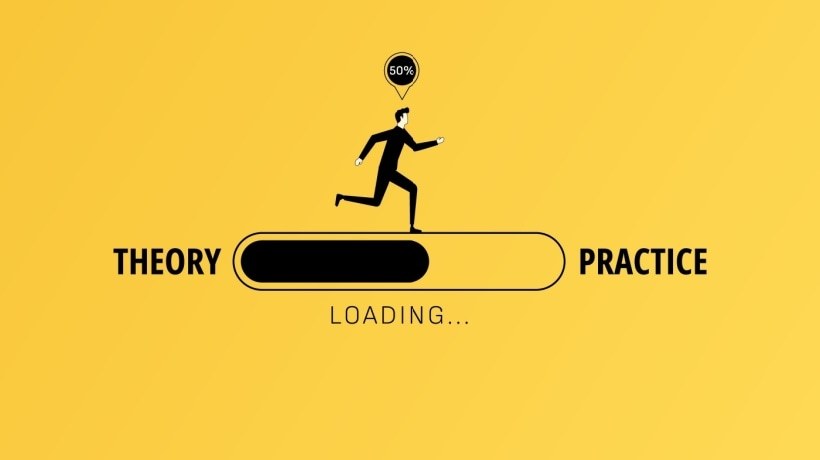
Rehearse before it becomes real
A new manager begins her first solo shift. The system alarms she has never seen before are not loud, but persistent and pulsating. The instructions are in the manual, but at the moment it is messy, vague and fast. She hesitates. A few minutes pass. Teams come together, workarounds are displayed, productivity is reduced, and nervous conflicts are present. No one is incompetent. This is my first time.
For the first time, it carries hidden costs. They turn otherwise capable people into beginners in public places. Some settings mean that a customer has been lost or missed a deadline. In others, that means real risk. He says that learning at work builds resilience. Sometimes it does. Often, it means that the work will become a classroom, and the organization will pay tuition.
Practice without results
High Stakes Fields know this all the time. The pilot rehearses engine failures on the ground. Surgeons practice with simulators and corpses. Emergency responder drills in controlled chaos. The goal is not entertainment or “engagement.” It’s a rehearsal. You make decisions when the stakes are low, so you can use them when the stakes are high.
Corporate training often skips this step. Explaining the policy, testing the recall, and then hoping for the best. People nodded, completed modules and met evaluation criteria, but the first meaningful application still happens in front of customers, regulators, or live systems. Confuse exposure with preparation.
What does “safe practice” actually mean?
Safe practice is not gimmicks or headsets. It’s an environment where people can do the real thing, or something close enough to it, and an environment in which errors are information rather than responsibility. There are three parts.
Realistic context
It’s not perfect fidelity, but it’s important. Time pressure, incomplete information, social dynamics, conflicting priorities. Immediate specific feedback
What happened, why it happened, what should I try next time? It’s not just the score. Repeated by variation
Because the same core skills apply to different scenarios, learning is transferred beyond one practiced example.
This is closer to what psychologists call intentional practice. It’s not just about doing the task over and over. Runs on the edge of capabilities using feedback and retrying. Learning science, spacing, and variability are because we learn not only surface patterns but the underlying rules. To put it plainly, people are good at what they actually face.
Designed not only for knowledge but for decisions
Most workplace performance issues are decision issues. Given this troublesome reality, it’s the option now. Safe Practice focuses on decisions. A good exercise pushes trade-offs openly. Do you escalate or resolve locally? Do you prioritize speed or accuracy? Do you accept short-term costs to avoid long-term risks?
Designed for decisions, we discover which clues will notice, who we are ignoring, and where the procedures conflict with reality. The discovery is valuable in itself. In many cases, manuals reveal problems with processes that do not surface.
Measure what’s important
If practice replaces your first mistake, you need to measure more than attendance and score. Useful methods are as follows:
Error Pattern
Not only how many, but what kinds and how they change in practice. Decision time
Exert speed under pressure without losing quality. Recovery quality
How quickly people who have been course corrected will become clean after mistakes. transfer
Whether improvements will be shown not only for rehearsed scenarios, but also for adjacent scenarios.
These are the main indicators. They do not replace operational KPIs. They prepare people to move.
Not just culture, but culture
Safe practice requires psychological safety and techniques. People only reveal edges of their capabilities if they trust that the edge is a place to learn, not a place to be judged. This is a leadership question. Actual errors are treated as money. Rewards thoughtful risk-taking in rehearsals. Normalize the phrase “Let’s do it again.”
It’s also a product question. The best exercises are short, specific and available at the time you need them. Long events have their place, but preparations are built in small loops and are repeated frequently.
Limitations and honesty
Not all skills benefit from simulations and not all contexts require high fidelity. Some knowledge is best learned in the shadows, reading, watching, or otherwise. Some risks are very low, so practical practice is wise. The test is easy. If the initial mistake is expensive, irreversible, or public, you should try to move the mistake into a safe space.
There are also ethical boundaries. If the scenario is likely to fold or cross a dignified line, don’t build it. Instead, practice component skills. Empathy, escalation, language, escalation, decision framework. Realism is not an excuse for harm.
Start small
You don’t need a complete simulation lab to get started. Select one sensitive moment within the organization and build a lightweight practice loop around it.
Identify decisions that are most often not working. Write realistic scenarios that will trigger that decision. Use the example to define what “good” looks like. Use guided feedback to run people one at a time. Repeat later with a twist and learning the rules rather than scripts.
Track some simple indicators. Decision time, error pattern, recovery quality. If the signal is promising, expand.
point
If the work leaves no room for error, the first attempt should not be live. Safe practice isn’t about making your training more interesting. It is moving the cost of the mistake from the customers and systems to the rehearsal room they belong to.
Everyone remembers the first time at a truly high pressure moment. Cold shock, narrowing vision, moving your mind when you need something sharp. You can’t remove pressure from the real world. You can remove surprises. When the moment comes, you can make sure it’s not the first time.
Totem Learning
Partner with Totem to promote higher engagement, deeper learning and better retention through premium digital experiences | Simulation | Serious Games | Gamification | Virtual and Augmented Reality | Behavioral Science
