


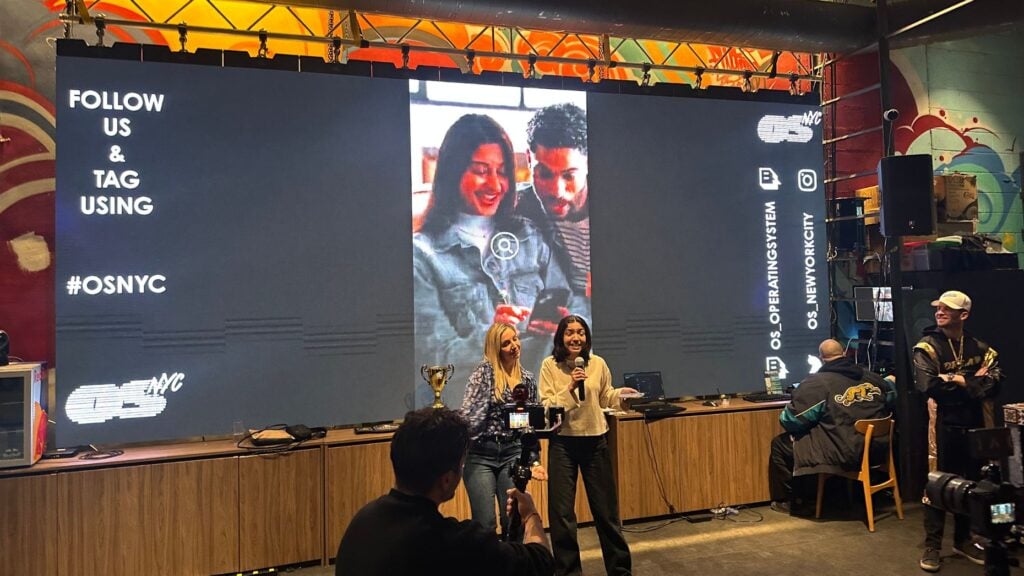

Troy Palmquist writes that the first HomeCode Pitch Battle proved to be the best way to bring real estate and technology together in a way that was more congenial than a sales pitch.
I love real estate conferences.
I love walking around the expo floor and seeing new companies, evolving platforms, and meaningful new product features. When things are hot, the expo floor is one of the best places to see where the industry is headed.
At the same time, there is a feeling that many of us are aware of. It’s more flash than substance, and the feeling that everyone you meet is looking for a way to sell you.
That tension led us to host the first HomeCode Pitch Battle the night before Inman Connect New York started last week. The purpose was not to replace the Expo site. This complemented that by giving participants a way to see and learn about new technology without the pressure of selling, scanning, or following up after the fact.
Before ICNY, I wrote that pitch battles were a great way to learn more about the proptech landscape in a low-risk environment, allowing you to stay on the cutting edge without feeling a nagging sense of obligation. At that time, I wrote:
Want to know where the industry is headed? Go where the builders are. Even without introducing new tools, you’ll be rethinking and improving the way your business operates. With one foot already in the future, there will be fewer surprises.
I put that theory to the test in this year’s pitch battle.
Where pizza, games, and proptech come together
Our Pitch Battle brought together 15 real estate technology companies for a structured, fast-paced competition aimed at surfacing clarity and expertise.
Creators and startup representatives faced off over three rounds, with each round crowning a winner. These three winners would then compete for first, second, and third place overall.
By the end of the night, RealScout emerged as the grand champion, with founder Andrew Flachner taking home the championship belt, trophy, and Times Square billboard. UpFront and AutoReel took round wins and podium finishes.
But the real value of the night wasn’t who won. That was what the format revealed.
the power of the environment
The setting for our pitch battle was the OS NYC Gaming Lounge, which was purposefully removed from a traditional conference room. The venue’s giant LED video wall allowed the founders to not only talk about their products, but also show them in action.
The interface, workflow, and visuals are now part of the pitch itself. That was important. Because seeing how a product looks and behaves under pressure is much more useful than hearing how it is described in a sales conversation.
As a result, recommendations were based on experience rather than on hypotheses.
the power of an enthusiastic crowd
At one point in the second round, a draw necessitated an unexpected solution. It was a dance-off where the audience decided who had won.
Drew Fabricant (left) and Troy Palmquist
It was lighthearted and a lot of fun, but something important became clear. The crowd was worryingly enthusiastic. They weren’t passively watching pitches, and this wasn’t just a popularity contest. Participants positively evaluated the presentation, allowing Cream to rise to the top.
Think back to the last time you were pitched by a vendor or technical representative at a traditional product demo. Did you feel that level of involvement? That’s why this format works.
The power of a sponsor who understands the mission
Troy Palmquist and Stephanie Alfonso
Our event was supported by Constant Contact and Scouts, whose involvement helped shape the atmosphere of the evening. Constant Contact’s Stephanie Alfonso and Scout Drew Fabricant served as emcees and kept the tournament moving while adhering to the spirit of the format.
Their presence reinforced our goal of building a space where technology is tested, not just talked about.
Why pitch battles are effective for agents
One of the arguments in my original article was that pitch battles compress the learning curve. Watching founders explain and even demonstrate their products under time constraints will tell you much more than a polished demo or drip campaign.
That was proven true in real time.
With limited time and a live audience, the founders answered the questions that mattered most to agents, even if they weren’t explicitly asked.
What problem convinced you that this product needs to exist? Where does this tool actually save time in your workflow? Why is this solution better than doing what you’re already doing, or rather than doing nothing at all?
For the agents in the room, the benefits were immediate.
First, this format helped separate the signal from the noise. Some ideas were clearly in their early stages, while others showed real operational depth. These differences became apparent in a short pitch without the need for weeks of follow-up. Second, you can now learn without commitment. Attendees were able to absorb insights into case studies, consumer expectations, and workflows without feeling pressured to make a purchase or book a demo, or justify their interest (or lack thereof). Third, my perspective has become sharper. Agents are constantly touting their value. Observing which explanations worked and which didn’t had the unexpected side benefit of clarifying how the agents themselves communicated value and what they could do better.
What does it mean to move forward?
My original article ended with a simple idea: “If you want to know where the industry is going, go where the builders are.” The first HomeCode Pitch Battle proved that the advice actually works.
The agent left the room smarter than when he entered. The founder left with clearer feedback and an instant vibe check. And no one felt like they had just gotten over the challenge of “salesy” conversations.
This was our first pitch battle, but it won’t be our last. Because the future of real estate will be in rooms like this, pitched, challenged, refined, and debated in real time. For agents looking to reduce surprises and make better decisions in the coming years, these rooms are worth entering.
Troy Palmquist is the founder and president of HomeCode Advisors. Connect with him on LinkedIn.
