


Promote information retention through self-directed, hands-on learning
I have taught many ECE lessons over the years. Because the curriculum had to follow students’ individual learning needs and state guidelines, some did not include hands-on learning. But I’ve noticed that the kids in my second grade classroom really engage in learning when I give them freedom through experiential learning.
I once taught a class about the difference between past, present, and future. One of my students started fiddling with something under his desk. I decided not to say anything to him until the lesson was over so as not to disturb anyone. When I asked him what he was doing, he pulled out 3D paper models of past, present, and future signs. It was the same as the one I saw on the roadside!
I was so proud of my student and relieved that I couldn’t say anything to him while I was teaching him. He knew how to tell the difference and interpreted them through familiar signs. This is a great metaphor for how to let things happen spontaneously when possible or appropriate.
The importance of self-directed and hands-on learning
Educators must not overlook the importance of self-directed learning moments. This is where the magic happens for many students, especially those who learn differently. Researchers found that parents and teachers believe that hands-on learning is worse [1] Rather than visual learning, conventional wisdom about styles predicts a student’s “best” learning style. Different students have different learning styles.
Given how many children are neurodivergent, it is especially important to incorporate teachable moments into lessons whenever possible. Experts estimate that more than 6.1 million children have ADHD and between 5% and 20% have dyslexia. Children who benefit from a variety of teaching styles will gain greater confidence in classrooms that give them the opportunity to learn in such ways.
Useful tools for ECE teachers
While we can’t always plan teachable moments and hands-on learning opportunities, we can implement ideas that are already being used in ECE classrooms worldwide. As a result, each student’s academic potential is increased and social-emotional support systems are fostered that are not possible in classrooms with traditional instructional structures.
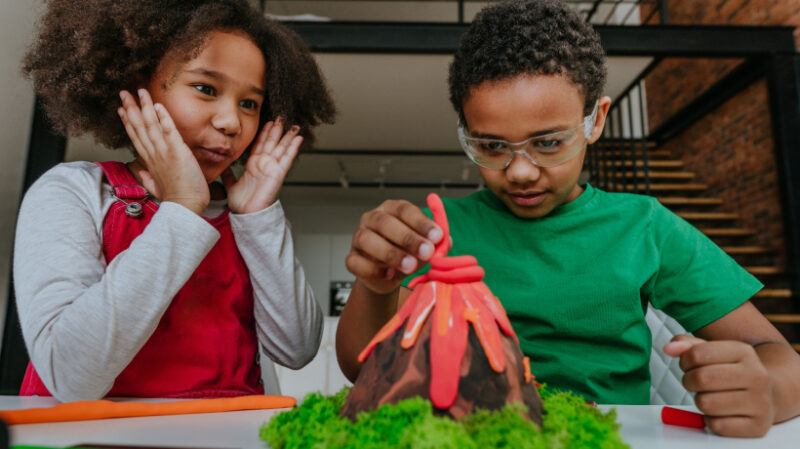
Actual teaching time in an ECE classroom may include activities that my former students have devised themselves, such as using paper, clay, or other craft materials to create models from private lessons. there is. Students were able to further combine their lessons with creativity and focus by acting out what they learned with crafts.
Involving students in role-playing opportunities helps them retain more information [2] Because they are actively connecting dots, solving problems, and making memories. This is one way that hands-on activities can become educational tools, regardless of the equipment you use in your classroom.
“Self-directed, hands-on learning is especially useful for formative assessment with young children,” says Jodi Abel-Clark, M.A., M.A., Ph.D., author of “Achieving and Teaching Neurodivergent Learners in STEM.” says Mr. “By giving learners the opportunity to persistently engage in creative, systematic, and self-directed oral or practical problems, teachers can protect themselves from neurodivergent learners hidden by the barriers of traditional school activities. It may reveal your skills and talents.”
Strategies and processes that educators can use
Make hands-on learning a regular part of your ECE lesson plans by researching other educators. There are always creative solutions to help children learn in the way their unique minds require.
“My classroom has a variety of sensory materials that help children separate and integrate their senses,” says the Harvard-trained educator and former Montessori preschool director. says Dr. Jenny Wu, Founder and CEO of Mind Brain Emotion. “Children can choose activities such as using a color tablet to line up different shades, ringing a bell to recognize the differences in sound, or touching boards with different textures. We also integrate practical living materials such as loose flowers and vases to encourage the integration of the five senses.” Express creativity through flower arrangements. ”
Teacher Amy Blessing wrote a letter to the National Association for the Education of Young Children (NAEYC) explaining how her students learned that black bears hibernate in small burrows made of tree branches. [3]. They made blueberries out of craft paper, played stethoscopes and used stuffed animals to study the bear’s anatomy.
This hands-on educational time in the ECE classroom is critical for children at all early education levels. Blessing’s students were actively involved in the bear lesson, so they probably didn’t forget it. Instead of listening to a 15-minute lecture, which is not very helpful for children with ADHD, the young students were able to use their imaginations.
Building an educational environment based on spontaneous play
When planning your purposeful teachable moment, remember that setting is paramount. Students need academic lessons alongside practical activities to gain experience that will help them in their education.
“The best environment for hands-on, authentic learning consists of free, diverse, and accessible materials for all children, and where teachers support children’s curiosity and encourage children’s questions and ideas. ” and promote classes that respond to it. Jonah Weller, Chief Academic Officer, Learning Care Group. “For example, in a preschool setting, children learn that when they want to ‘save’ their creations and return to them, they need more space to store their creative work in progress. I recognized it. The classroom teacher maximized the children’s questions by guiding them as follows. Create an invention that solves that need. ”
The children practiced listening to and learning from each other. As you consider the importance of spontaneous moments, think about how your students can use play for more than just entertainment. Make life fun while turning each child’s education into a fun opportunity.
“As an early childhood educator, I am a strong believer in play-based curriculum because play is young children’s work.In the early childhood classroom, I use play as a mode for exploring math, science, and social studies. “It promotes physical, emotional, cognitive, and physical development. Sociology, art, and literacy,” says Dr. Noreen Wilde, assistant professor of early childhood education at Niagara University. “One of my favorite hands-on experiences is building a volcano using baking soda and vinegar, and it is essential that we are allowed to do this on our own from government agencies, rather than adult supervision. ”
References
[1] Beware of misconceptions: Learning styles influence how parents, children, and teachers think about a child’s academic potential.
[2] Student learning styles and academic ability in module learning
[3] The power of playful learning in early childhood
