


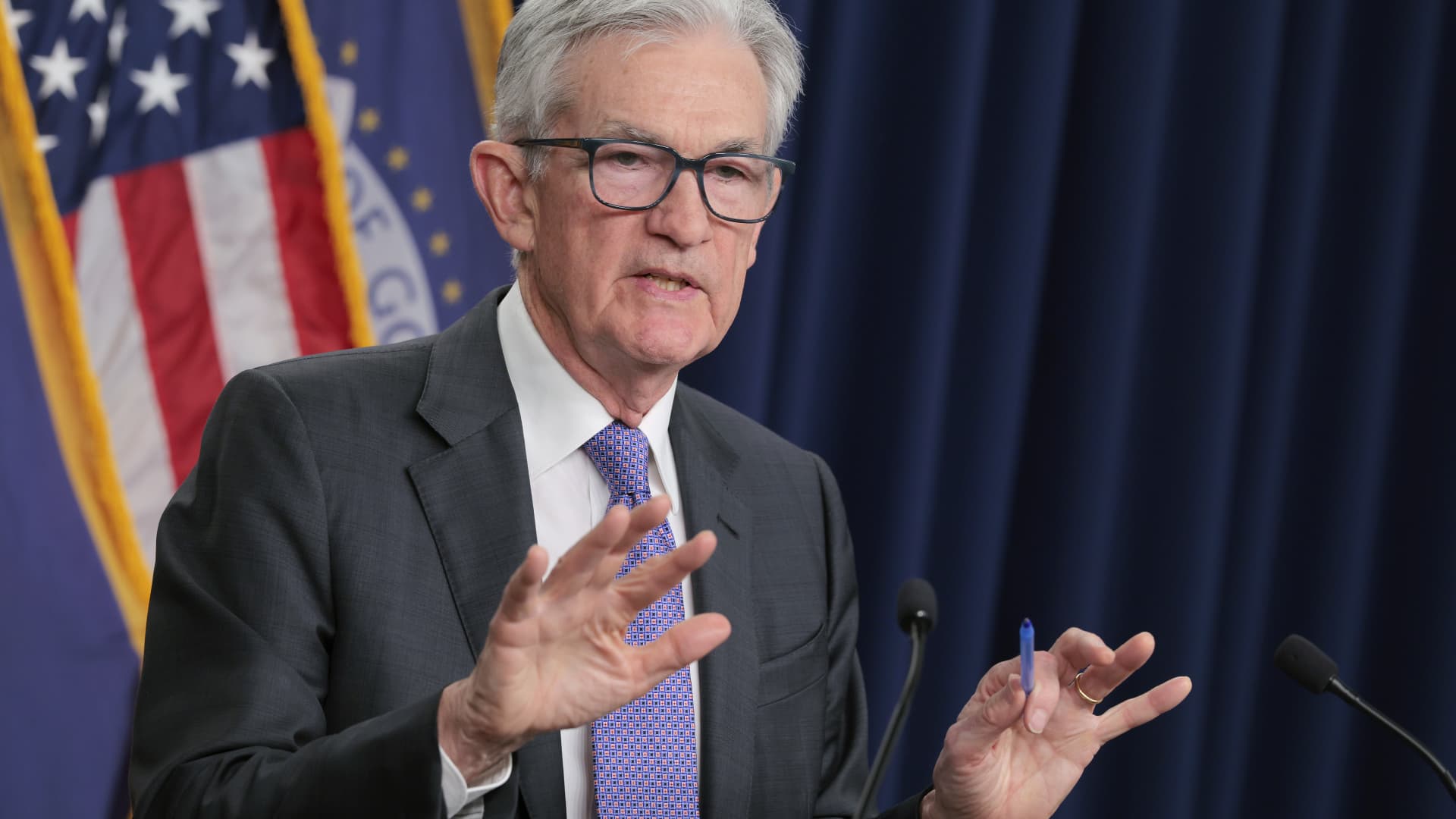
WASHINGTON, DC – DECEMBER 10: Federal Reserve Chairman Jerome Powell speaks during a press conference after the Federal Open Market Committee on December 10, 2025 in Washington, DC. The Federal Reserve announced its third rate cut this year, cutting interest rates by a quarter of a percentage point to a range of 3.5% to 3.75%. (Photo by Chip Somodevilla/Getty Images)
Chip Somodevilla | Getty Images News | Getty Images
Another twist in the saga surrounding President Donald Trump’s efforts to restructure the Federal Reserve involves whether current Chairman Jerome Powell will step down after his term ends.
Mr. Powell will end his term as central bank chief on May 15, but Mr. Trump is likely to name a successor long before then. In fact, Treasury Secretary Scott Bessent told CNBC on Tuesday that the long-awaited nomination could happen as early as next week.
However, Powell’s 14-year term as governor will be extended until January 31, 2028.
Historically, almost all outgoing Fed chairmen have resigned from their positions, but Mr. Powell could decide to break that pattern if he feels the threat to the central bank’s independence is serious enough to warrant his retention. This is what Mariner Eccles did in the late 1940s when he viewed his removal from office by then-President Harry Truman as a political move.
voice gets louder and louder
Mr. Trump has increasingly spoken out about controlling the Fed. He did so through persistent criticism of Mr. Powell, his colleagues, his own appointments, and statements that he believed the president should be consulted on interest rate decisions.
Some on Wall Street believe the prospect of Mr. Trump gaining more control of the Fed board and using it to steer monetary policy may persuade Mr. Powell to stay on. Such speculation has increased in recent days following revelations that the Justice Department is investigating Mr. Powell for possible criminal prosecution and Mr. Powell’s public statements that the related subpoenas were a “pretext” for Mr. Trump to try to control the Fed.
From a series of events, “Mr. Powell… [Fed Governor Michael] Barr and others will remain in office beyond May,” Krishna Guha, head of global policy and central banking strategy at Evercore ISI, said in a recent note.
Barr’s term ends in 2032, but there were rumors that he might resign. Barr previously served as vice chairman of the Division of Banking Supervision, but resigned from that post shortly after the start of President Trump’s second term, preempting Trump’s possible appointment to replace him. He was replaced in the supervisory position by Governor Michelle Bowman, whom Trump appointed during his first term.
Similarly, Philip Jefferson, vice chairman of the Federal Open Market Committee, which sets interest rates, could choose to remain in his seat, which does not expire until January 2036, or step down.
But there is growing speculation that threats to the Fed’s independence could increase the likelihood that all current leaders will remain in office.
“We believe that the probability that Chairman Powell will remain on the board as president after his term expires in May has increased with the announcement,” Nomura economists said in a note. “President Trump’s attempts to influence monetary policy could prompt a backlash from current FOMC participants.”
Market expects Powell to step down
But traders are betting on Mr. Powell’s departure.
Prediction market site Calci currently puts the probability of Powell stepping down by August 2026 at 70%. This suggests that, assuming Mr. Trump’s nominee passes the Senate, Mr. Powell will leave the seat soon or soon after being replaced as chairman. Sen. Thom Tillis (R-North Carolina) has vowed to block Fed appointments until the Justice Department issues are resolved.
Mr. Powell has refrained from commenting on this issue. A Fed spokesperson contacted by CNBC.com said the chairman’s office had no comment.
At a news conference after the Fed’s last meeting in December, Powell dodged a question about the issue, saying only, “I’m focused on the rest of my time as chairman. I don’t have anything new to say about that.”
Meanwhile, Mr. Trump’s efforts to oust Mr. Powell from office could backfire and harden the position of other Fed officials as the president continues to press for rate cuts.
“The bottom line is that President Trump’s push for Fed compliance may ironically make the Fed more independent,” said Ed Yardeni, head of market veteran Yardeni Research. “Thus, the person President Trump appoints to chair the Fed may have a harder time building consensus around his views than previous Fed chairmen and may have less control over the Fed’s actions than President Trump expects.”
