


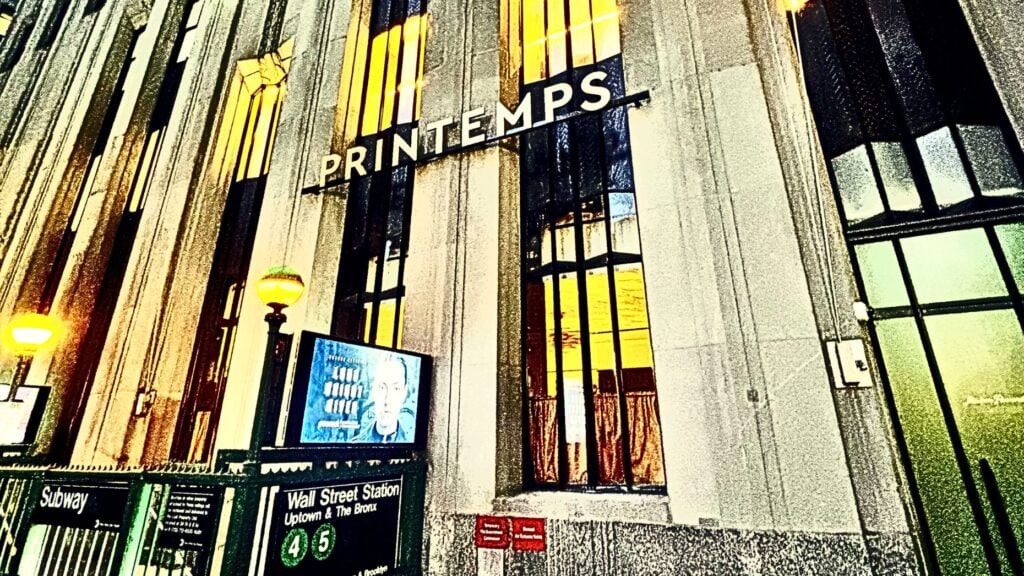
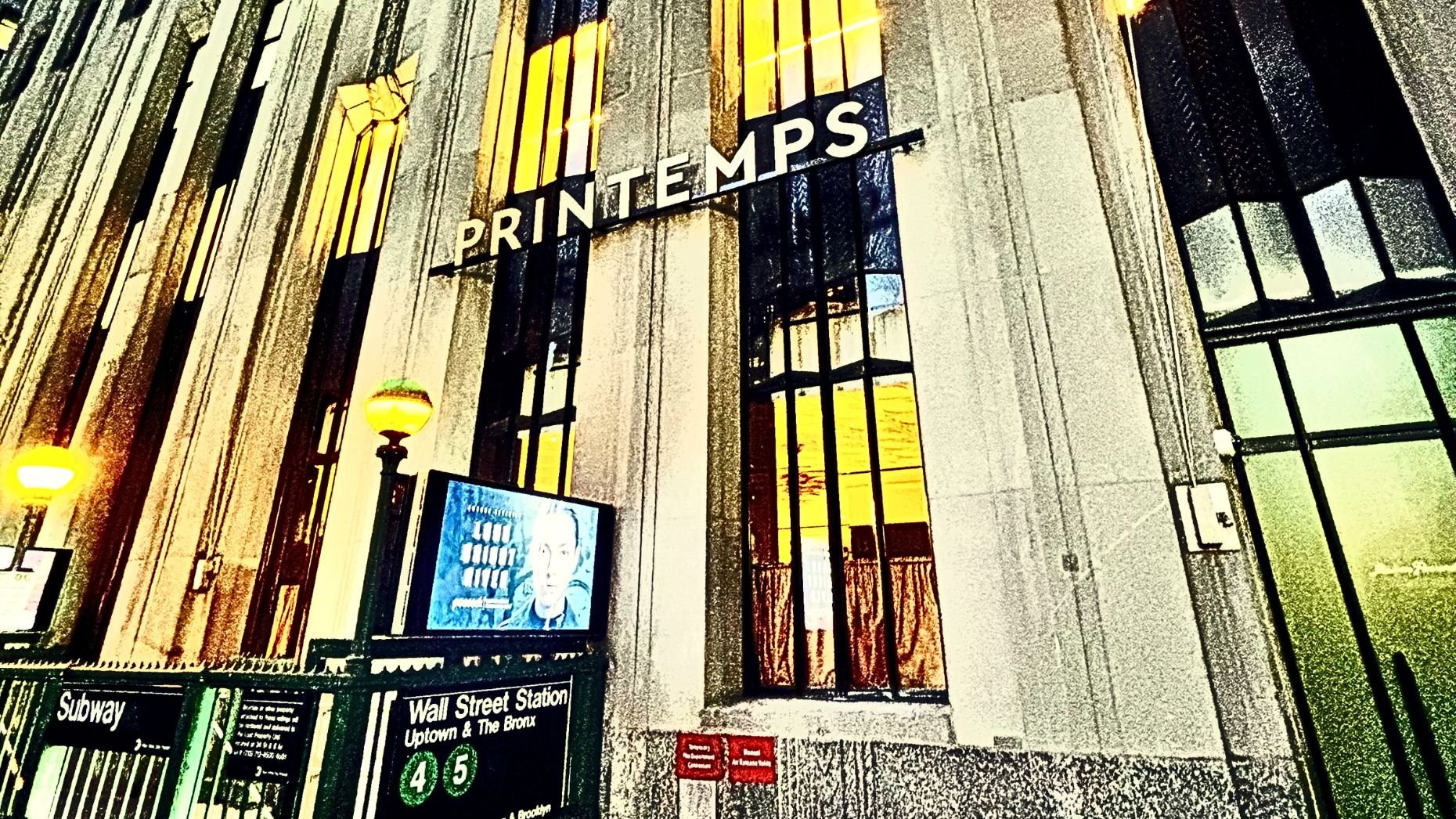
When Printemps opened last March, I went the first week. Intentionally.
It had been on my radar for months. In this retail environment, a Parisian department store’s choice to open a store in New York felt like a noteworthy signal. Since it’s on my way to the office, I thought it would be more than just a one-time visit. I was able to take my time and look at it.
Participate in the INMAN Intel Index Survey
What immediately stood out was the restraint. The ceiling is high. warm light. Clear vision. No endless racks. No visual noise disguised as richness. Products are laid out loosely. Carefully edited by the designer. The beauty is displayed like an object rather than an inventory item. Without trying to prove it, the space felt quiet and expensive. I remember thinking, “This is a store I can trust.”
I came back often. Sometimes to take a quick spin, sometimes to see what has changed. Sometimes to see what you couldn’t see. The display rotates, but discipline remains. Printemps never flows in excess. There’s no way you don’t know who it is.
When Saks Fifth Avenue filed for bankruptcy last month, the timing was hard to ignore.
The collapse of an iconic retail brand
What’s worth studying about Saks’s collapse is that it wasn’t because consumers lost interest in luxury goods. It was structural. In 2024, the company took on a significant debt burden as part of a major consolidation that brought together Saks Fifth Avenue, Neiman Marcus, and Bergdorf Goodman under one umbrella. Logic was scale. Reality was fragile.
As luxury spending slows in 2025, that debt becomes harder to service. The vendor went unpaid. Stock is running low. Shelves began to look sparse, foot traffic decreased, numbers worsened and relationships with vendors further deteriorated.
At the same time, luxury brands are increasingly moving towards selling directly through their own boutiques and digital channels, weakening the role of department stores as necessary intermediaries.
By the time Sacks filed for Chapter 11, the experience had already begun to unravel. Bankruptcy wasn’t the beginning of the problem. It marked the moment when the problem could no longer be hidden.
The changing face of U.S. retail
The significance of that moment becomes clear when you look at what the department store used to look like.
In the mid-20th century, department stores were not fungible. From the 1950s to the 1970s, each company had a distinct personality and clearly defined customers. You were either a Saks woman or a supporter of B. Altman & Company. You didn’t casually browse between them. You chose it. And once selected, it remained.
That loyalty came from identity, not inventory. Each store made careful decisions about what to carry, how to present it, and who to serve it to. The taste was filtered. The decision paid off. Customers were not asked to choose from an infinite number of options. The store did it for them.
Over time, that confidence eroded. As department stores have sought scale, they have weakened their edge. Our product lineup has expanded. Identity becomes ambiguous. More brands, more categories, more noise. They gained in quantity but lost in distinction. Shopping has become less personal and feels more transactional. And once that change occurred, loyalty quietly disappeared.
The parallels with real estate are hard to miss.
Last month, I wrote about this dynamic in a different context. In “Choice Doesn’t Equal Freedom When It Comes to Private Listings,” I argued that while scale often appears as an option, it quietly shapes outcomes through default. Having more options does not automatically lead to better decisions. Often they obscure trade-offs that really matter.
Department stores also fell into the same trap.
As we expanded, we had more choice in theory, but less clarity in practice. Customers were given more brands, more categories, more ways to shop, but less guidance. There are few points of view. You lose confidence that someone else has thought for you.
Consolidation and change in the real estate industry
In real estate, consolidation occurs similarly. Larger platforms promise more agents, more listings, more tools, and more exposure. Pitch is plentiful. But at some point, abundance stops empowering clients and they begin to feel overwhelmed. If everything is available, nothing is contextualized. When everyone fits in, no one feels singled out.
This is not an ideological criticism. It’s behavioral. Consumers don’t want endless choices. They want to make informed choices. They want to understand the trade-offs. They want to know who is making decisions and why.
Boutique brokerages operate differently by design. They define who thrives within their walls. They protect standards, culture and experience. They cherry-pick to clarify rather than exclude. That restraint is not a restriction. That’s the advantage.
Department stores didn’t go bankrupt because people stopped looking for beautiful things. I failed because I stopped choosing.
Printemps appeals to me not because it’s new, but because it’s distinct. It knows who it serves and who it supports. That confidence creates trust. Trust breeds loyalty. The companies that survive in real estate aren’t the biggest or the loudest. They will define themselves accurately and be proactive in defending that definition.
Because when everything belongs to everyone, it really doesn’t belong to anyone. And loyalty has always followed belief.
Dezireh Eyn serves as Chief Executive Officer of Platinum Properties. Connect with her on LinkedIn and Instagram.
