


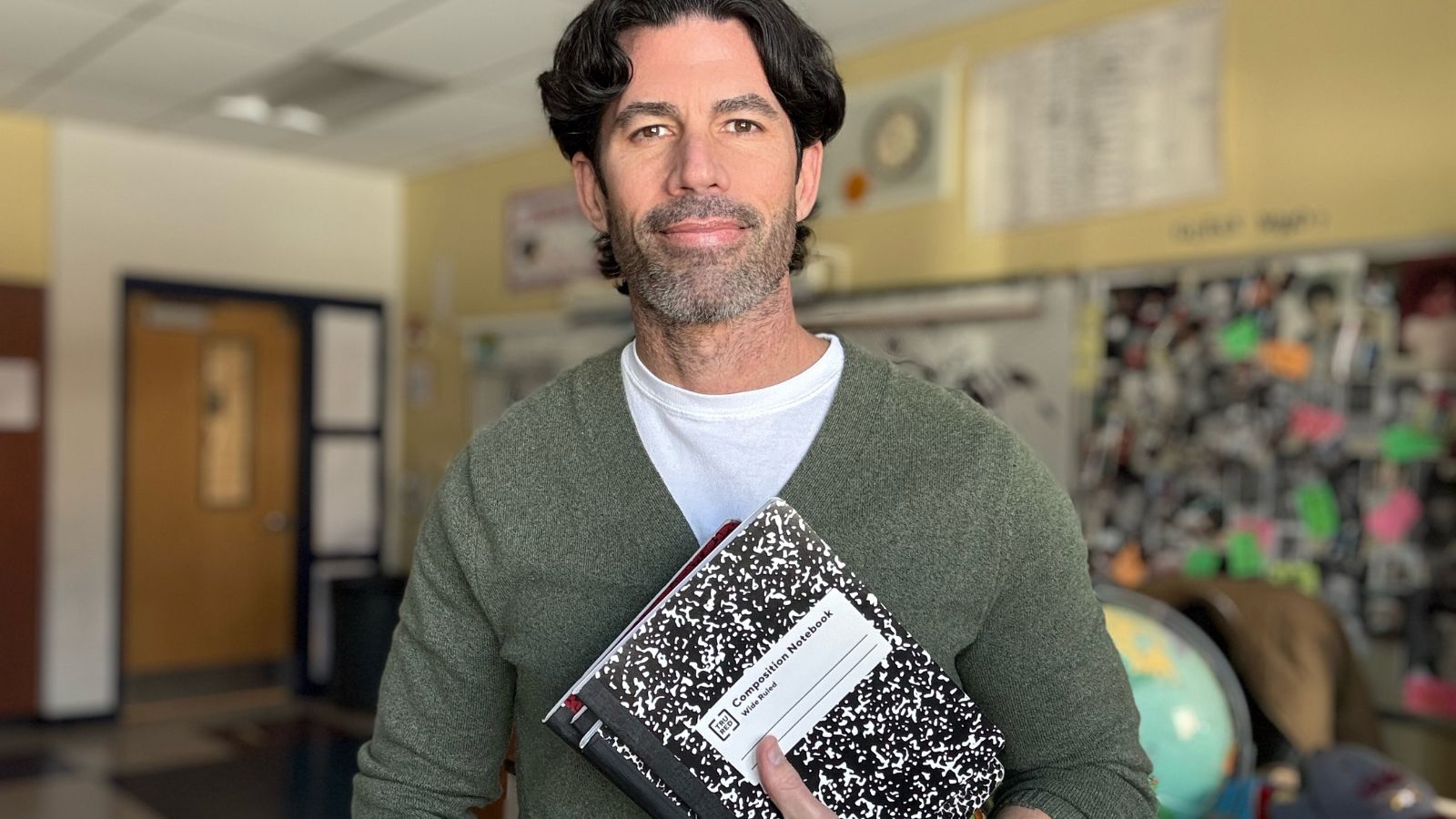
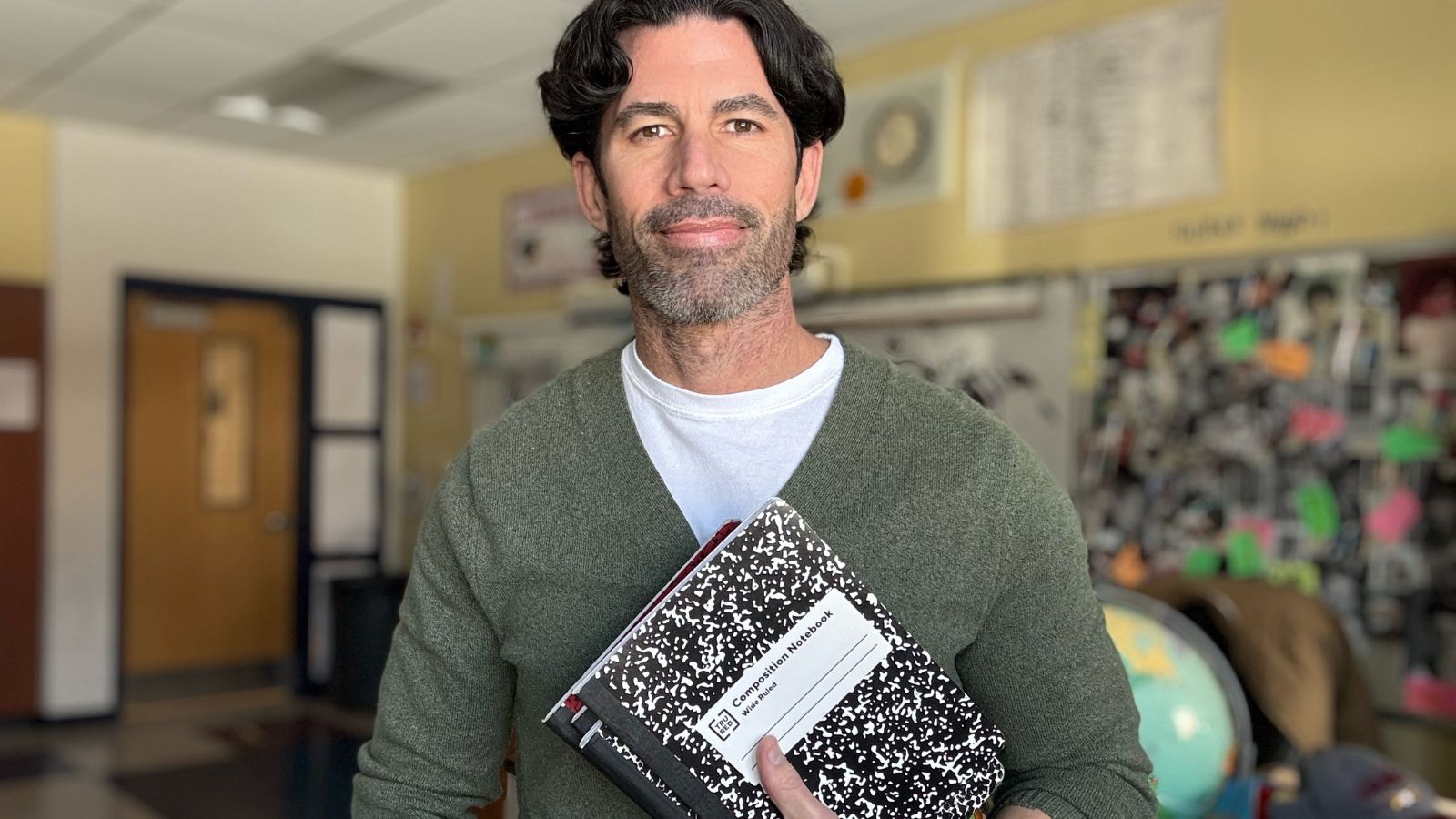
After 23 years in the classroom, Nicholas Ferroni decided to change direction, and millions of people took notice. In an Instagram video that has been viewed more than 3 million times, the New Jersey high school teacher, who once worked as an actor, explains why he intentionally reduced his use of technology this year and returned to the teaching practices that worked before Google, laptops, and all the clicking.
In his video, Felloni discusses the shift to more paper, more eye contact, more conversation, and more hands-on learning, arguing that faster and more efficient doesn’t necessarily mean better for fostering critical thinking, creativity, and connection in students. We caught up with Felloni to find out how the experiment is progressing, what everyday “less technology” actually looks like, and what he’s learned so far. Here is a Q&A with him.
By the way, you can follow Nicholas on Instagram here.
Q: This is your 23rd year as a teacher. What made you rethink the way you teach this year when it comes to technology?
Last year, I was actually looking for a change. I felt like I couldn’t do this anymore.
Over the summer, I thought about what worked best in my classroom. It feels like so many teachers have transitioned to 100% online presentations and digital tools during the pandemic, and we were forced to do the same. But when we returned to in-person learning, all of these technology systems were already in place, so we continued to use them. chromebook. presentation. screen.
And to be honest, I have seen a significant decline in my students’ academic performance, critical thinking skills, social skills, and ability to adapt and resolve conflicts. That’s when I realized that I had strayed a bit too far from what it takes to be an effective teacher early in my career.
I felt like I was doing my students a disservice by continuing to use Chromebooks throughout the semester. I love my job. I love my students. But they knew this wasn’t in their interest.
When I first started teaching, I felt like I was a much more effective teacher and my students benefited more from my style and methodology. So I said, we have to go back to what worked.
Q: What are you teaching now?
I currently teach the following courses: 10th grade Honors U.S. History, 11th and 12th grade Humanities, and History through Pop Culture and Mass Media.
Q: I heard that you were an actor before teaching. How did that experience shape the way you approach the classroom?
Yes, I was an actor before teaching. I was using soap. I fell into it and thought maybe I could pursue this. I quickly realized that I wasn’t very good at it, but I still kept getting hired.
After about a year, I realized that it wasn’t making me happy. I always wanted to be a history teacher, so I started writing subtitles on days when I wasn’t filming. When my alma mater high school had a job opening, I applied and became a full-time assistant, then switched to full-time.
I always say that all great teachers can become great actors, but not all great actors can become great teachers. Teaching is performance and improvisation every day. Except we’re doing six shows a day to an audience that doesn’t necessarily want to be there.
Q: When did things finally start to click for you as a teacher?
The first four or five years were really difficult. You walk in thinking it’s a Dead Poets Society and they’ll hang on to your every word, but then you realize that content isn’t the most important thing in education.
Around my fifth year, I really came into my own. It happened when I stopped lecturing so much and took more risks. I moved to experiential, activity-based learning. That’s when everything changed.
Q: What does “less technology” actually mean in the classroom?
I would be lying if I said there were no engineers in my class. I still use it for research. But I do put pen to paper at least 3-4 days a week. Put your hand on the paper. Practical work.
Every other Friday, we have a completely technology-free day. Students play board games, read, write, journal, draw, and color. There are no jobs. There are no screens.
Q: What changes have you seen in your students since switching to this approach?
My kids are more talkative. Be more proactive. Be more considerate. They are using parts of their brains that they don’t normally use. Seniors who usually check on me are also participating. It was so big.
Q: How do you talk to students about phone use and technology without turning it into a power struggle?
I don’t frame it as a discipline. I frame it as care. I tell them about brain hacking, how companies are designing technology that hooks them. Talk about mental health. Tell them why you are limiting your phone and technology. I don’t expect them to throw their phones on the ground, but I do want them to understand what’s going on with their brains.
Sometimes all that matters is showing that it’s okay to disconnect. It’s okay.
Q: What advice would you give to teachers who want to try this but feel overwhelmed?
Let’s start simple. diary entry. Questions on the board written on index cards. A notebook placed in the classroom. Next year, I plan to purchase notebooks for all of my students so they can journal regularly.
There’s always a way to take something out of Google Classroom and make it tangible: write it, feel it, see it, touch it.
Q: Please give a final message to educators who are watching this series of developments.
Don’t be afraid of failure. Try new things. Our best memories, and most of our learning, rarely happen in front of a screen. Presence remains the most powerful tool we have.
Watch the video where Nicholas Ferroni talks about this initiative.
For more articles like this, subscribe to our newsletter to find out when they’re posted.
