


Idaho is taking steps to strengthen its antiquated coroner system following a ProPublica article documenting that lawmakers repeatedly fail to solve problems that harm grieving families.
An advisory committee formed last year at the request of Gov. Brad Little is developing legislation that would require autopsies in a variety of situations, including the unexplained death of a child. If coroners can obtain national certification that proves they can meet certain standards, it would help pay for coroners’ autopsies.
The bill would emulate a similar system in neighboring Washington. An increase in Idaho’s death certificate fees would help pay for autopsies.
A ProPublica investigation that examined hundreds of death records in 2024 found that some coroners did not meet national standards for investigating child and infant deaths, and a state monitoring report found that Idaho ranked last in the nation in the number of autopsies performed when children and infants died unexpectedly. The state performance review office cited lack of funding as a major problem.
A ProPublica review of training records for Idaho coroners also found that many coroners do not receive the continuing education hours required by state law. A further report in 2025 investigated how potentially suspicious deaths could slip through the cracks of Idaho’s underfunded system.
The committee working on the bill includes seven county coroners and one deputy coroner. Representatives from city, county, and state law enforcement agencies. Deputy county prosecutor. county commissioners and tribal members;
Kelly Brassfield, co-chair of the panel and a lobbyist representing county governments in Idaho, warned that the proposal likely won’t be ready during the 2026 annual legislative session. But this is the first time in decades that coroners and other local and state officials have agreed to improve Idaho’s death investigation system.
Idaho’s death investigation system is funded almost entirely by counties, which have previously fought efforts to mandate autopsies, which can cost thousands of dollars each. At a committee meeting in January, Madison County Commissioner Brent Mendenhall was enthusiastic about the bill and pushing for more autopsies.
“It just makes me shudder to hear that the commission and the county refused to perform an autopsy,” Mendenhall said at the meeting. “I just think, ‘What are you doing to that family who doesn’t know what happened?'”
Mendenhall said that under the proposed law, coroners who have struggled with small autopsy budgets could approach county commissioners and say, “Here’s the law. I want you to let me do it.”
The advisory committee working on the bill is co-chaired by Sen. Melissa Wintrow, D-Boise. Wintrow said ProPublica’s reporting has raised awareness of the harm caused by a flawed death investigation system.
“There is a problem with the system here, and your report sheds light on that,” she said.
Bingham County Coroner Jimmy Roberts, a member of the commission, told ProPublica that Wintrow has repeatedly stated that one of his motivations for doing something about the coroner’s system in Idaho is that “he doesn’t want to see the coroner’s system in the media or on the news anymore.”
“I think that speaks volumes,” Roberts said.
More than a year ago, Idaho’s governor said he supported providing more resources to coroners to help them do their jobs properly. Lawmakers didn’t take him up on it.
Wintrow won minor changes to the coroner’s system during the 2025 session by introducing legislation that would clarify the role of coroners and law enforcement in investigating deaths.
Another development following the ProPublica report is the creation of a new series of intensive courses for coroners, law enforcement officers and others in the state to learn how to respond to child and infant deaths. This spring course, funded by a grant from the Governor’s Children at Risk Task Force, will be the most in-depth training of its kind since 2019.
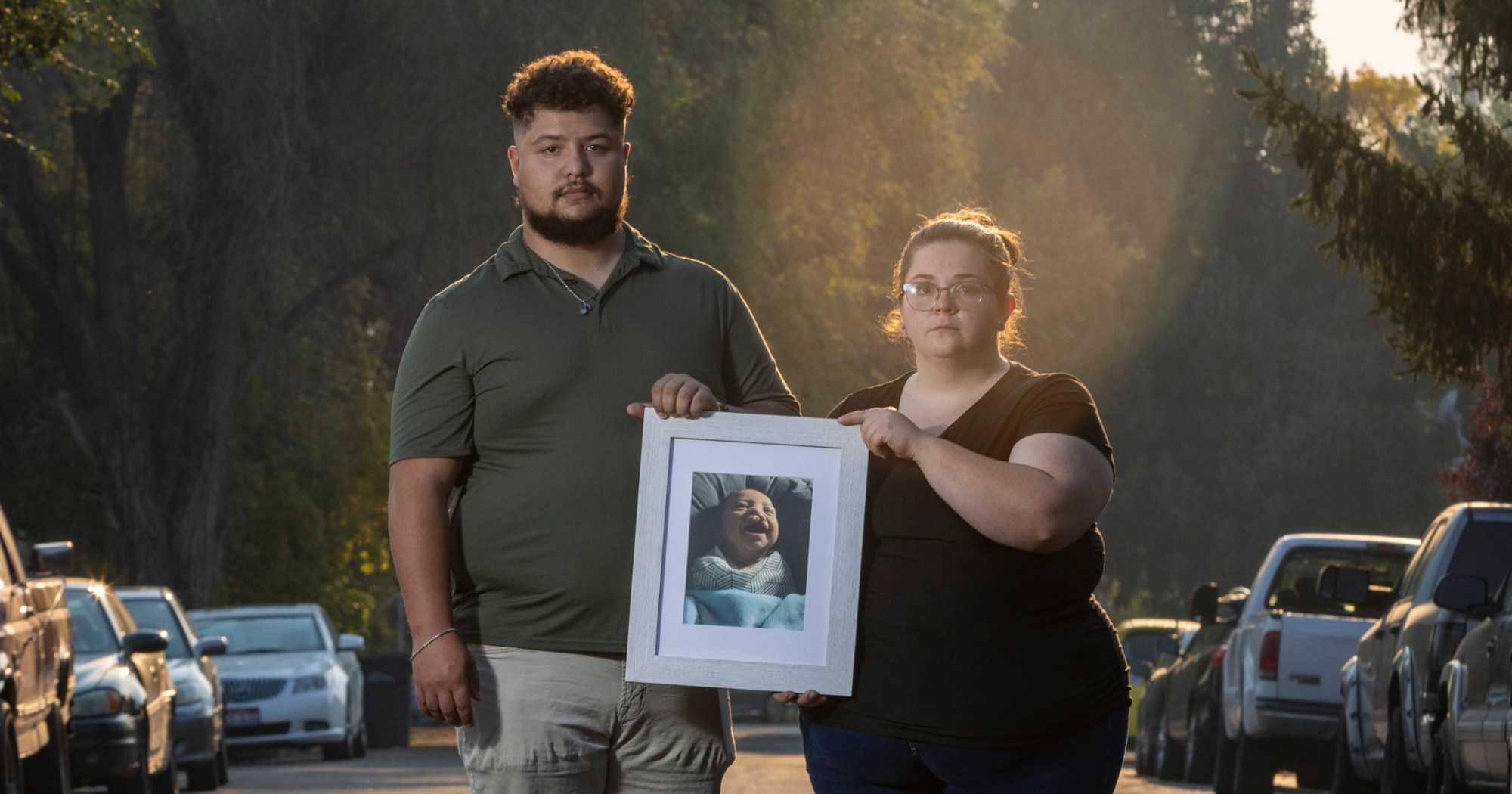
Roberts and Ada County Chief Deputy Coroner Brett Harding will lead the training. Coroners across the state will receive eight hours of virtual education, while coroners in the Boise area and eastern and northern Idaho will receive in-person education. In eastern Idaho, infant Onyx Cooley died suddenly and unexpectedly in February 2024. His mother, Alexis Cooley, found him cold and lifeless and called for help, but the baby could not be revived.
A report released to ProPublica by the coroner legally responsible for determining the cause of the baby’s death found that the coroner did not follow state guidelines. He did not speak to the parents, examine the baby’s body or the scene of death for clues, or order an autopsy. The coroner, who has since retired, told ProPublica that he spoke with law enforcement officers who responded to the infant’s death and relied on emergency physicians who examined the infant’s body to determine the cause of death.
Alexis Cooley told ProPublica that she hopes her baby’s death was not in vain, and that sharing her story with the public might start positive change.
When she learned that the coroner was working on legislation to improve the nation’s final autopsy rate for unexplained child deaths in Idaho, and that first responders and coroners in the state would receive specialized training to handle such cases, she began to cry.
“I hope that my pain and suffering will lighten the burden on other parents if this situation ever arises again,” Cooley said. “And it’s amazing that they were able to get answers and that Onyx’s case was heard.”
Meanwhile, Wintrow said committee members’ willingness to work together to solve problems is encouraging, but progress is slow and piecemeal in a system without a central national body to set public policy for coroners. She is lobbying for a full-time coordinator for the state of Idaho, a role she has played as a part-time lawmaker.
