


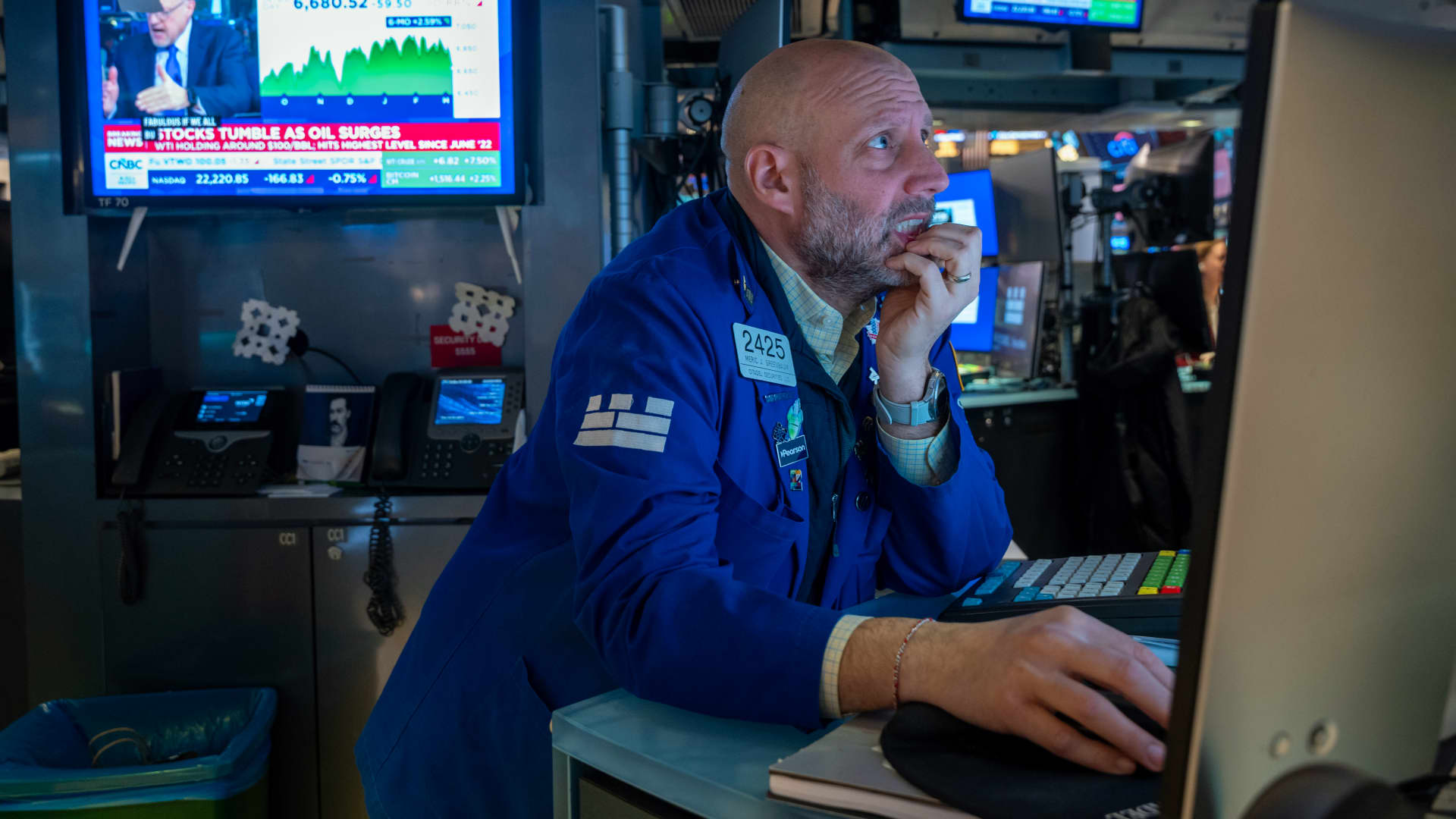
As oil prices soar above $100 a barrel, professional investors are reshuffling their portfolios into sectors linked to commodities, hedging against the risk that geopolitical tensions could trigger broader economic shocks. Rising energy prices related to the Middle East conflict are prompting asset managers to reconsider their positioning. Many point out that the current focus is on maintaining exposure to equities while diversifying into sectors and regions that can withstand rising inflation and volatility. West Texas Intermediate crude rose above $100 a barrel in overnight trading for the first time since 2022 as the region’s major oil producers cut production amid the continued closure of the Strait of Hormuz. Many on Wall Street see the $100 threshold as a potential tipping point for the global economy unless the conflict quickly eases and prices retreat. The S&P 500 fell for the third day in a row in Monday trading, after falling 2% last week. Still, despite the increased volatility, U.S. stocks have remained resilient, with the S&P 500 index trading just about 4% off its all-time high. Some investors point out that rising oil prices do not necessarily hurt the stock market situation. “While the duration and extent of supply disruptions resulting from the conflict remain uncertain, we believe a healthy economic and market backdrop provides some reassurance,” said Brock Weimer, associate analyst for investment strategy at Edward Jones. Carol Schleif, chief market strategist at BMO Private Wealth, said traders are increasingly pricing in the possibility that rising energy costs will push up inflation while hurting economic growth. However, he noted that similar concerns surfaced in 2023, and the stock ultimately held steady. “This is a midterm election year, affordability is paramount for consumers, and policymakers will be paying close attention to the inflation shock from higher oil prices,” Schleiff said. “With elections around the corner, everyone is focused on finding a timely solution to the Middle East conflict, policies that help ease the pain at home.” Small-cap stocks shining? Jason Pride, head of investment strategy at Glenmede, said the shock could be accelerating a shift away from the narrow leadership that has dominated the market for years. Investors are increasingly turning to smaller companies as they diversify their portfolios away from mega-cap stocks. “After nearly a decade of mega-cap outperformance, small-cap stocks and more diversified investment processes appear to be benefiting from a favorable rotation this year,” Pride said. He said small-cap companies could benefit from potential corporate tax cuts and lower interest rates while being less affected by tariffs and global trade tensions. Lisa Charette, chief investment officer at blue-chip Morgan Stanley Wealth Management, said investors should focus on companies that deliver real earnings growth, rather than chasing “hyped themes.” She favors quality large-cap stocks, including select financials, healthcare companies, and technology leaders, including some of the Magnificent Seven names. He said cyclical sectors such as industrials and materials could also benefit from increased demand for primary products. “While surface-level index movements mask extreme rotations and dispersion, the resilience of U.S. stocks in the face of wars and oil shocks is almost unprecedented over the past 80 years,” Charette said. Hedging with options For some portfolio managers, increasing geopolitical risk has shifted focus to hedging strategies. “Energy can and should be part of people’s portfolios because of its diversification and real return potential,” said John Luke Tyner, portfolio manager and head of fixed income at Aptus Capital Advisors. At the same time, Tyner said long-term government bonds may no longer provide the same downside protection for portfolios during market declines, prompting investors to look for alternative hedges. “Using options to generate some income in your portfolio to protect against real-world bad scenarios and reduce volatility makes a lot of sense in the current environment,” he said. —CNBC’s Sean Conlon contributed reporting.
