


Skills that distinguish high-impact educators
Educational priorities change over time. Teachers who started working 15 years ago were far less reliant on digital technology than they are today. Teachers who earned their license four years ago had no idea how artificial intelligence (AI) would impact the classroom. Who can say what tomorrow’s concerns will be?
Nevertheless, there are certain skills that have a huge impact beyond the concerns of our time. These attributes are important for high-impact educators, regardless of what is happening in the wider world around them. In this article, we look at high-impact skills that are important for a career in education.
classroom management
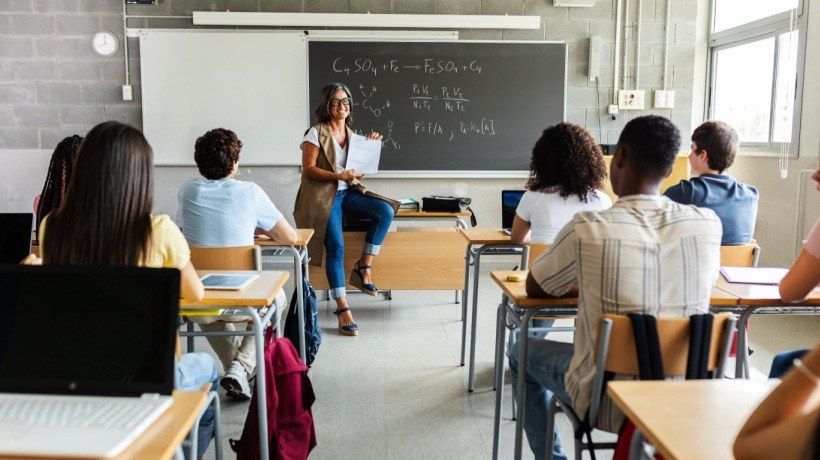
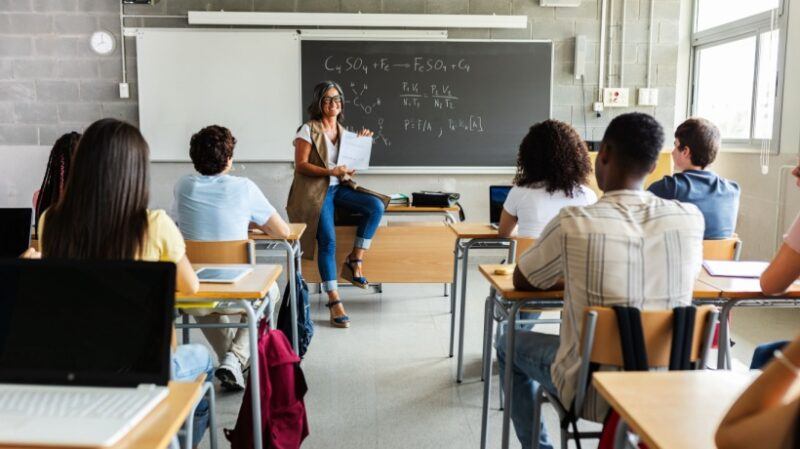
Many aspiring educators do not consider how difficult this is. You know what it says, but how can you teach it to 30 well-meaning but often misbehaving children in a small room? Over time, most high-impact educators learn how to redirect unwanted behavior with simple things like posture and facial expressions, but these skills take time to develop.
There are several elements to effective classroom management. Can you redirect unwanted behavior without interrupting the flow of the lecture? Can you have difficult conversations with students without discouraging them in the long run? Can you manage redirects that don’t need to be repeated every five minutes? Keep in mind that the answers to these questions vary from year to year. Even experienced teachers can sometimes struggle to manage particularly difficult classroom behaviors.
resilience
While certainly intangible and certainly difficult to measure, resilience is what keeps teachers in the game. I use it a lot. How else can a teacher, exhausted from comforting a crying child during a planning period, work an extra two hours to finish grading a paper? How does a special educator cope with the fact that the room is full of 8th graders at a 2nd grade reading level about to enter high school?
Resilience in education means accepting challenges and remembering that no matter how difficult it feels, you still make an impact. This is something that develops over time, but is still incomplete. Even veteran teachers still have their down days. What matters is whether you can move on and overcome it.
communication
A natural but sometimes elusive element of our work as educators is that it’s not just about teaching content. You need to be able to frame it, present it, and restate it in the communication style that most resonates with your students. This, like many other educational talents, is something that fluctuates based on the child you are working with.
adaptability
There are so many variables in any classroom. Johnny is a nuisance. Susie threw up. Michael put his head down on the desk again. Then you realize that you’re supposed to be moving on to another learning module, but half the class still doesn’t actually understand the skills you need. I still don’t understand the content of the previous unit.
What do these situations have in common, other than the fact that they are virtually inevitable? The only solution is through adaptability. As a teacher, you have to accept the fact that things will never be perfect. They are rarely ideal. Your job is to work with what you are given.
Awareness of digital technology
This is a skill that can never be fully mastered. Awareness of digital technology must be continuously updated. This is often something that schools specifically strive to develop through workshops, seminars, and other ongoing training opportunities. The good news, of course, is that teachers don’t have to constantly be on the lookout for what’s new or in development. School districts prioritize these educational opportunities based on the tools they want to integrate into their classrooms.
Public school budgets are often quite tight, so the integration of digital technology within the classroom is quite gradual. There are exceptions. For example, the COVID-19 pandemic has sharply increased the need to understand digital communication technologies. However, in most cases, it takes time for schools to change the tools they use.
consideration
Finally, be considerate. Approximately 63% of public schools have Title I status. What does this mean in a practical sense? I mean, there’s a lot of conflict out there. All children experience something, such as a lack of resources at home or other personal obstacles that can act as barriers.
A good teacher can fully recognize the needs of their students. We cannot always find solutions to every problem that comes into the classroom. But simply recognizing that this complexity exists can improve your ability to fully consider your students’ needs. Learning is a top priority and definitely a teacher’s main job. Every student is unique and complex, and compassion can help teachers do a better job of taking into account the entire needs of the classroom.
conclusion
It can be stressful to realize that you need to learn, balance, and maintain all of these skills in order to become an impactful educator. In a sense, that’s true, but there are a few things to keep in mind. The first is that on a daily basis, your primary responsibility is always to teach. Continuing education efforts occur constantly, but gradually and in the background.
Second, improving your skills as a teacher is often done with joy. Of course, not always. While some training duties are inconvenient or tedious, teachers are often happy to learn more, knowing it will improve their ability to educate their students.
If you’re interested in becoming a teacher, don’t stress too much about the complexity of the role. The job may be difficult, but the qualification process is well designed and aims to ensure you have all the skills you need to succeed.
