


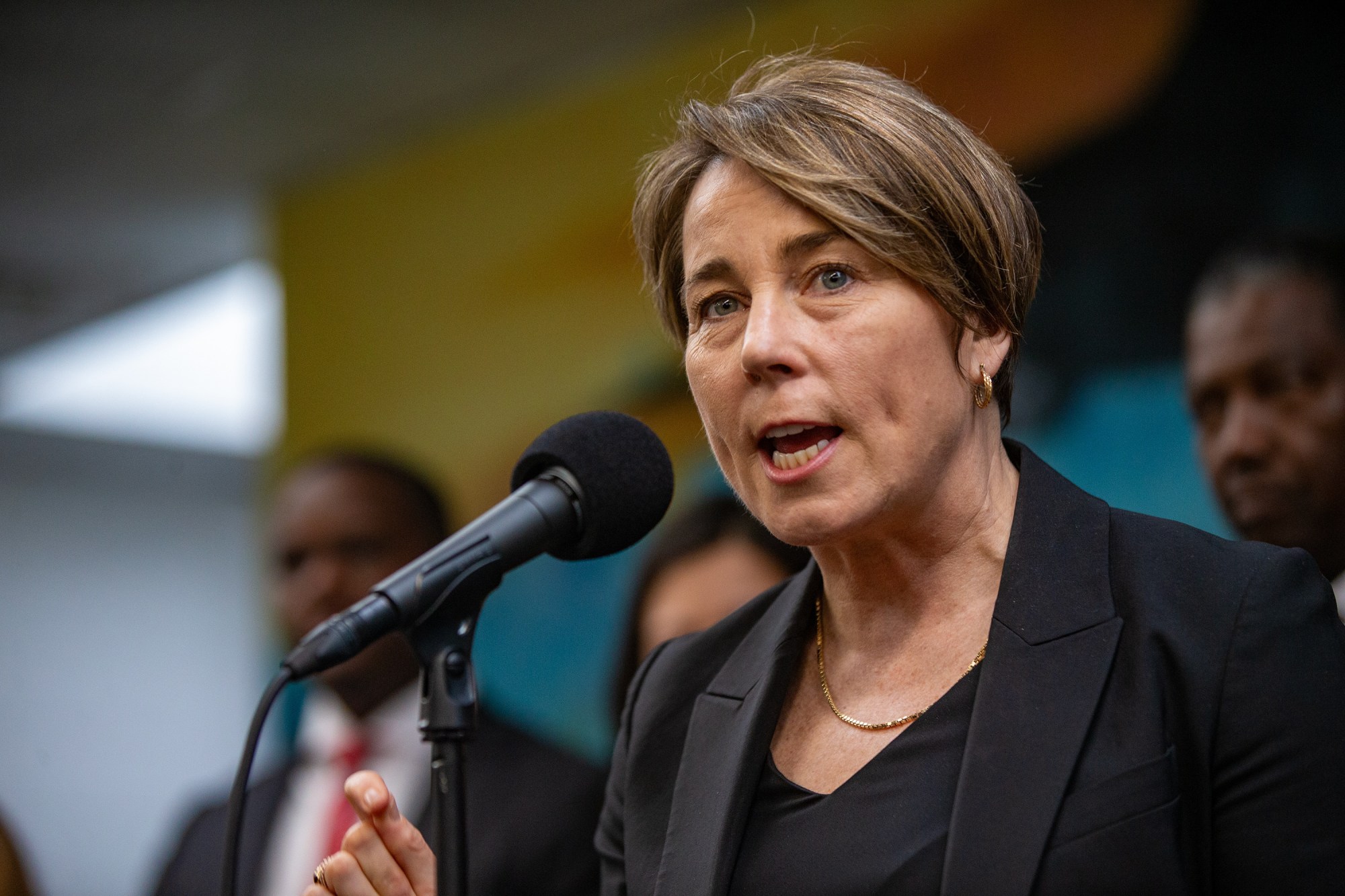
Massachusetts Governor Maura Healey wants to eliminate the 15-year statute of limitations on rape charges based on a DNA match.
Current Massachusetts law prohibits rape prosecutions in older cases, even if a suspect is identified through DNA testing.
An investigation by WBUR and ProPublica last year found that nearly every other state gives adults longer to prosecute rape and similar assaults than Massachusetts. Many of those 47 states have extended deadlines in recent decades because DNA technology has helped solve older cases and because of mounting evidence that police are not investigating rape cases fully.
The WBUR/ProPublica investigation followed the story of Louise, a woman who was raped and stabbed in 2005 after being picked up in a car by a man she said she knew from college, according to a police report. DNA tests later linked her case to a man accused of multiple assaults, but prosecutors had to drop the assault charges against her under Massachusetts statute.
(WBUR does not identify victims of sexual assault without their permission. Louise has agreed to be identified by her middle name.)
Healey’s proposal would eliminate the statute of limitations for rape cases when DNA evidence exists.
“Advances in technology mean new evidence is being collected and tested every day, and the justice system must keep pace,” Healey said in a written statement Saturday. “We hope this proposal will help survivors who have had to wait too long for justice and improve our ability to hold criminals accountable.”
The new language is part of Healey’s fiscal year 2027 budget proposal. This provision must pass both houses of Congress. The system applies to cases where the statute of limitations has not yet expired and future sexual assault cases, but does not affect older cases.
According to WBUR, lawmakers have tried to pass a similar proposal every session since 2011, but efforts have failed in part because defense attorneys opposed the changes, saying longer deadlines risked violating defendants’ rights. State Rep. Adam Scanlon, who introduced the bill to create a DNA exception starting in 2021, said media attention helped move the issue forward again this year.
Healey’s bill, he said, is “a testimony to victims to ensure that people in the same situation never have to go through a process where someone can get away with a rape charge when they know, and we know as a society, that DNA evidence is implicated in a rape crime.”
Healey’s support for the change, the state’s former attorney general, gives new hope to victims, said Louise, a woman profiled as part of WBUR’s investigation. She was raped and stabbed repeatedly, according to a police report. However, the DNA evidence did not match her assault on the suspect over a period of 17 years.
“So many of us have never had justice. We wouldn’t see that day if we knew our perpetrators couldn’t get us,” Louise said.
Prosecutors claimed in 2022 that Louise’s attacker was a serial rapist. The DNA of Ivan Chan, a Boston-area man who worked in the financial services industry at the time of his arrest, also matched the 2006 stabbing and rape case, according to court records. However, this attack was also beyond the state’s statute of limitations at the time the match took place.
Chung has repeatedly maintained his innocence. His attorney did not respond to WBUR’s request for comment.
Louise decided to advocate for survivors like herself after Chung’s prosecution failed. In June, she publicly testified before a state legislative committee in support of Scanlon’s bill.
She said she’s glad the governor listened to her and other survivors.
“I have a beautiful family and a young woman,” Louise said. “I care about all the young people in our community. I want them all to be safer.”
