


The European Commissioner for Energy and Housing was in Algiers last month for high level talks with Algerian officials on building out the two sides’ energy relationship. It was a routine gathering—one of many since Algiers and Brussels signed a strategic partnership in the field of energy in 2013. They checked off the usual boxes of developing the Algerian hydrocarbon sector with more European investment, renewable energy, and emissions reductions. Despite the gathering storm clouds in the Middle East, there was little sense of urgency.
Now a little more than a month later and leaders from eurozone nations are rushing to Algiers to beg for more natural gas.
Prime Minister Giorgia Meloni of Italy, which is one of the countries most affected by the knockout of Qatari natural gas supplies, went to Algeria on Wednesday and made a lot of vague statements that amount to little relief. Meloni said the two countries had agreed to deepen their already strong partnership through their national energy companies, Italy’s Eni and Algeria’s Sonatrach.
“We have decided to strengthen our already very strong cooperation by working in new areas such as shale gas and offshore exploration,” she said, adding that this would help increase the flow of Algerian gas to Italy. Perhaps, but that will be years away, which will get into a moment.
Spanish Foreign Minister Jose Manuel Albares rushed off to Algiers the following day. Spain is pushing for increased pipeline imports from Algeria as prices skyrocket due to the US-Israel war of aggression against Iran.
While the trips across the Mediterranean make it appear as though European leaders are doing something about the worsening energy crisis that is only just beginning to hammer their countries, how much help can Algeria really provide?
Plans Meet Reality
There are three gas pipelines that connect Algeria to Europe—the TransMed to Italy, MedGaz to Spain, and the Maghreb-Europe. The latter links Algeria to Iberia via Morocco but hasn’t delivered gas to Europe in five years (ironically, today it is used to send gas from Spain to Morocco). Its closure was blamed on tensions between Algiers and Rabat, although some analysts believe that the real reason is that Algeria is short of gas to sell.
That possibility tells us a lot about the European plan for the past four years to lean on Algeria to make up for the Russian gas it decided it didn’t want anymore and now the Middle East capacity destroyed by war.
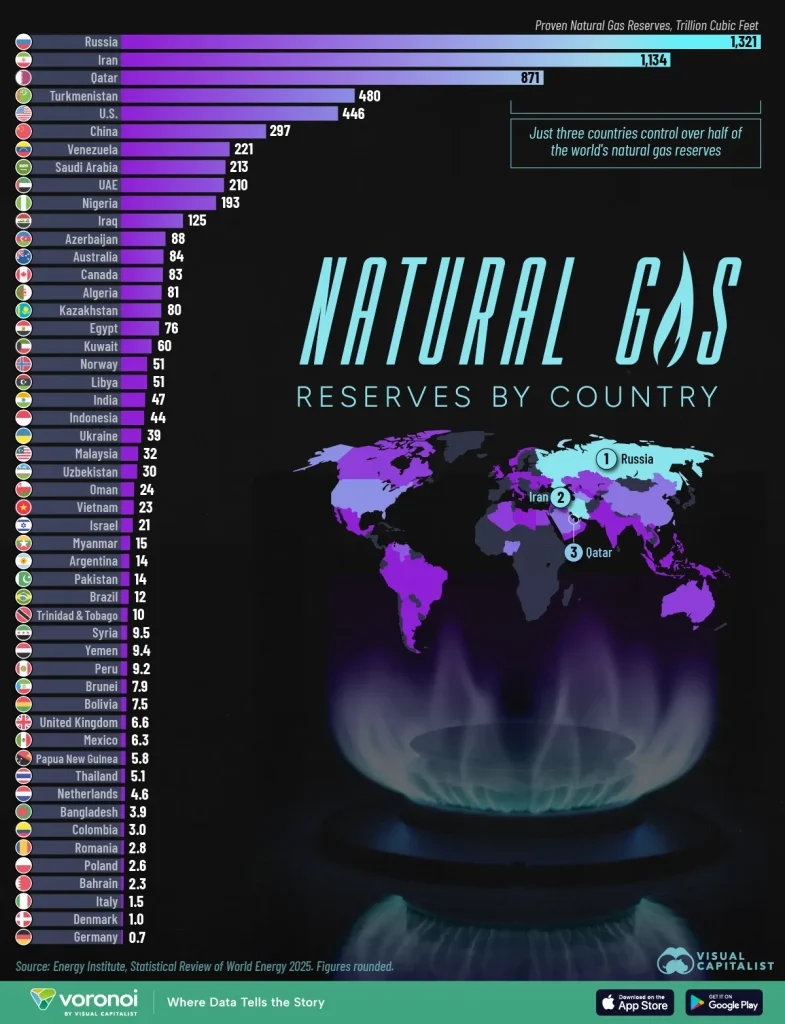
Algeria does have plenty of gas:
Yet its output remains relatively small, and Europe has yet to secure more supplies despite years of trying. In fact, Algerian gas exports to Europe have declined over the past 15 years as have total exports.
The Algerian state-owned oil and gas company, Sonatrach, exported 55 billion cubic meters (bcm) of gas in 2010. That fell all the way to 39 bcm in 2020 before rising again to 49 bcm in 2025, 14 bcm of which were LNG.
Following the EU’s decision to forego much of the pipeline Russian gas it used to receive, Sonatrach committed to increasing gas flows to Italy, but it has failed to do so. While the TransMed pipeline has an official capacity of 33.5 bcm, it repeatedly comes in much lower due to maintenance or other issues (plans have been in the works for years for a new pipeline that would send more gas and “green” hydrogen, but that is years away). Just 21 bcm flowed from Algeria to Italy in 2024. And that total is not set to improve in the near future.
“There is some spare capacity in MedGaz (maybe 1 billion cubic metres per year), but there is no extra capacity in TransMed,” Geoff Porter, an analyst with North Africa Risk Consulting, told AFP.
MedGaz has a capacity of 10.5 bcm, and 9.4 bcm was sent through the pipeline last year.
According to Bloomberg, Algeria’s state energy firm is asking Italy to buy any extra fuel from the spot market, where prices are higher. Ouch.
So what about on the LNG front?
Algeria has reportedly boosted LNG exports to Europe by 74% in the past month, but that’s not saying much:
It’s not clear whether that jump is sustainable, and it also comes with a higher price tag due to global competition for suddenly short supplies. In a reverse of the last time Ansar Allah shut down the Red Sea, the EU could potentially be aided here by Yemen jumping into the war as such a scenario would make it less likely Algeria would send its LNG to Asia.
Still, the math doesn’t add up—for Europe or globally.
“Replacing Qatar, which produces double that of Algeria – 200 billion cubic metres per year versus 100 – is not realistic in the short-term without massive investment,” Moez Ajmi, an energy analyst at the EY consulting firm, told AFP.
And Porter, an analyst with North Africa Risk Consulting, adds: “Algeria does not have enough spare gas production to serve as an alternative to lost Qatari volumes.”
Italy’s energy minister Gilberto Pichetto Fratin, like many of his European counterparts, recently said that he was also in direct talks with Azerbaijan and the US to make up for the loss of Qatari gas. We know the situation with US gas. It’s expensive, and the EU will be in competition with countries around the world desperately seeking supplies. (It’s also horrible for the environment, with a recent study showing it’s worse than burning coal).
Similar to Algeria, the EU likes to tout Azerbaijan as a pillar of its gas strategy (i.e., to get rid of Russian gas), but it’s another failure to do basic math. Azeri supplies to the EU can’t come close to replacing Russian gas, let alone Russian and Qatari gas. Azerbaijan is maxxed out and has even been importing more Russian gas to meet its domestic demand in order to send more to Europe. Those exports could run into trouble any day now, as well, due to the war on Iran and Azerbaijan’s close relationship with Israel (it’s surprising they haven’t yet). Oh, and Moscow is heavily involved in the Azeri oil and gas sectors so European reliance on Azerbaijan ultimately helps Russian companies’ bottom lines.
This all brings us back to the elephant in the room: the EU’s self-destructive decision to refuse cheap and reliable pipeline Russian gas.
As we can see the EU has “successfully” reduced its imports of Russian gas:
While EU total imports are down compared to 2021, the gap from the loss of Russian gas has largely been made up by much more expensive imports from the US. Eurocrats have been touting Algeria and Azerbaijan as “key pillars” of their strategy to replace Russian gas for the past four years, but simply repeating it doesn’t change the reality.
Russia still sent more gas to the EU than Azerbaijan and Algeria combined in 2025:
Norway: 31.1% – 97.2 bcm
United States: 25.4% – 79.4 bcm
North Africa: 12.8% – 39.9 bcm
Russia: 13.1% – 40.9 bcm
United Kingdom: 4.3% – 13.4 bcm
Azerbaijan: 4% – 12.4 bcm
Qatar: 3.8% – 12 bcm
Others: 5.7% – 17.7 bcm
And now, despite years of hysteria over Russian gas and the efforts to replace it, they want us to believe that Algeria and Azerbaijan will play a large role in replacing the gap of Russian and Qatari gas.
It doesn’t make any sense, and it hasn’t for the past four years when European officials have claimed Algeria will be their gas savior whenever trouble pops up.
Desperation Time
From Politico’s March 30 newsletter:
Protecting the gas pump: In the past two weeks, Hungary implemented a fuel-price cap … Spain announced a €5 billion package to mitigate the war’s impact … Italy slashed excise duties on fuel … Ireland has done the same … and France announced targeted measures to bail out affected sectors.
The list goes on. But it’s not enough, amid dire warnings of a “global recession” around the corner. Europe’s leaders warn they don’t have the budgetary room to do more — so they’re looking to Brussels.
Just in time: The European Commission is expected to unveil, as early as this week, a series of measures to help capitals weather the storm. These could include financial aid for affected industries; relaxing state aid rules around fuel subsidies; and measures to offset the price of carbon credits in the EU’s Emissions Trading System.
Italy, in particular, is in a world of hurt with the loss of Qatari gas. The country, which is the second largest manufacturing center in Europe behind Germany, generates roughly 44 per cent of its electricity from gas-fired plants, well above the EU average of 17 percent. Qatar supplied 33 percent of Italy’s LNG imports in 2025.
It’s showing:
The Italian economy is already stagnant and real wages are 7.5 percent lower than in 2021. That’s a long-term story, but what was the primary factor contributing to the most recent fall? In 2021, Russian imports accounted for about 40 percent of Italy’s gas supplies, and that loss has been devastating.
And the bill for the harebrained “plan” to wreck Russia is only starting to come due. The Italian public, which has never supported Project Ukraine and has a long history of proud ties with Russia and the USSR, is paying for it.
Meloni’s predecessor, the unelected former Goldman Sachs man Mario Draghi, was one of the biggest proponents of the EU’s doomed Russia policy and pushed the energy hub idea, which was seamlessly picked up by Meloni.
What a disaster. It’s worth briefly retracing this whole sad saga of trying to quit Russian pipeline gas (while still importing more expensive Russian LNG) as it provides the necessary background for why Italy—and Europe—is in deep trouble now.
Draghi and company said Italy was not only well-positioned to manage the loss of Russian fuels due its proximity to North Africa, but that it would become a gas hub! Italy quickly began looking south across the Mediterranean as part of the EU-wide turn to Africa in search of energy replacements for Russian oil and gas. Algeria was going to increase the flow of gas through an existing pipeline, and the countries plan to build another pipeline.
Here were Italy’s calculations from a March 2022 piece from Hellenic Shipping News:
Italy consumed 29 billion cubic metres (bcm) of Russian gas last year, representing about 40% of its imports. It is gradually replacing around 10.5 bcm of that by increased imports from other countries starting from this winter, according to Eni.
Most of the extra gas will come from Algeria, which said on Sept. 21 it would increase total deliveries to Italy by nearly 20% to 25.2 bcm this year. This means it will become Italy’s top supplier, provide roughly 35% of imports; Russia’s share has meanwhile dropped to very low levels, Descalzi said this week.
The rest of the shortfall was to be made up of LNG shipments, primarily from Qatar and of course the United States.
Rome was burning through billions of euros coming from the EU’s green fund, the REPowerEU plan, and the Covid recovery fund to completely wean itself off Russian gas and turn the country into a hub, mainly with LNG storage facilities. Seeing as the majority of the LNG imports to Europe have come from the US, this essentially amounted to a massive taxpayer giveaway to American energy companies.
Rome rushed through a 5 bcm LNG terminal project in Tuscany with the Draghi government appointing a special commissioner with near-absolute powers that allowed the project to proceed despite court challenges.
In December, Italy’s gas grid operator Snam completed a $400 million deal for another floating 5 bcm LNG storage and regasification facility that will be based on Italy’s northeastern coast, which will bring the country’s total to 28 bcm. Italian energy company Edison is in the middle of a 25-year contract with QatarEnergy for about 6.5 bcm per year of LNG, and Italian energy giant Eni, which in 2024 signed a 27-year-deal for up to one million tons per year of LNG.
The Italian government patted itself on the back and said it was the “best in Europe” on energy security. Oops.
And so Rome turns to Algeria yet again, but the same roadblocks still exist.
Algeria already supplied Italy around 20 bcm last year, roughly 30% of the country’s total consumption, but any increase is likely years away.
Algiers is pouring $60 billion into efforts to boost exploration and modernize energy infrastructure with the goal of doubling its gas production to 200 billion cubic metres by 2030. This includes exploring shale gas deposits in the country’s harsh southern desert, with Chevron and ExxonMobil potentially bringing in capital and technical expertise, but any boost in production there is probably at least five years away, and that’s a best-case scenario.
That’s probably why neither Meloni nor Algerian officials provided a timeline or specifics on how quickly additional supplies could reach Italy.
Algerian sources tell Decode39 that Italy and other European nations seeking more gas need to move beyond a model centered exclusively on hydrocarbon imports. They want knowledge transfer, advanced vocational training, and industrial partnerships in renewable energy and smart agriculture, joint production and direct industrial integration with the European market.
The Russian gas crisis alone wasn’t enough to get Europe there; we’ll see if the loss of Middle East gas does the trick.
While the idea that Algeria will rescue Europe is countered by the facts, it might be one of lesser examples of magical thinking having to do with North Africa currently floating around
Pipe Dreams
The SoutH2 Corridor is a cornerstone of the EU Hydrogen Strategy embedded in the REPowerEU, the 300 billion euro plan to free the EU from Russian gas. The corridor envisions a 3,300 km long pipeline that will send hydrogen produced by wind and solar from North Africa to Italy, Austria, and Germany. There are questions not only about how “green” it will be but also about the energy competitiveness. From Francesco Sassi:
The first auction issued by the European Hydrogen Bank evidenced lower costs in Southern and Northern Europe (€5.8 to €8.8 per kg) in green hydrogen production versus Germany and France (€12-13 per kg), but the premium needed by producers is between €3.3 to €6.5 per kg to just break even, at least for at least a decade.
These factors open serious questions on how green hydrogen would help to lower energy costs for citizens. Governments will also have to figure out how notable are risks for investors and shareholders in a market concerned about grid congestion, cost increase and geopolitical tensions affecting projects’ implementation.
Green premiums are in fact pushing investors away from green hydrogen. The market “is not where we thought it would be” said at Davos Fortescue Energy CEO’s Mark Hutchinson. The company’s investments in “green iron” has been growing over the years, but according to him “If you’re waiting for someone to pay you extra because it’s green, forget it … at the end of the day, the economics have to work.”
***
Algeria says it plans to begin construction on the Trans-Saharan Gas Pipeline this year. First proposed in the 1970s, it would carry 30 billion cubic meters per year from Nigeria through Niger to Algerian terminals. There is also renewed talk about the Renewed Hope Pipeline, which would bring Nigerian gas through Chad and Libya and then on to Sicily.
Pipelines through some of the most insecure places on the planet? What could go wrong?
They’re, of course, all talk at this point and years away if they ever see the light of day. But that’s apparently better than just accepting gas from Moscow because, haven’t you heard, Russia is about to collapse any day now.
