


Combine two e-learning methods to improve learning outcomes
Creating interesting learning content that engages learners and completes the course is only part of successful learning. The other is to achieve strong knowledge retention so that students don’t forget much of what they learned soon after the course ends. Increasing retention and recall is essential for learners to feel that your learning content has had an impact on their professional or academic life and be motivated to take more courses. An approach that appears to be successful in achieving this goal is a combination of spaced repetition and retrieval practice. While effective on their own, using these eLearning techniques together will take your learning results to the next level for your audience.
In this article, we will explain what each technique means, how you can combine them and, most importantly, what benefits you can expect.
Defining Spaced Repetition and Retrieval Practices
What is spaced repetition?
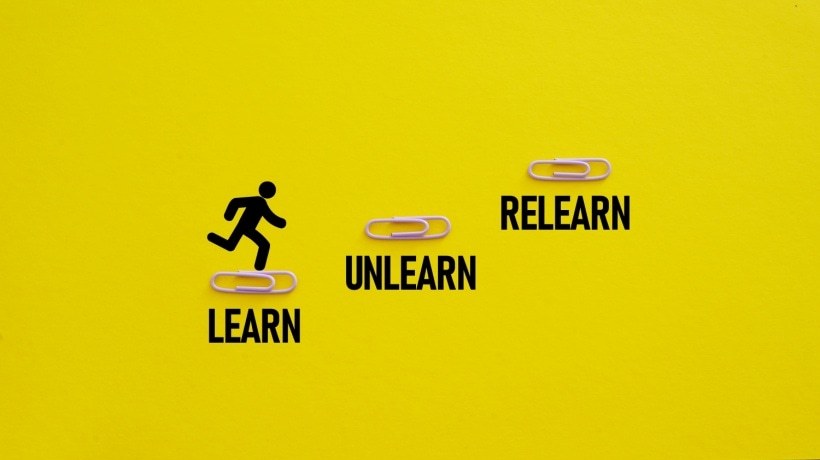
Spaced repetition involves revisiting information over time, increasing the time between review sessions. In other words, learners are encouraged to revisit key concepts after a day, week, month, or year, rather than cramming all the information into one learning session. This method is effective because it encourages learners to review and reconstruct what they have learned when they are about to forget. This relearning process strengthens memory retention and makes it easier to recall information later.
Activities that you can incorporate into your eLearning course to support spaced repetition include:
Schedule review quizzes at longer time intervals. Create short microlearning modules that reintroduce key concepts. It utilizes an algorithm that adjusts the review schedule according to the learner’s performance.
What is retrieval practice?
Retrieval practice refers to the process of actively recalling previously learned information from memory. This is essentially what learners are expected to be able to do after completing a learning module or revising content. By making an effort to recall information rather than simply reviewing it passively, as with spaced repetition, learners strengthen neural pathways and contribute to the transfer of knowledge into long-term memory. This ultimately improves knowledge retention and application in real-world situations.
Search practice can be implemented through activities that most of us are familiar with, such as:
Complete tests and quizzes. Learners use flashcards to self-test. Answer scenario-based questions and reflection prompts that encourage learners to explain concepts in their own words.
How can these techniques be combined?
Now that you know what these two e-learning technologies mean and how they can be used in your learning environment, you may be wondering how to combine them. Here’s a practical way to accomplish this:
Incorporate knowledge search sessions into your eLearning courses and gradually lengthen the time between sessions. It uses an adaptive algorithm that adjusts the interval between search sessions depending on the learner’s performance and confidence level. Including pop-up prompts and quizzes in your content helps learners actively recall information as they review it. Provides feedback after each search attempt to correct mistakes and reinforce important points.
4 benefits of combining spaced repetition and recall practice
In the previous section, we mentioned many times that the combination of spaced repetition and retrieval practice enhances knowledge retention, recall, and transfer. This article also explains how to achieve this.
Strengthen long-term storage
One of the main benefits of combining these learning strategies is that it positively impacts long-term learning retention. Specifically, as described in the forgetting curve model, spacing out learning sessions allows learners to be ready to revisit information when they begin to forget it. Retrieving information from long-term memory at this critical moment is the most difficult, but extremely beneficial. This approach enhances memory tracking and significantly enhances retention compared to cramming sessions.
Improving knowledge transfer
Another benefit of combining spaced repetition with retrieval practice is that it provides multiple opportunities for learners to apply what they have learned. Each time a learner acquires or reviews information, they approach it from a different stage of their learning process or professional routine. As a result, the information can be applied in new or different contexts. This is particularly beneficial to learners’ problem-solving skills, as it allows them to use their newly acquired knowledge more flexibly.
Boost engagement and motivation
It is important for learners to feel motivated and focused throughout the learning process. This can be facilitated by providing frequent bite-sized search activities that encourage learners to review information and complete additional modules. These study reminders also create measurable progress milestones for learners. Even if they successfully complete an activity and realize they don’t remember as much as they should, learners will be motivated to reuse training resources to learn more or address gaps. Ultimately, your ability to recall information will improve, leading to a sense of accomplishment and increased self-confidence.
Supports mastery learning
A final reason to consider a combination of spaced repetition and retrieval practice is to help learners achieve the highest level of understanding of a particular topic. Mastery learning, as this approach is known, allows learners to fully understand a subject before moving on to the next one. When learners return to learning materials regularly, instructors and learning platforms can easily identify knowledge gaps and systematically address them. This way, learners are more likely to achieve true mastery rather than superficial learning, and are able to effectively recall and apply what they have learned.
conclusion
Combining spaced repetition with retrieval practice demonstrates the effectiveness of combining simple activities that you are already providing to your audience. These approaches emphasize that the best results are achieved by treating learning as an iterative process rather than a one-time event. Incorporating blended activities like the ones described in this article not only engages learners, but also helps enhance understanding, retention, and memory. This ensures a more effective application of newly acquired knowledge and an overall more effective learning strategy.
