


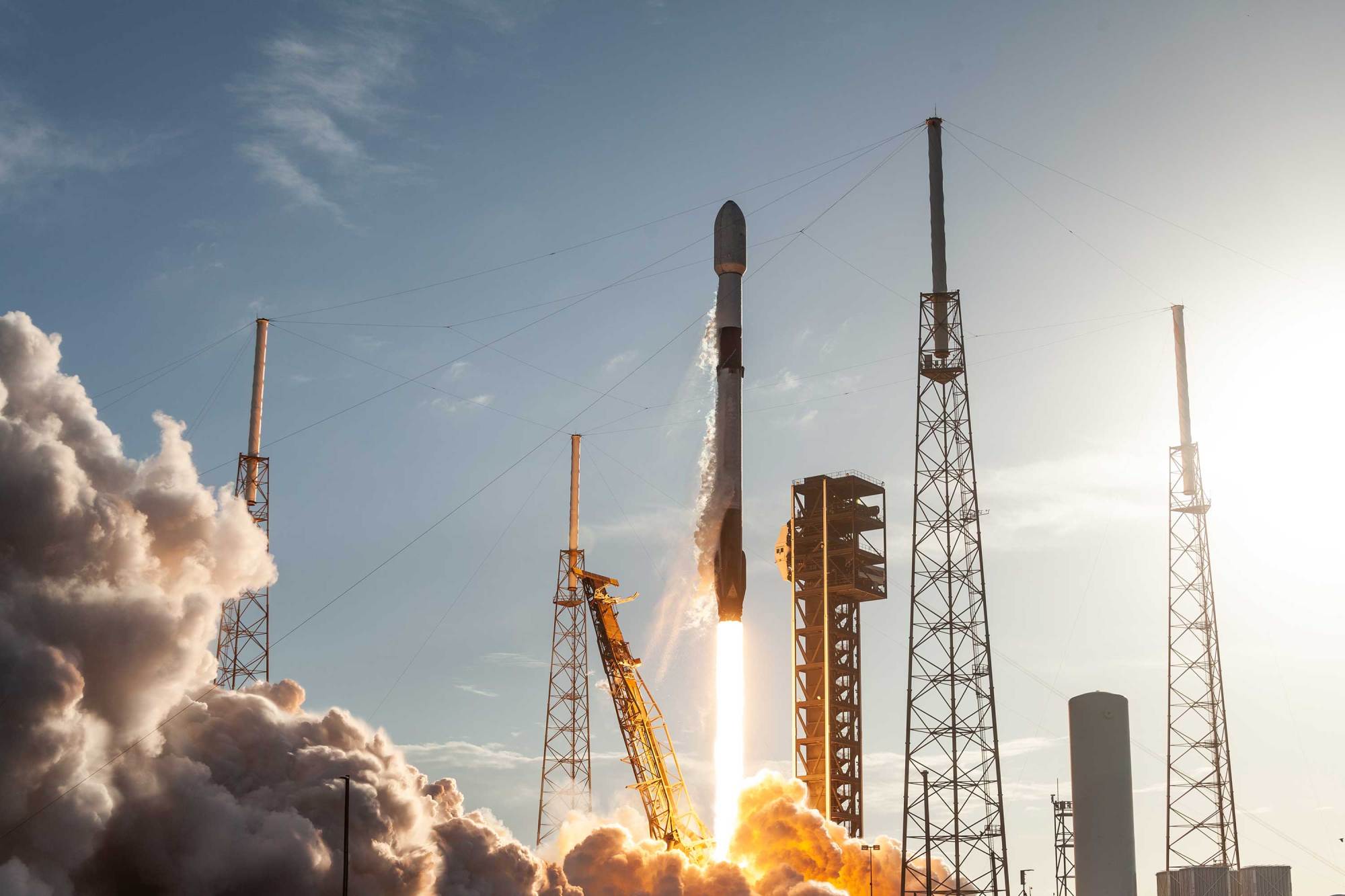
The Trump administration is rolling back rules aimed at preventing commercial space companies from leaving rocket bodies in Earth orbit, a practice that experts say could threaten public safety and communications.
The Federal Aviation Administration first proposed the measure in 2023 under the Biden administration in hopes of curbing the planet’s growing debris dumps. Companies like Elon Musk’s SpaceX would have been required to safely remove such spacecraft within 25 years of launch, saying their “mass and the uncertainty of their landing destinations pose a significant risk to people on the ground.”
Officials cited the example of SpaceX’s Falcon 9 rocket re-entering Earth’s atmosphere over the Pacific Northwest in March 2021, creating a streak of light in the night sky and dropping a tank on a farm in Washington state.
But companies like SpaceX criticized the proposal, citing cost and other concerns, and the FAA repealed the rule in January, saying it needed more time to study.
“The FAA will review the space launch industry’s expectations regarding cost inputs and debris mitigation activities,” the FAA said, adding that it would also review the FAA’s authority to enact similar regulations. In response to questions for this article, an agency spokesperson reiterated that rationale.
The White House did not respond to a request for comment on the withdrawal.
The move is a concession to the commercial space industry and follows a move by President Donald Trump’s administration last year to roll back regulations meant to protect the environment and the public during rocket launches. “The Trump Administration is committed to solidifying America’s primacy in space without compromising public safety or national security,” a White House spokesperson said last summer.
But critics argued that the government was missing an opportunity to manage the rubble, putting the public at risk in the process. Rockets can be hundreds of feet tall and are usually made up of multiple parts called stages. After the lower stage falls, the upper stage continues into space to deploy payloads such as satellites or carry out other missions.
“Instead of asking companies to dispose of these upper stages responsibly, the United States decided to determine whether falling debris would hit people or planes,” said Dr. Euan Wright. candidate at the University of British Columbia and a junior fellow at the Space Institute, a nonprofit organization that supports the rule.
A study by Wright and colleagues found that there was a 20 to 29 percent chance that at least one bystander would be killed by debris from a reentry rocket within the next 10 years.
No one has yet died from falling space debris. But others have been recorded with minor injuries, including a boy who broke his toe in China and a woman who was hit in the shoulder in Tulsa, Oklahoma. In 2024, a piece of metal from the International Space Station crashed through the roof of a house in Naples, Florida.
Last year, two of SpaceX’s Starship mega-rockets exploded, raining debris over the Caribbean Sea, drawing new attention to the dangers planes place when re-entering the atmosphere, sometimes in uncontrollable ways. After ProPublica wrote about the Starship disaster, the FAA issued a new warning to airlines, saying that rocket launches can “significantly reduce safety” and that pilots should prepare for the possibility of “catastrophic failure” resulting in dangerous debris.
Experts say space debris poses a growing threat to both the space program and everyday life on Earth.
In 2023, the FAA announced that a growing field of debris above Earth, if left unchecked, could clutter the orbits used for human spaceflight and increase the likelihood of collisions that could damage satellites that support communications, weather forecasting, and the Global Positioning System. The FAA said at the time that the rule was an attempt to bring the evolving commercial space industry into line with national practices and international guidelines followed by NASA.
Wright said about half of all launches involve the rocket’s upper stage leaving orbit. There, it could pose a danger to the manned space station and disrupt astronomers’ research before it hits Earth.
Wright said U.S. rocket companies, including SpaceX and United Launch Alliance, have abandoned 41 upper stage rockets in orbit over the past three years. Currently, 33 people remain. “Abandoning a truck-sized upper stage in orbit would be irresponsible,” he said.
In response, SpaceX said in a statement on its website that it is committed to reducing and eventually removing space debris left behind by Falcon, which regularly deploys new Starlink satellites.
“In 2024, 13 of Falcon 9’s 134 upper stages remained in orbit after successful payload deployment,” the company said. “In 2025, we have reduced this number to three out of a total of 165 launches.”
United Launch Alliance, a joint venture between Lockheed Martin and Boeing, said through a spokesperson that it will safely dispose of the upper stage “either by placing it in a graveyard orbit or by conducting a controlled reentry in which the majority of the stage disintegrates in remote deep ocean.”
When the FAA proposed the rule, it said that for the past 50 years, on average, one piece of space debris has fallen to Earth every day. Last year, an 8-foot-tall, 1,100-pound ring from the rocket fell on a remote village in Kenya, and pieces of the Falcon 9 were found in forests, warehouses, and fields in Poland.
The FAA’s proposal would require launch companies to submit plans for how they will remove debris before launch, and would also apply to debris larger than 5 millimeters. Acceptable options for disposing of spent rockets that don’t burn up in the atmosphere include launching them into higher “disposal” orbits or sailing them to splashdown in “extensive ocean areas,” the FAA wrote.
In comments on the proposal, commercial space companies challenged the FAA’s authority to implement the rule, saying they were concerned about costs and other issues. SpaceX said the proposal “significantly underestimates the costs and impacts of the proposed rule and overstates its benefits.”
Experts fear the debris collision could cause a chain reaction that would be difficult to stop and could render large areas unnavigable. This is a phenomenon known as Kessler syndrome. In 2009, a U.S. satellite and a defunct Russian satellite collided over northern Siberia, creating more than 2,300 traceable pieces of debris.
The problem also complicates SpaceX’s job. As New Scientist reported in January, the company’s Starlink satellites routinely maneuver to avoid collisions with objects such as other satellites or space junk, performing about 300,000 similar actions last year alone.
