


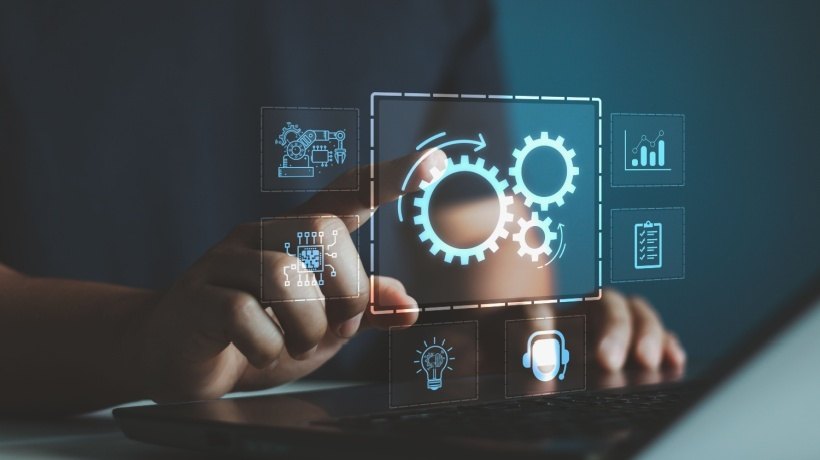
Transition to automation of routine tasks
Artificial intelligence (AI) is automating repetitive, mundane tasks across industries. Automation reduces errors, increases efficiency, and frees up employees to focus on creative and strategic roles. The changes in the workplace driven by AI and its impact on the future of work are most visible in manufacturing, data processing, and customer service.
AI and the future of work
Manufacturing transformation
Automated assembly lines and AI-powered quality control systems are dominating manufacturing. Robots handle repetitive tasks such as welding and packaging, increasing productivity. However, this reduces the demand for manual labor in factories. Employees are moving into roles that oversee or maintain these automated systems.
Redefining customer service
AI-powered chatbots now manage routine customer inquiries. This trend reduces the workload of human agents, allowing them to focus on complex customer issues. While automation may replace some jobs, it also creates opportunities for those skilled in maintaining and programming AI support systems.
Challenges and opportunities
As AI takes over daily tasks, workers must adapt to maintain the status quo. Upskilling and reskilling programs that provide training in areas such as AI monitoring, ethical programming, and creative problem solving will be essential.
The rise of hybrid work models
Hybrid work, which combines remote work and office work, is becoming popular. AI tools have played a key role in enabling this change by facilitating communication, collaboration, and productivity.
AI-powered collaboration tools
Platforms like AI-driven project management systems and virtual assistants can help teams work more efficiently. These tools can also analyze your workload, set priorities, and schedule meetings based on availability.
remote monitoring system
Employers use AI to remotely monitor employee performance and productivity. While some employees welcome the transparency, others express concerns about privacy. Finding a balance between oversight and autonomy is key to successful hybrid work.
Future impact
Hybrid models offer greater flexibility, which increases job satisfaction and retention. However, employees will need to develop digital literacy to effectively interact with AI-powered tools.
New roles in AI-driven industries
While AI is automating some jobs, it is also creating new roles. These new roles require technical expertise, creativity, and adaptability.
AI specialist
Engineers, data scientists, and machine learning experts are in high demand. They design, train, and deploy AI systems to ensure they operate effectively and ethically.
ethics advisor
As AI’s influence grows, ethical concerns are gaining traction. Ethics advisors ensure that AI systems comply with societal values, privacy norms, and legal requirements.
Creative roles in areas where AI is utilized
AI will revolutionize creative industries such as marketing and design. Professionals who are skilled at creating personalized content and designs using AI tools are highly sought after.
Skill improvement as a necessity for career advancement
To succeed in an AI-driven job market, workers will need to invest in continuous learning. Skill development programs are extremely important for career advancement and job security.
learn technical skills
We offer a wide range of courses in coding, AI programming, and data analysis. These skills are essential for AI management and development roles.
Developing soft skills
Creativity, emotional intelligence, and critical thinking are equally important. AI cannot replicate these human qualities, which makes them valuable in the workplace.
Corporate initiatives
Companies partner with educational institutions to provide customized training programs. These efforts will help employees smoothly transition into AI-powered roles.
Impact on traditional work
The integration of AI into the workplace is impacting traditional roles, from management to healthcare. While some jobs face displacement, others are evolving.
Administrative role
Tasks like scheduling and data entry are increasingly being handled by AI. Employees in these fields are pivoting to roles that require strategic thinking and customer interaction.
advances in healthcare
AI-powered diagnostics and robotic surgery are improving patient outcomes. Nurses and doctors are implementing new technologies to provide better care, requiring continuous training and adaptability.
Integrating the gig economy and AI
The gig economy, characterized by short-term contracts and freelance work, is also evolving with AI. Platforms like ride-hailing apps and freelance marketplaces rely heavily on AI for efficiency.
Enhanced matching algorithm
AI allows for better matching of employees to clients or tasks. This reduces waiting times and increases job satisfaction.
New opportunities in the gig space
Freelancers are skilled in AI-based tools such as graphic design software and data analysis programs. The role of AI in the gig economy highlights the need for workers to embrace technology.
Ethical issues and human factors
The impact of AI on employment raises ethical questions about fairness, transparency, and inclusion. Addressing these challenges is essential for a sustainable future of work.
Bias in AI systems
AI algorithms can perpetuate biases present in the training data. This impacts hiring decisions, promotions, and workplace diversity. Ensuring fairness requires continuous monitoring and updating of AI models.
Maintaining relationships
As AI takes on management and operational roles, there is a risk that human connections in the workplace will fade. Leaders must foster relationships to maintain a cohesive work environment.
AI and the future of small business
Small businesses are leveraging AI to compete with larger companies. From marketing to operations, AI provides cost-effective solutions.
personalized marketing
AI tools analyze customer data to create targeted marketing campaigns. This allows small businesses to reach their audience more effectively.
operational efficiency
Inventory management, financial forecasting, and customer service are powered by AI. These tools allow small businesses to operate with the same efficiency as large businesses.
Prepare for tomorrow’s workforce
As we approach 2025, preparing for an AI-driven workforce is essential. Governments, businesses and individuals must work together to ensure a smooth transition.
policy reform
Governments should focus on policies that support reskilling programs, protect workers’ rights, and promote the ethical use of AI.
lifelong learning
Workers must adopt a continuous learning mindset to adapt to evolving job requirements.
corporate responsibility
Companies play an important role in preparing their employees. Investing in transparent communication and training programs are essential steps.
Conclusion: AI and the future of work
The integration of AI into the workplace is changing the way we work, live and adapt. While it brings automation, efficiency, and innovation, it also raises challenges such as job losses and ethical concerns. However, the emergence of new roles, hybrid work models, and advances in upskilling highlight the immense potential of AI to create a dynamic and inclusive workforce.
As businesses and individuals prepare for the future, it remains important to embrace continuous learning, promote ethical AI practices, and stay connected. The right balance of technology and human ingenuity can ensure that AI becomes a tool for enabling growth, equity, and opportunity in the evolving world of work.
